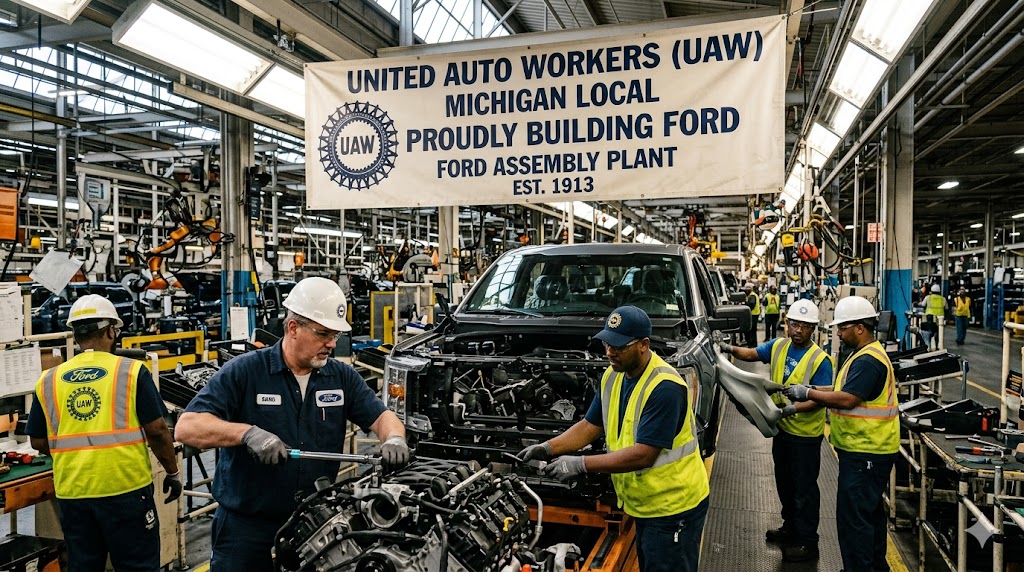
Picture three assembly plants, one for each of Detroit's legacy automakers, all walking off the job on the same night for the first time in the union's history. That single tactical choice — hitting Ford, General Motors, and Stellantis simultaneously rather than picking one "target" company as had been custom for decades — told you everything about how differently the United Auto Workers intended to fight this round. What followed didn't just produce a new contract. It rewired assumptions about pay tiers, plant staffing, and the union's own appetite for confrontation that are still shaping decisions on factory floors today.
The Strategy Shift That Made This Different
For generations, the UAW's playbook involved striking a single automaker to set a pattern, then pushing the other two to match it without a work stoppage. The strike broke that mold by rolling out walkouts plant by plant, across all three companies, escalating unpredictably as talks dragged on. Executives couldn't plan around a single strike date, and rival automakers couldn't quietly wait out a competitor's labor fight while continuing to build and sell vehicles uninterrupted. That unpredictability was the point. It forced concessions faster than a traditional single-target strike might have, and it signaled a more combative union leadership willing to use every plant as leverage rather than conserve resources for one flashpoint.
The ripple effects went beyond the three companies directly involved. Non-union automakers with US plants — the transplants and the newer EV-focused manufacturers — watched closely, because a more assertive UAW emboldened by a strong outcome was clearly going to look at their facilities next. That anticipation alone changed how those companies talked about wages and benefits internally, even before any organizing drive reached their doors.
Wage Tiers Became the Central Battleground
One of the strike's defining fights was over the multi-tier wage system that had crept into the industry since the 2008-2009 financial crisis, when automakers won concessions allowing newer hires to be paid substantially less than veteran workers doing the same jobs. That system had been a sore point inside the union for years, seen by many members as a betrayal of solidarity even if it had helped keep plants open during leaner times. The strike put ending or sharply compressing those tiers at the center of the union's demands, and the resulting agreements moved workers toward a faster path to top pay rather than the years-long progression many had faced before.
That shift matters beyond the immediate pay bumps. Compressing wage tiers changes the cost structure automakers use when deciding where to locate new production, how quickly to automate certain jobs, and how aggressively to recruit new hires. A workforce that reaches top wages faster is also a workforce with less patience for slow-walked negotiations next time around, which raises the stakes for every contract cycle that follows.
Electric Vehicle Plants Became Labor Territory, Not a Loophole
Perhaps the most consequential and least discussed shift involved battery and EV assembly plants, many of them structured as joint ventures between automakers and battery manufacturers. Those joint ventures had operated in a gray zone — new entities, often non-union, building the components that would power the industry's future even as the traditional assembly plants around them stayed organized. The strike forced a reckoning with that gap. The union pushed for those battery plants to be brought under the same national agreements as the rest of the workforce, treating them as an extension of core auto manufacturing rather than a separate, lower-cost category of employment.
This is where the longer-term stakes really show up. If EV and battery production becomes a larger share of total automotive manufacturing over the coming decade, as most industry roadmaps suggest it will, then whether that production is organized labor or not determines the UAW's relevance far more than wage tiers at legacy engine and transmission plants ever will. Automakers, for their part, have real cost pressure to manage here: battery plants are capital-intensive, margins on early EV models have been thin, and labor costs baked in at the outset are hard to unwind later. That tension between the union's push to organize the EV supply chain and automakers' need to keep those plants cost-competitive against non-union rivals, including newer entrants, is not resolved — it simply became an explicit, contractual fight rather than a quiet structural gap.
Contract Length and the Return of Strike Leverage as a Strategy
Contract duration became its own point of negotiation, with the union pushing agreements timed so that future expiration dates would align with other high-leverage moments, rather than accepting whatever multi-year cadence automakers preferred. That's a subtle but important change. Aligning contract expirations gives the union the option to coordinate pressure across the industry again in the future, rather than negotiating each company on its own separate clock. It's a structural choice that only pays off years later, and it's a clear sign the union expects to keep using industry-wide, simultaneous pressure as a standing tool rather than a one-time tactic.
Automakers, meanwhile, walked away from the experience having to price in a different kind of risk. Labor stoppages that hit all three domestic manufacturers at once, with escalating and hard-to-predict plant selections, are costlier to model than a traditional single-target strike. Expect that risk to show up in how automakers plan inventory buffers, how they stagger production commitments, and how much they're willing to concede early in future talks simply to avoid a repeat of the uncertainty.
What Changed for Workers Outside Detroit's Big Three
The strike's aftershocks reached well beyond the three unionized automakers. Reports of wage increases at non-union plants operated by other manufacturers in the months following the settlement suggested those companies were moving preemptively, hoping to reduce the appeal of unionization before any formal campaign arrived. Whether that preemption fully succeeds is a longer story still playing out, but it's a clear indicator that the strike's leverage extended into boardrooms that never sat across a table from the UAW at all. For an industry that had spent decades treating non-union Southern and newer EV-focused plants as largely insulated from organized labor's demands, that alone marks a meaningful shift in the competitive landscape for labor costs across the entire US auto sector.
The Decade Ahead Looks Different Because of It
None of this guarantees continued union momentum. Organizing drives can stall, contract fights can go the other way, and automakers under margin pressure from EV transition costs have every incentive to push back hard next time. But the baseline has moved. Wage tier compression, battery-plant labor status, and synchronized contract timing are no longer background details of auto labor relations — they are the explicit terrain on which the next decade of negotiations will be fought, and every party involved knows it.
Key Takeaways
- The strike's plant-by-plant, all-three-companies-at-once strategy replaced the old single-target pattern and forced faster concessions through unpredictability.
- Compressing multi-tier wage systems became a central union demand, changing how quickly new hires reach top pay across the industry.
- Bringing battery and EV joint-venture plants under standard union agreements turned the EV transition into an active labor battleground rather than a quiet non-union loophole.
- Aligning future contract expiration dates signals the union intends to keep using industry-wide, simultaneous pressure as a long-term strategy.
- Non-union automakers raised wages preemptively afterward, showing the strike's influence extended well past the three companies directly involved.
- Bottom line: this strike didn't just settle one contract cycle — it reset the leverage, cost assumptions, and battle lines that will define automaker-labor relations for years to come.