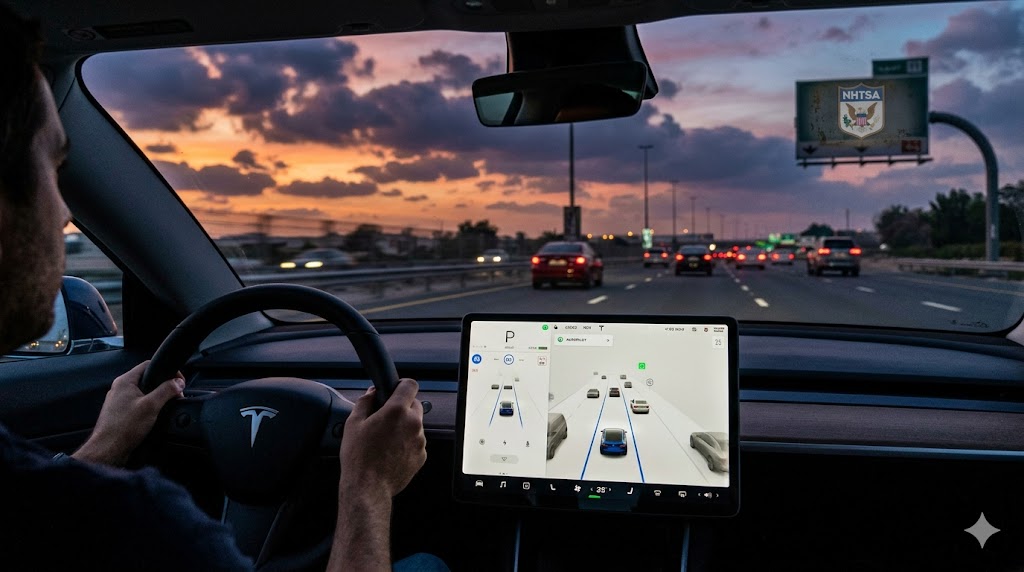

The National Highway Traffic Safety Administration's investigation into Tesla's Autopilot and Full Self-Driving driver assistance systems represents the most significant regulatory examination of advanced driver assistance technology to date. The investigation's findings, accumulated over multiple years of incident data analysis and updated through 2026, provide the most comprehensive picture available of how these systems perform across the full range of real-world use conditions - including the conditions where they fail.
Understanding the investigation requires separating the marketing language from the technical reality. Tesla's naming conventions - Autopilot, Enhanced Autopilot, Full Self-Driving - have consistently implied a level of autonomy that the systems do not deliver. NHTSA's investigation has focused on the gap between the implied capability and the actual operational behavior, particularly in the edge cases where that gap produces accidents.
The core findings relate to a consistent pattern: the Autopilot system's failure to maintain performance in scenarios outside its reliable operational envelope, combined with driver over-reliance on the system based on its demonstrated capability in more common scenarios. Drivers who have used Autopilot successfully for extended periods in appropriate conditions develop trust that exceeds the system's actual capability - a psychological dynamic that NHTSA's investigation has documented in incident patterns.
The specific incident types that have drawn investigative attention include collisions with stationary emergency vehicles, intersections where cross-traffic creates scenarios outside the system's reliable detection envelope, and highway scenarios where lane markings are absent or ambiguous. In these scenarios, the system's behavior has not consistently matched driver expectations based on prior performance in more standard conditions.
Tesla's response has involved over-the-air software updates that modify system behavior in documented problem scenarios. The effectiveness of these updates in resolving the identified risks is a central element of NHTSA's ongoing evaluation. Software-based vehicle systems can be updated in ways that mechanical systems cannot, which creates a different risk management framework than conventional vehicle safety defects - one that NHTSA's existing regulatory framework was not originally designed to evaluate.
For current and prospective Tesla owners, the investigation's practical implication is the same message that both Tesla's documentation and NHTSA's guidance have consistently communicated: these systems require continuous driver attention and cannot substitute for driver engagement. The name Full Self-Driving does not describe a system that drives itself fully. Owners who treat it as such create risk that the technology's designers have not designed it to manage.
Summary
What it is: An analysis of NHTSA's ongoing investigation into Tesla's Autopilot and Full Self-Driving systems, including key findings and implications for current and prospective owners.
Best for: Tesla owners and prospective buyers who want an honest assessment of what the regulatory investigation has found and what it means for system use.
Biggest risk factor: Using Autopilot or FSD in ways that exceed the system's documented operational envelope based on assumption rather than verified capability.
When to act: Current owners should review Tesla's most current Autopilot documentation; prospective buyers should evaluate the system in person before purchase.
AutosAdvisor is not affiliated with NHTSA or Tesla. This content is editorial analysis based on publicly available investigation findings.