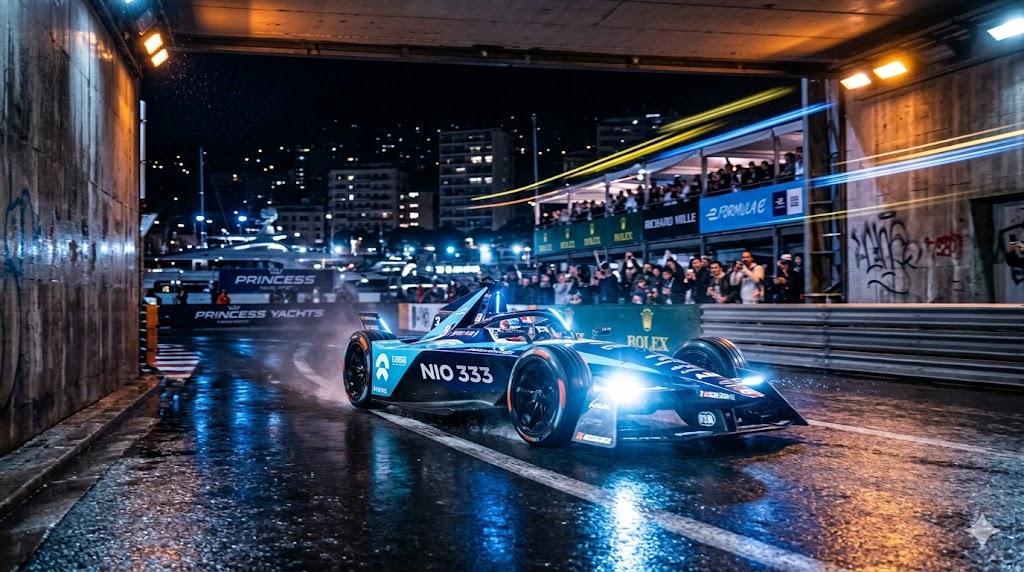

Season 11 of Formula E arrived at a pivotal moment for the series. After years of identity questions - is it a legitimate top-tier racing series or a promotional exercise for EV technology? - the racing itself began providing answers that marketing never could. The Gen3 Evo car, introduced with revised aerodynamics and updated power electronics, produced wheel-to-wheel competition that required no apology to any other single-seater category.
The fundamental architecture of Formula E - city center street circuits, limited energy per race, and mandated energy management strategy - was initially viewed as a constraint. The Gen3 era has reframed it as a defining characteristic. The energy equation turns every Formula E race into a real-time optimization problem where outright pace is only one variable. Drivers who manage energy poorly while qualifying at the sharp end finish poorly. Drivers who conserve energy strategically while running mid-pack can emerge in the final laps with pace advantage that the leading group cannot match.
The championship came down to the final race in London, contested under mixed conditions across the two-race weekend that Formula E's calendar regularly provides. Mitch Evans' title defense came into the weekend with a lead that was vulnerable but not easily overturned. The mathematics of the final race - points available, gap to close, attacks needed - made for a scenario where both the defending champion and the primary challenger had to commit to strategies that carried real risk.
The technical picture across the season revealed meaningful performance differentiation between the six manufacturer power units. Porsche's efficiency gains in power deployment represented the most consistent competitive development across the season. Jaguar's attack mode strategy in specific circuits demonstrated that tactical energy use can substitute for outright pace advantage in ways that aren't available to the field in any other racing series.
The venues told a consistent story about Formula E's strengths and limitations. Tokyo's tight street circuit produced intense racing in a city where the EV message resonates with cultural authenticity. Cape Town's layout produced overtaking opportunities that some circuits don't. The Paris layout through the Invalides area remains among the most visually distinctive racing environments in any motorsport category.
Criticism of the series focuses consistently on accessibility - races behind streaming paywalls in some markets, circuits that are difficult to attend as a spectator compared to traditional racing venues, and a championship structure that can produce confusing outcomes at the end of a long season. These are legitimate concerns that the series' governance needs to address if Formula E is going to expand its audience beyond the EV enthusiast demographic.
The collaboration with Formula 1 under Liberty Media's expanded motorsport portfolio creates opportunities for promotional cross-pollination, but also risks reducing Formula E to a supporting character in a story that F1 controls. The series needs to continue developing on its own competitive terms.
The manufacturer commitment to the series for the Gen3 Evo era and beyond - Porsche, Jaguar, Nissan, DS Automobiles, Maserati, and Mahindra all active - provides competitive depth that the early seasons lacked. The technology transfer argument, where Formula E serves as a development laboratory for EV efficiency technology applicable to road cars, has become more credible as the power unit regulations have become more demanding.
Summary
What it is: A review of Formula E's Season 11, the Gen3 Evo era's competitive picture, and an assessment of where the series stands in the motorsport landscape.
Best for: Motorsport fans who want to understand Formula E as a competitive series rather than as a technology demonstration.
Key tradeoff: The series' energy management strategy creates unique racing dynamics but can be difficult to follow for viewers accustomed to conventional racing.
Bottom line: Season 11 was the series' most competitive to date - the argument that Formula E has arrived as a credible top-tier series is now harder to dismiss.
AutosAdvisor is not affiliated with Formula E or the FIA. This content is editorial analysis.