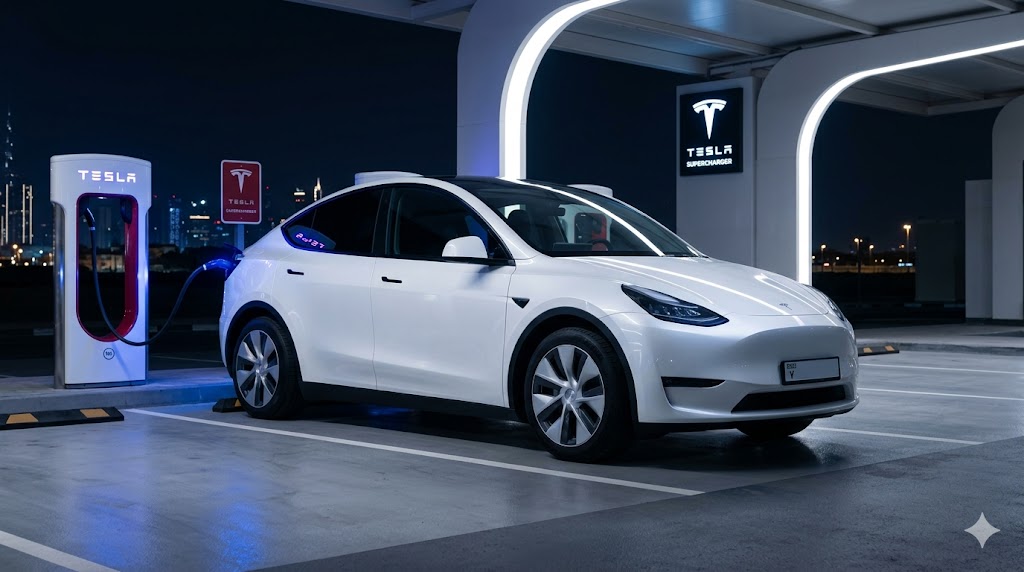

The Tesla Model Y has been the best-selling vehicle globally - not just the best-selling EV, the best-selling vehicle - in recent years. That achievement is either a straightforward indicator of its quality or a commentary on Tesla's price positioning, marketing, and the state of EV competition at the time. Three years and 45,000 miles in our long-term test fleet provide a more nuanced answer than either interpretation alone supports.
The long-term test car is the Long Range All-Wheel Drive configuration, the specification that represents the best balance of range, performance, and value in the Model Y lineup. EPA range of 330 miles. Dual motor AWD. 4.8-second 0-60 mph time. The car that most Model Y buyers choose.
After 45,000 miles, the battery retains approximately 95% of its original capacity as measured by the car's own systems. This is consistent with what the battery degradation data from larger Model Y populations shows - the Model Y's thermal management system has done its job, and the degradation concern that dominated early EV discussions has not materialized in any operationally meaningful way.
The Supercharger network remains the Model Y's most consistent practical advantage. Three years of road trips across the continental United States involved frequent Supercharger use, and the experience was consistently more convenient than the alternative charging networks we used for comparison. Wait times at Supercharger locations have increased as the fleet has grown, but route planning through the Tesla navigation system's Supercharger integration remains the best in-car charging guidance available.
Software updates have meaningfully changed the car over three years. Features present at 45,000 miles didn't exist at purchase. The autopilot calibration has improved. The navigation integration has improved. The charging management has improved. This is genuinely unusual in the automotive market - most cars don't improve over ownership. The experience of receiving meaningful new capability through software is one that traditional automotive models don't provide.
Quality consistency has been the Model Y's ongoing weakness. Our test car required three service visits for quality issues in the first year that shouldn't have been delivered from the factory. Panel gaps, a misaligned trunk seal, and a driver's door that required adjustment were all addressed under warranty with minimal friction but shouldn't have been necessary.
Summary
What it is: A three-year, 45,000-mile long-term evaluation of the Tesla Model Y Long Range AWD - what real-world ownership reveals about the world's best-selling vehicle.
Best for: Prospective Tesla buyers who want long-term ownership data rather than first-impression reviews, and current owners curious about what to expect over time.
Biggest cost/risk factor: Initial quality inconsistencies that require service visits; service center wait times have increased as the fleet has grown.
When to act: The Model Y's fundamentals remain strong - long-term battery performance and the Supercharger network justify the purchase for buyers whose use patterns fit the EV model.
AutosAdvisor is not affiliated with Tesla. Long-term review reflects editorial fleet evaluation.