Somewhere in a filing cabinet of broken promises sits a decade's worth of press releases declaring that fully self-driving cars were two years away. They were said in 2015. They were said in 2017. They were said, with straight faces and confident timelines, in 2019. Executives stood on stages and told us that steering wheels would soon be optional, that owning a car would become quaint, that a fleet of robots would ferry us around cities while we napped or worked in the back seat. None of that happened on schedule, and understanding why tells you almost everything you need to know about where autonomy really stands today.
The Promises That Didn't Land
The mid-to-late 2010s were the industry's most confident era of self-driving forecasting. Executives from major automakers and tech companies alike suggested that consumer-ready, fully autonomous vehicles requiring no human attention were just a couple of years out. The pitch was seductive: sensors were improving, machine learning was accelerating, and prototype vehicles were already navigating real streets in demonstrations. Extrapolate that curve a few years forward, the thinking went, and steering wheels would be gone by the early 2020s.
What actually happened was a much slower, messier grind. The easy 90 percent of driving—lane-keeping on a highway, adaptive cruise control, smooth merges in light traffic—turned out to be tractable within a few years. The last stretch, the so-called long tail of driving, proved to be a different kind of problem entirely. Unprotected left turns across oncoming traffic, a construction worker waving a car through a closed lane, a plastic bag blowing across the road versus a small animal, a double-parked delivery van forcing a maneuver into the opposing lane, an officer directing traffic with hand signals that contradict the light—these are the situations that separate a good driver-assist demo from a system you can trust with your life every single day, in every city, in every weather condition. Engineers who worked on these programs will tell you, often candidly now, that the industry underestimated how much of driving is improvisation rather than pattern-matching. The hype cycle collided with that reality, and the public timeline quietly slid backward year after year until companies mostly stopped naming dates at all.
That recalibration is not a story of failure so much as a story of a genuinely hard problem revealing its true difficulty. Progress has been real. It has just been slower, narrower, and far more geographically limited than anyone selling the dream in 2016 was willing to admit.
The SAE Levels: Why "Self-Driving" Means Six Different Things
Much of the public confusion about autonomy traces back to the fact that "self-driving" is not one capability but a spectrum, and the industry's own vocabulary has been sloppy about it. The SAE (Society of Automotive Engineers) framework breaks driving automation into levels, and understanding the shape of that ladder—rather than memorizing exact wording—clarifies almost every debate about what a given car can actually do.
At the bottom, Level 0 is a car with no sustained automation: driver aids like automatic emergency braking might intervene in a moment of danger, but the human is doing all the driving all the time. Level 1 introduces a single automated function, such as adaptive cruise control or lane centering, but not both together. Level 2 combines steering and speed control so the car can handle both simultaneously under supervision—critically, the driver is still required to watch the road and remain ready to intervene at any moment. This is the level where the vast majority of "advanced" consumer systems on the road today actually sit, no matter how sophisticated their marketing sounds.
The real conceptual leap happens between Level 2 and Level 3. At Level 3, the vehicle can manage the full driving task under specific conditions and the human is permitted to disengage attention from the road, though they must be ready to retake control when prompted. This is a legally and technically thorny middle ground, because it requires the car to reliably recognize its own limits and hand back control with enough warning for a distracted human to respond. Level 4 removes that handback requirement within a defined operational domain—a geofenced area, a certain speed range, particular weather—meaning the vehicle can safely stop itself if it encounters something outside its competence, no human required within that domain. Level 5 is the mythical endpoint: a vehicle that drives anywhere, in any condition, with no human involvement ever needed, and no steering wheel required at all. No consumer or commercial vehicle operates at Level 5 today, and it remains more of a theoretical benchmark than a near-term product category.
Where Robotaxis Actually Operate
Genuine Level 4 deployment does exist, and this is where the industry can point to real, tangible progress rather than a demo reel. Waymo, the most mature player in this space, operates driverless robotaxi service in a handful of US metropolitan areas, picking up paying passengers with no safety driver behind the wheel within a defined operating area. Other companies have run or are running similar pilot and commercial programs in select cities as well. These services have expanded gradually over time, adding neighborhoods, extending hours, and pushing into more complex road environments like highways, but the expansion has been deliberate and incremental rather than the overnight nationwide rollout that early forecasts implied.
The operative phrase for all of these deployments is "within a defined operating area." These vehicles are not simply turned loose to drive anywhere in the country. They operate in carefully mapped zones where the company has accumulated extensive experience with local road quirks, traffic patterns, and edge cases, and where weather conditions are generally cooperative. Extending that same confidence to a snowy Midwestern city, a chaotic downtown with unpredictable double-parking, or rural roads with no lane markings is a substantially harder problem, and it's part of why growth has been steady rather than explosive. The technology works well in the environments it has been tuned for; generalizing it everywhere remains the unsolved part of the equation.
Hands-Off Is Not the Same as Driverless
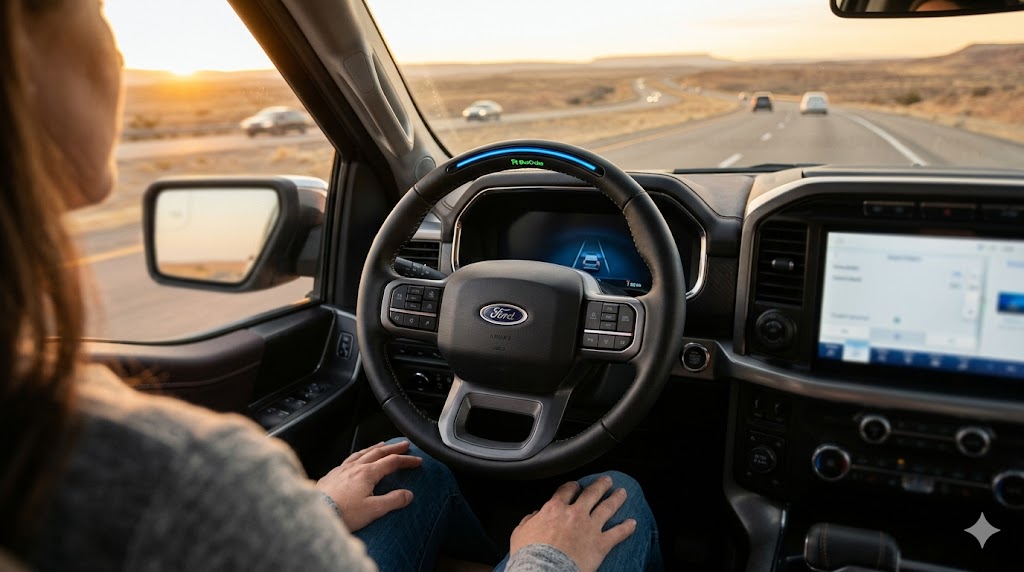
This is the distinction that consumer marketing has muddied the most, and it's worth being precise about. Systems like GM's Super Cruise and Ford's BlueCruise allow genuinely hands-free driving, but only within specific, mapped conditions—typically divided highways that the manufacturer has pre-verified with detailed mapping data, and usually in good weather and clear lane-marking conditions. Both systems use driver-monitoring cameras that track eye gaze or head position to confirm the person behind the wheel is still paying attention, ready to intervene. Take your eyes off the road for too long, and the system will warn you, then disengage. That's a meaningful and genuinely useful convenience feature, but it is not autonomy in the SAE Level 4 or 5 sense—it is a well-executed Level 2, or arguably a constrained Level 2-plus, system that still legally and functionally requires an attentive driver.
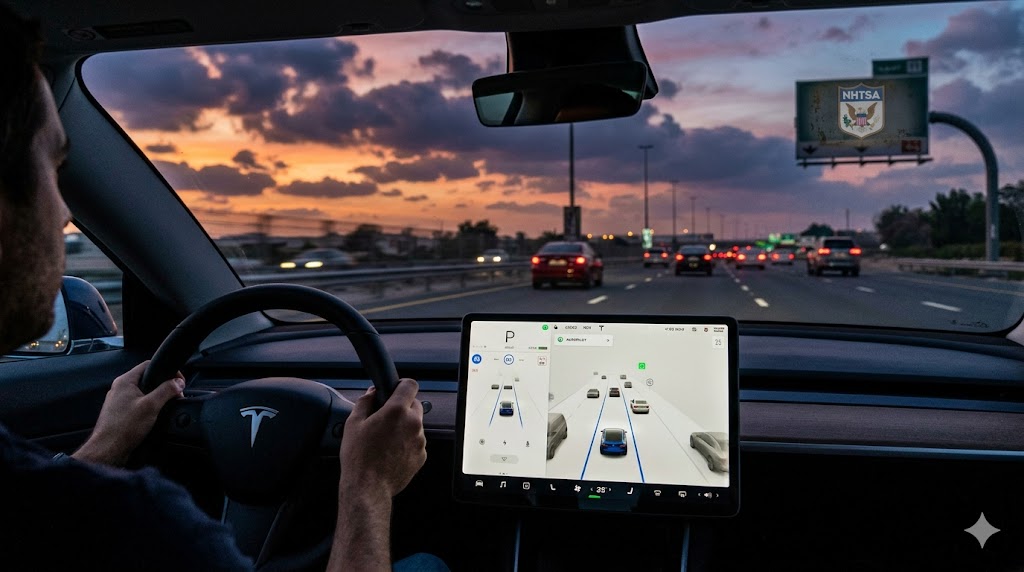
Tesla's driver-assist offerings occupy a similar category, despite branding that has sown more confusion than almost any other product name in the industry. These systems require active driver supervision, and Tesla itself, in its own documentation, is explicit that the driver must keep their hands available and attention on the road at all times, ready to take over immediately. They are not classified by regulators as fully autonomous systems, and treating them as such—something that has contributed to real-world crashes—is precisely the gap this article is describing between marketing language and the SAE framework's actual definitions.
Regulation, Liability, and Trust
Even if the technology closed every remaining capability gap tomorrow, the legal and institutional scaffolding around autonomy would still lag behind. Who is liable when a driverless vehicle causes a crash—the software company, the automaker, the fleet operator, or some shared arrangement among them—is a question that varies by jurisdiction and remains only partially settled through a patchwork of state-level rules and case-by-case regulatory approval rather than a single coherent national framework. Insurance models built around a human driver's choices don't map cleanly onto a world where the "driver" is a software stack maintained by a corporation.
Public trust is its own hurdle, separate from the legal one. High-profile incidents involving autonomous or semi-autonomous vehicles tend to generate outsized media attention and public anxiety relative to their frequency, and regulators have responded with caution, sometimes pausing or narrowing permits for testing and commercial operation while investigations proceed. That caution is arguably appropriate given the stakes, but it also means the path to broader deployment runs through a slow, trust-rebuilding process city by city and regulator by regulator, not a single federal green light that unlocks the whole country at once.
What's Actually Plausible From Here
The realistic near-term picture is more evolution than revolution. Expect robotaxi services to keep expanding into additional metro areas and broader zones within existing cities, with highway and adverse-weather capability improving gradually rather than suddenly. Expect consumer hands-free systems from automakers to extend to more roads and more conditions, chipping away at the restrictions that currently confine them to divided highways in good weather. What you should not expect, on any realistic timeline, is a personally owned vehicle that can be summoned with no driver at all and sent to drive across an unfamiliar city in a snowstorm. That capability sits well beyond the current frontier, and nobody credible in the industry is putting a confident date on it anymore—which, given the last decade's track record, might be the most encouraging sign of progress there is.
Key Takeaways
- The "two years away" predictions of the 2015-2019 era badly underestimated how hard the last stretch of driving—rare, improvisational, edge-case scenarios—actually is.
- The SAE Levels 0 through 5 framework explains most of the industry's marketing confusion: nearly all consumer systems today are Level 2, meaning the driver must stay attentive regardless of how "hands-free" the system feels.
- True driverless operation (Level 4) is real but geographically limited, running in defined zones within select cities rather than everywhere, with expansion happening gradually.
- Hands-free systems like Super Cruise and BlueCruise are genuine conveniences within mapped highway conditions, not autonomy, and driver-monitoring systems exist precisely because attention is still legally required.
- Liability rules, insurance frameworks, and public trust are lagging behind the technology itself and will shape the rollout timeline as much as engineering does.
- Bottom line: autonomy has made real, measurable progress since the hype years, but full self-driving remains a narrow, expanding capability rather than an imminent universal reality.