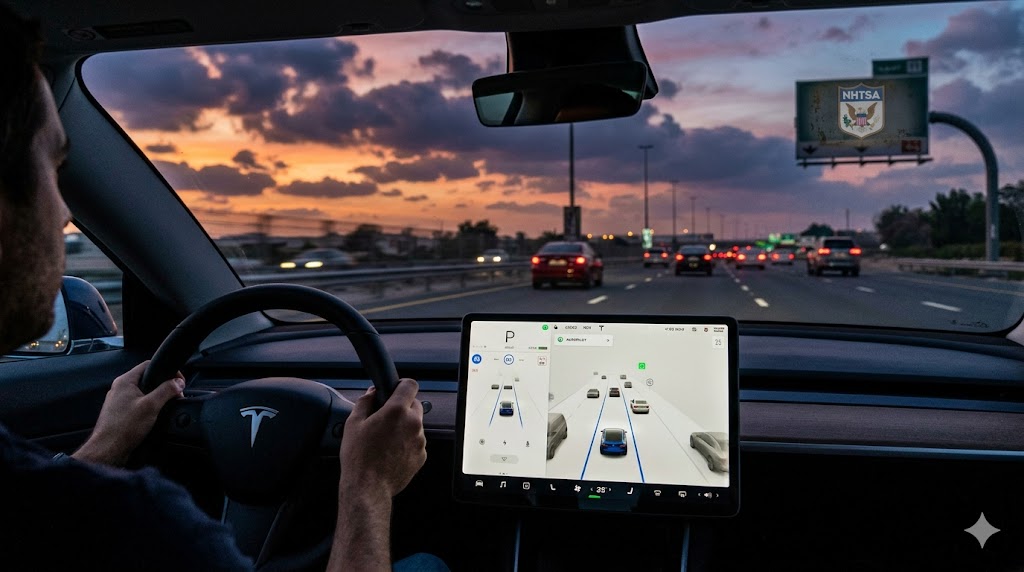
Two shoppers walk into the same showroom, one eyeing an electric model, the other a gas-powered version of a comparable vehicle. Their monthly lease payments can end up meaningfully different even when the sticker prices are close, and the reason has almost nothing to do with the car they're driving off the lot. It has to do with what that car is predicted to be worth years from now, a number baked quietly into every lease before you ever sign, and one that behaves very differently for electric vehicles than for their gas counterparts.
This article provides general information, not financial advice. Residual values and lease terms vary by manufacturer, model, and leasing company, so confirm current figures before signing.
What Residual Value Actually Does to Your Payment
A lease payment is essentially the cost of the vehicle's depreciation over the lease term, spread across monthly installments, plus interest and fees. The residual value, the amount the leasing company predicts the car will be worth at the end of the lease, is subtracted from the vehicle's initial price to determine how much depreciation you're paying for. A higher predicted residual value means less depreciation to cover, which means a lower monthly payment, all else being equal. This is why two vehicles with similar starting prices can carry noticeably different lease payments: the one with the stronger residual value prediction is cheaper to lease, even if it's not cheaper to buy outright.
This mechanic is exactly where the EV-versus-ICE divide becomes visible to shoppers, often without them realizing why. Residual value predictions for electric vehicles have historically been less stable and, in many cases, lower relative to their original price than predictions for comparable gas vehicles, and that instability translates directly into lease pricing.
Why EV Residual Values Have Been Harder to Predict
Forecasting residual value requires looking several years into the future and estimating what buyers will pay for a used version of a given vehicle. For gas-powered cars, this forecasting rests on decades of data: how engines age, how maintenance costs evolve, how demand for a given model shifts over time. Electric vehicles offer a much shorter track record, and the technology underneath them has been changing quickly, which makes long-range predictions inherently shakier.
Battery degradation concerns weigh on these forecasts, even though real-world battery longevity in many EVs has proven better than early skeptics assumed. Buyers shopping the used market have historically shown some hesitation around a used EV's remaining battery life and the cost of eventual replacement, and that hesitation gets reflected in lower predicted resale values. Rapid improvements in range, charging speed, and features across new EV model years have also historically pressured used EV values, since a three-year-old EV can look markedly less competitive against a new one than a three-year-old gas car looks against its own newer equivalent, given how much faster the technology curve has been moving in the electric segment.
Incentive structures add another layer of complexity. Federal and state incentives on new EVs can affect the relative attractiveness of buying new versus used, and shifts in these incentive programs over time have made it harder for forecasters to pin down what used EV demand will look like a few years out.
How This Shows Up in Real Lease Offers
When a residual value forecast is lower, the leasing math assumes more depreciation over the term, and that depreciation cost gets passed to the lessee through a higher payment, assuming the manufacturer or leasing company isn't subsidizing the deal to offset it. This is precisely why automakers and their captive finance arms have often leaned on subvented lease deals, artificially propping up the residual value or subsidizing the money factor, to keep EV lease payments competitive despite the underlying depreciation risk. Shoppers benefit from these subsidized deals directly, but it's worth understanding that the attractive lease payment you see advertised may reflect manufacturer support smoothing over a residual value gap, not necessarily strong organic resale value.
Gas-powered vehicles, particularly established, high-demand models with a long history of holding value, often carry residual value predictions that need less artificial support to produce a competitive lease payment. This doesn't mean every ICE vehicle beats every EV on lease pricing; it varies by model, brand, and the specific incentives active at any given time. But the underlying pattern, that ICE residuals tend to rest on more data and historically more stable ground, remains a meaningful factor shaping the offers you see.
The Buyer's Risk vs. the Leasing Company's Risk
One of the most underappreciated aspects of this dynamic is who actually bears the risk of a residual value miss. If you lease a vehicle and the leasing company overestimates what it will be worth at lease-end, that's the leasing company's problem, not yours, since you can simply return the car and walk away rather than buying it out. This makes leasing an appealing hedge against depreciation uncertainty for exactly the kind of vehicle where that uncertainty runs highest, which, given everything above, often points toward EVs.
Buyers who purchase an EV outright, by contrast, absorb that same depreciation risk directly. If the vehicle depreciates faster than expected because of the pace of technological change or shifting incentive programs, the owner bears that loss when they eventually sell or trade it in. This asymmetry is a real argument in favor of leasing specifically for EV shoppers who are uncertain about long-term resale value, even setting aside the monthly payment comparison entirely.
What This Means for Your Decision
None of this means EVs are a poor lease choice or that ICE vehicles are automatically the smarter financial move. It means the residual value assumptions embedded in any lease offer deserve scrutiny, and comparing lease deals across EV and ICE options requires looking past the headline monthly payment to understand how much of that number reflects genuine predicted value retention versus manufacturer subsidy propping up a shakier forecast. A subsidized EV lease can be an excellent deal precisely because it transfers depreciation risk away from you while still delivering a competitive payment.
If you're weighing a lease against a purchase for an EV specifically, it's worth asking the finance manager directly what residual value percentage is baked into the offer and comparing that figure across a few competing vehicles. A residual value that looks unusually generous relative to the vehicle's segment could signal manufacturer support, which is good news for a lessee, while a residual value that looks weak suggests the payment reflects more organic depreciation risk being passed straight to you.
Key Takeaways
- Residual value, not just purchase price, drives most of what you pay on a lease, since it determines how much depreciation the payment needs to cover.
- EVs have historically carried less predictable and often lower residual value forecasts due to limited historical data and rapid technology turnover.
- Manufacturers frequently subsidize EV leases to offset weaker residual forecasts, which can make EV lease deals attractive despite underlying depreciation uncertainty.
- Leasing shifts residual value risk to the leasing company, making it a reasonable hedge for buyers uncertain about long-term EV resale value.
- Compare the residual value percentage behind lease offers, not just the monthly payment, when cross-shopping EV and gas vehicle leases.
- Bottom line: a strong EV lease deal often reflects manufacturer subsidy as much as genuine resale strength, so evaluate the underlying numbers before assuming one type of vehicle is the better lease.