Ask two engineers at two different autonomous vehicle companies how their car "sees" the road, and you may get two fundamentally incompatible answers—not because one of them is wrong, but because the industry never settled on a shared philosophy for how a machine should perceive the world. Some companies build their entire perception stack around cameras and neural networks, arguing that vision alone, done well enough, is all a car needs. Others insist that a self-driving system without LIDAR is skipping a safety margin that shouldn't be optional. Years into serious autonomous vehicle development, this argument hasn't resolved. It has hardened into two camps.
Two Philosophies, Not Just Two Sensors
The debate gets framed as a hardware question, but it's really a disagreement about how confident you can be in inference versus direct measurement. A camera captures a two-dimensional image and hands it to software that has to guess depth, distance, and speed from visual cues—the same way a human driver does, just with algorithms instead of a brain. LIDAR, by contrast, sends out pulses of laser light and measures how long they take to bounce back, producing a direct, three-dimensional point cloud of everything around the vehicle. It doesn't have to guess how far away an object is; it measures it.
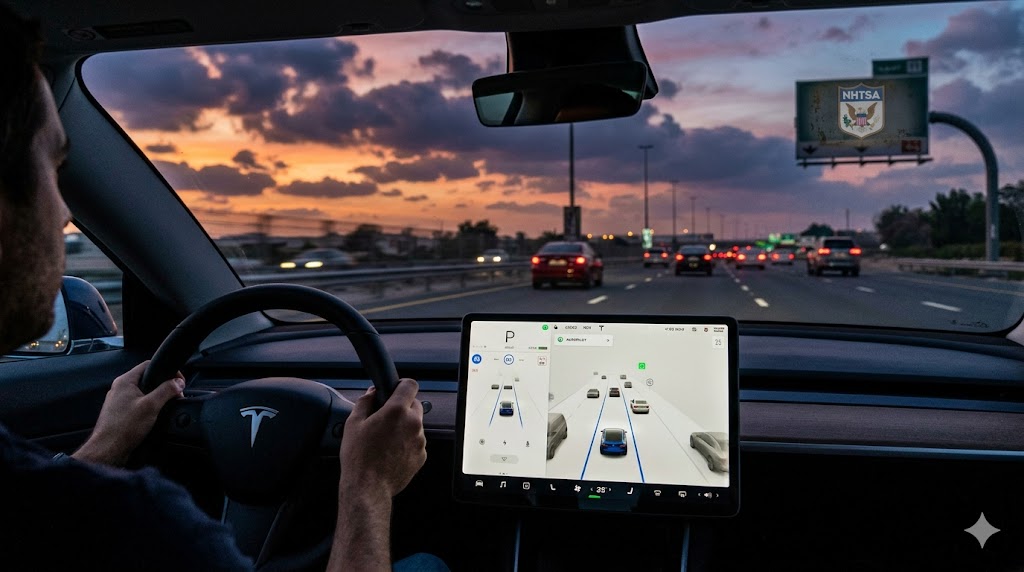
That distinction matters enormously to how each camp thinks about the problem. The vision-first argument—most publicly associated with Tesla's approach to its driver-assistance systems—holds that humans drive successfully using only two eyes and a brain, so a sufficiently advanced camera-and-neural-network system should eventually be able to do the same, at a fraction of the cost and complexity. The counterargument, more associated with Waymo and most of the rest of the autonomous vehicle industry, is that redundancy is the whole point of a safety-critical system: you don't remove a sensor type just because you believe your software can compensate for its absence, especially when the failure modes of a pure-vision system are harder to predict and characterize.
The Case for LIDAR: Redundancy and Direct Measurement
LIDAR's core appeal is that it doesn't depend on inference for the thing that matters most—how far away is that object, and how fast is it closing. That direct measurement holds up in darkness in a way cameras fundamentally cannot; a camera needs light to form an image, while LIDAR generates its own. This is why so many AV developers treat LIDAR as a baseline safety layer rather than a nice-to-have: it provides a check on the system's understanding of the world that doesn't degrade the moment the sun goes down.
LIDAR isn't without real weaknesses, though, and it's worth being honest about them rather than treating it as a silver bullet. Fog, heavy rain, and snow can scatter or absorb the laser pulses, degrading the quality of the point cloud in exactly the adverse-weather conditions where you'd most want reliable perception. LIDAR units have historically been significantly more expensive and mechanically more complex than cameras, which matters enormously when you're trying to put the technology into mass-market vehicles rather than a limited robotaxi fleet. Costs have come down over time and packaging has improved, but the sensors remain a meaningfully bigger line item than a camera module, and they add another data stream that the vehicle's compute platform has to fuse with everything else in real time.
The Case for Cameras: Cost, Scale, and Human-Like Perception
The vision-first argument isn't just about saving money, even though cost is clearly part of it. Proponents argue that cameras capture richer contextual information than LIDAR—color, text on signs, the specific posture of a pedestrian who might be about to step off a curb—details that a point cloud simply doesn't contain. A system trained well enough on enough camera data, the argument goes, should eventually out-perform sensor fusion approaches because it's learning to interpret the same rich visual world humans use, rather than a simplified geometric abstraction of it.
The honest weaknesses on this side are just as real. Cameras struggle in low light, and while modern image sensors have improved dramatically, they still don't match LIDAR's ability to operate identically in daylight and darkness. Glare from low sun angles, reflections off wet pavement, and the general unpredictability of adverse weather all degrade a camera's usable signal in ways that are hard to fully engineer around with software alone. Because a vision-only system has no independent sensor to cross-check its depth estimates against, an error in the perception model isn't caught by a second, differently-built sensor the way it would be in a fused system—it's a single point of failure for that particular capability, however well-tested the software might be.
Why This Argument Refuses to Settle
Part of why the debate persists is that both camps are making a bet about a curve that hasn't finished playing out. The vision-first camp is betting that machine learning and compute will keep improving fast enough to close the perception gap that LIDAR currently fills through brute-force physics. The sensor-fusion camp is betting that removing a redundant, physically-grounded sensor before that gap is conclusively closed is a bet you don't get to take back if it's wrong, especially in a safety-critical application. Neither side can prove its position with today's data, because the vision-only approach is still maturing and the fused approach hasn't been forced to operate at the cost and scale that would prove out its economics for the mass market.
It's also a genuinely philosophical disagreement about what "as safe as a human" should mean for a machine. Human drivers do rely on vision alone, but they also bring judgment, situational awareness, and decades of embodied experience that current AI systems don't replicate the way they replicate optical processing. Whether that gap should be closed with more cameras and smarter software, or with sensors that sidestep the gap by measuring the world more directly, is a question reasonable engineers land on differently, and the industry's split reflects that honestly rather than reflecting one side simply being uninformed.
What It Means for the Car You Actually Buy
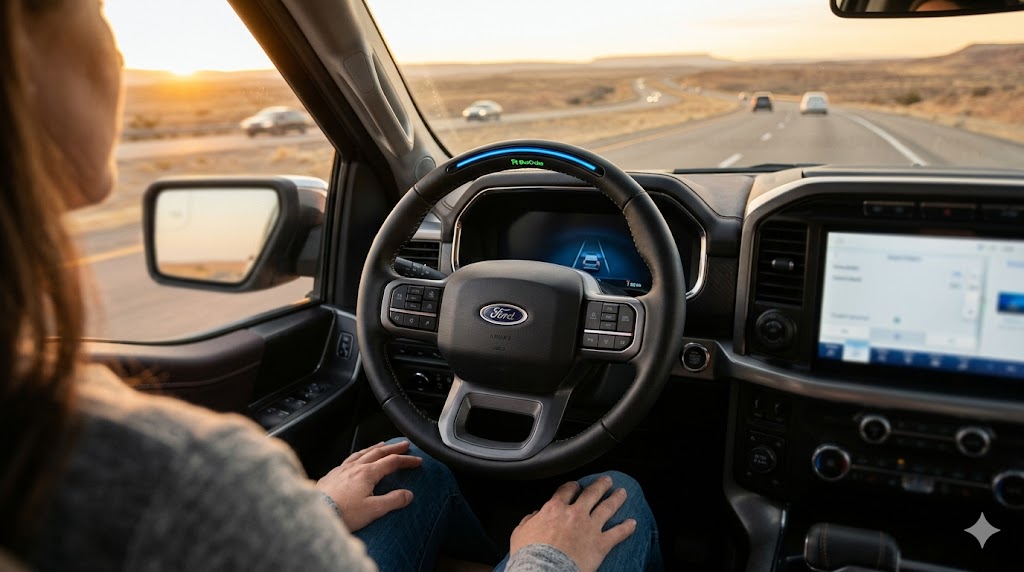
You don't need to resolve this debate to feel its effects at the dealership. The sensor philosophy a manufacturer commits to shows up directly in what their advanced driver-assistance systems cost and how they're marketed—vision-heavy systems tend to be positioned as more affordable and more broadly deployable across a model lineup, while systems built around LIDAR and heavier sensor fusion tend to be reserved for premium trims, robotaxi fleets, or vehicles where the manufacturer is willing to absorb higher component costs. That has real consequences for which safety features show up on a given trim level and how much you pay for them.
It also shapes the safety conversation you'll keep hearing about for years. Neither approach has definitively proven itself superior at the level of rigor regulators and independent researchers would need to declare the debate over, and claims from either camp about safety superiority should be read with real skepticism until backed by transparent, verifiable data rather than marketing language. As a buyer, the practical takeaway isn't to pick a side in an engineering argument you're not positioned to settle—it's to understand that "camera-only" and "LIDAR-equipped" describe genuinely different bets on how a machine should perceive the road, and to weigh that against how and where you actually plan to use the assistance features you're paying for.
Key Takeaways
- The LIDAR-versus-camera debate is a real, unresolved disagreement about whether machine perception should rely on direct measurement or inferred depth from images.
- LIDAR offers direct distance measurement and consistent performance in darkness, but is historically costlier and can degrade in fog or heavy rain.
- Camera-only systems are cheaper and scale more easily across a lineup, but depend entirely on software to infer depth and struggle more in low light, glare, and adverse weather.
- Tesla's public approach represents the vision-first camp; Waymo and most other AV developers represent the sensor-fusion camp that treats LIDAR as a redundant safety layer.
- Neither approach has been conclusively proven safer at a level that should end the debate, so treat marketing claims from either side with caution.
- Bottom line: understand which philosophy underlies a vehicle's driver-assistance suite before you buy, since it directly affects cost, feature availability, and how the system is likely to perform in the conditions you actually drive in.