Every time you ignore a feature your car's engineers were proud of, somewhere a dataset quietly records that fact. Modern connected vehicles are no longer just machines you drive; they're networked devices that report back, continuously, on how you actually use them. That shift from "vehicle as isolated product" to "vehicle as data source" has changed how automakers design cars in ways that would have been impossible a generation ago, when the only feedback a manufacturer got was a customer survey, a dealership complaint, or a warranty claim filed months or years after a defect emerged.
From Guesswork to Telemetry: What Actually Gets Collected
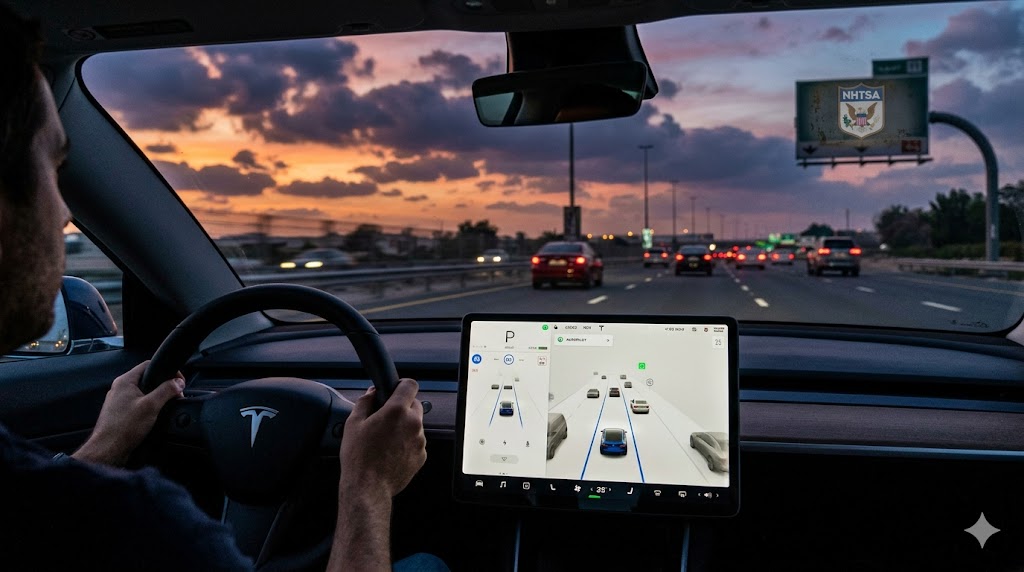
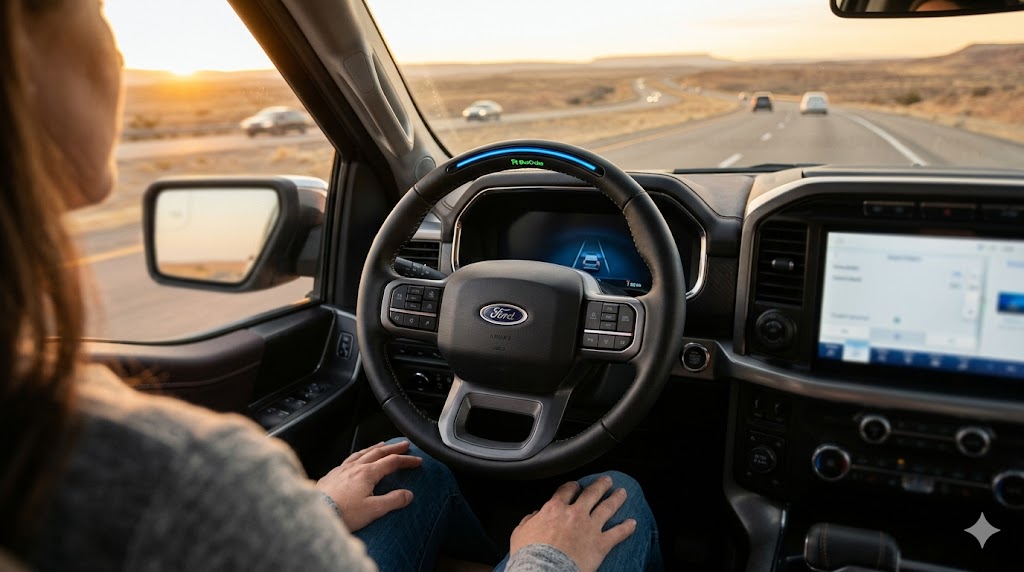
The range of data a connected car can generate is broad. There's driving-behavior telemetry: acceleration and braking patterns, speed profiles, how often adaptive cruise control or lane-keeping assist actually gets engaged versus left off. There's feature-usage data: whether drivers ever open the second screen of infotainment menus, whether they customize drive modes, whether they use built-in navigation or default to a phone-mirrored app instead. There's diagnostic and sensor data flowing constantly from the hundreds of electronic control units in a modern vehicle, capturing everything from battery health trends in an EV to intermittent sensor faults that never trigger a dashboard warning light. In some vehicles and under some data plans, location history and even in-cabin monitoring, such as driver-attention camera data, are part of the collection as well. None of this required a lab environment or a focus group; it's generated automatically as a byproduct of the car simply being driven and connected.
This is the foundational difference from how product development used to work. Engineers previously had to infer how people drove from a mix of controlled testing, limited customer clinics, and after-the-fact complaints. Now they can observe, at scale and in real time, what millions of real drivers in real conditions actually do with the vehicle they were sold.
Turning Usage Patterns Into Design Decisions
The most direct product-development payoff is separating the features people actually use from the ones that looked good in a boardroom presentation but get ignored on the road. If telemetry shows that a particular driver-assist feature is engaged constantly, that's a strong signal to refine and expand it in the next generation. If a feature is switched on once and never touched again, that's a signal too, and not a flattering one for whoever championed it. This kind of usage data lets automakers prioritize engineering investment toward what genuinely earns its place in the vehicle rather than what seemed compelling in isolation during development.
It also corrects assumptions about driver behavior that turn out to be wrong once measured against reality. Engineers build in assumptions about how aggressively people will brake, how they'll interact with touchscreens while driving, how often they'll actually use a given drive mode, and real-world telemetry frequently contradicts those assumptions. When it does, it feeds directly back into how the next model's controls are laid out, how software defaults are tuned, and which features get simplified or removed because nobody was using them as designed. This is a genuinely new capability; a manufacturer can now watch a feature underperform in the field and revise it in a software update long before the next physical model year even begins.
Catching Problems Before They Become Warranty Claims
Perhaps the most tangible benefit for owners is how this data shortens the distance between a problem occurring and a manufacturer knowing about it. Historically, a reliability issue surfaced only when enough customers independently experienced it, complained to dealers, and those complaints aggregated into a pattern someone at headquarters eventually noticed, often well after the affected vehicles had racked up significant mileage. Fleet-wide sensor and diagnostic data compresses that timeline dramatically. A subtle pattern, a sensor drifting out of calibration slightly earlier than expected across a batch of vehicles, or a component showing elevated failure rates in a specific climate, can be visible in aggregated telemetry long before it generates enough individual complaints to register through traditional channels.
This is also the mechanism behind proactive service alerts, where an automaker's system flags a vehicle for a checkup based on real diagnostic trends rather than waiting for a dashboard warning light or a scheduled maintenance interval. For owners, this can mean catching a developing issue before it strands them on the highway. It's a legitimate, consumer-friendly use of the data, and it's one of the strongest arguments automakers make for why connectivity is worth the tradeoffs involved.
Where This Data Goes Beyond Product Design
The applications extend past engineering. Driving-behavior data increasingly feeds into usage-based insurance partnerships, where automakers or their data partners share driving-pattern information with insurers to support pricing models based on how someone actually drives rather than broad demographic proxies. For some drivers this can mean lower premiums for demonstrably cautious driving; for others it means their insurance costs are now shaped by data they may not have realized was being collected or shared in the first place. Software update strategy is shaped by this data too: knowing which vehicles, regions, or driving conditions correlate with particular software behaviors lets automakers target over-the-air updates and prioritize fixes more precisely than a blanket rollout would.
This is also where the tension with consumers becomes unavoidable. The same telemetry that improves reliability and refines feature design is, from the driver's seat, a continuous stream of personal information leaving the vehicle without necessarily being visible or fully understood by the person generating it.
The Privacy Question Nobody Has Fully Answered Yet
The honest state of affairs is that data collection practices and consumer protections around connected vehicles are inconsistent and still evolving. What gets collected, how long it's retained, whether it's shared with or sold to third parties such as insurers or marketers, and what recourse a consumer has to view, download, or delete their own data varies significantly from one automaker to another, and just as significantly from one state or country to another. Privacy policies covering this data typically exist, since disclosure of data collection practices is standard industry practice, but the depth, clarity, and actual usability of those disclosures for an average consumer varies a great deal, and reading one rarely gives a driver a full practical sense of what's being collected in real time.
Regulation has not caught up uniformly. Some jurisdictions, California's privacy law framework being a notable example, extend broader consumer rights over personal data, including certain categories of vehicle-generated data, than most other states currently offer. That creates a patchwork where the same car can come with meaningfully different consumer protections depending purely on where it's registered. Automakers have also faced public scrutiny in recent years over how driving data gets shared with insurance partners, generally around the question of whether consumers meaningfully understood and consented to that sharing rather than encountering it as a buried clause in a lengthy agreement. That scrutiny reflects a broader unease: the value this data creates for product development and safety is real, but the consumer's ability to see, control, or opt out of that same data collection often lags well behind the sophistication of the collection itself.
What This Means for You as a Driver
None of this is a reason to avoid connected vehicles altogether, since the product-improvement and safety benefits are genuine and only growing more valuable as the data pools deepen. But it's worth treating your car's data practices the way you'd treat any other product that collects information about you: read the privacy policy when you buy or lease, check what data-sharing settings exist in the infotainment system and whether they can be limited, and understand that in many states your only real leverage is choosing what to opt into rather than any statutory right to demand deletion. The trade-off is real in both directions, better products and safer proactive maintenance on one side, and a widening, unevenly regulated data footprint on the other, and it's one every connected-car owner is already participating in whether or not they've thought about it.
Key Takeaways
- Connected vehicles generate continuous telemetry covering driving behavior, feature usage, and diagnostics that automakers use to guide real product-development decisions.
- Usage data helps engineers see which features are actually used versus ignored, correcting assumptions baked in during design.
- Fleet-wide diagnostic data can surface reliability patterns and trigger proactive service alerts well before traditional warranty-claim reporting would catch the same issue.
- This same data increasingly supports usage-based insurance partnerships and targeted software updates, extending its use well beyond engineering.
- Privacy protections are inconsistent across automakers and states, with frameworks like California's offering broader consumer rights than most jurisdictions currently provide.
- Bottom line: the product and safety benefits of vehicle data collection are real, but so is the gap in consumer visibility and control, so review your privacy settings and policy disclosures rather than assuming protections are uniform.