Ford has said the quiet part out loud: its first wave of electric vehicles has been losing the company money, and the fix isn't another round of price cuts or incentives — it's an entirely different way of engineering and building an EV. The automaker has confirmed that a dedicated internal team, operating with startup-like autonomy away from Ford's traditional product development bureaucracy, has been working on a next-generation EV architecture built from the ground up around affordability. That effort is real, it has been discussed publicly by Ford leadership, and it represents one of the more consequential bets the company has made in decades. Whether it actually delivers a profitable, genuinely affordable electric Ford is the question worth digging into.
Why Ford Needed a Reset
The Mustang Mach-E and F-150 Lightning were Ford's opening statement in the EV era, and by most measures they succeeded at building excitement and proving the company could build compelling electric vehicles. What they didn't do was make money. Ford has disclosed billions of dollars in losses tied to its EV division over successive years, and executives have been candid that the underlying economics of those first-generation vehicles simply didn't work at scale. Battery costs, complex electrical architectures carried over from gas-vehicle thinking, and manufacturing processes not designed specifically for EVs all added up to vehicles that were either priced too high for mass adoption or sold at a loss to stay competitive.
Layered on top of that internal cost problem is external pressure that has intensified rather than eased. Chinese automakers and battery-savvy new entrants have shown that electric vehicles can be built at price points that undercut legacy automakers substantially, using simplified designs, vertically integrated battery supply chains, and manufacturing techniques built for EVs from day one rather than adapted from combustion-era plants. Ford's leadership has pointed to this competitive dynamic directly, framing the next-generation platform effort as existential rather than optional. If Ford cannot find a way to build EVs that are both affordable and profitable, the company risks ceding an entire segment of the future market to competitors who figured out the cost equation first.
That combination — bleeding cash on current EVs while watching the cost bar drop industry-wide — is what pushed Ford to essentially start over on its next EV architecture rather than iterate on what it already had.
The Skunkworks Approach
Rather than asking its existing product development organization to simply trim costs from the current platform, Ford set up a smaller, semi-independent team tasked with rethinking the EV from first principles. This team has been described as operating with more autonomy and less legacy process than a typical Ford program, deliberately structured to move faster and question assumptions that had been baked into the company's engineering culture for generations. The logic mirrors an approach other automakers and tech-adjacent companies have used: when you need a genuinely different outcome, sometimes you need a genuinely different team, insulated from the inertia of existing systems and sign-off chains.
This isn't just a marketing framing. Ford has talked about this group's work as central to the company's EV strategy going forward, distinct from the teams responsible for keeping current EV models in production and distinct from the much larger organization that builds Ford's gas and hybrid trucks and SUVs. The existence of this separate team is itself a signal of how seriously Ford views the cost problem — leadership apparently concluded that the existing organization, however capable, was structurally unlikely to produce a low-cost breakthrough on its own.
What "Lower Cost" Actually Means in Engineering Terms
It's worth being precise about what a lower-cost EV architecture entails, because the phrase gets thrown around loosely. In practice, cost reduction in an EV platform tends to come from a handful of specific engineering moves rather than a single silver bullet.
Parts consolidation is one of the biggest levers. Traditional vehicles, including first-generation EVs adapted from or influenced by gas-vehicle thinking, tend to carry over complex wiring harnesses, numerous separate electronic control units, and multi-piece body structures that each require their own tooling, fasteners, and assembly steps. A ground-up low-cost EV architecture typically consolidates electronics into fewer, more centralized control modules and simplifies the wiring architecture, which reduces both material cost and the labor time needed to assemble each vehicle.
Structural battery packs are another major theme in this generation of EV thinking. Rather than treating the battery as a separate component bolted beneath a conventional frame, newer architectures integrate the battery pack as a load-bearing structural element of the vehicle itself. Done well, this approach can reduce the total part count, cut weight, and simplify assembly — though it also raises the stakes on getting the engineering right, since the battery is no longer just a power source but part of the vehicle's structural integrity.
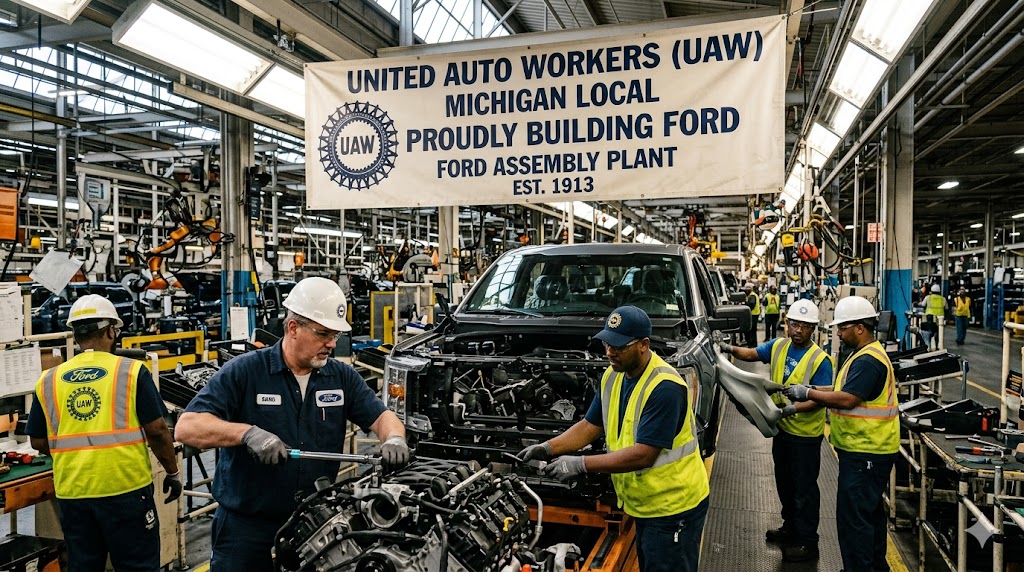
Simplified final assembly is the third piece, and it's less glamorous but arguably just as important. Automakers building EVs profitably at scale have generally rethought the assembly line sequence itself — how many major sub-assemblies come together, in what order, and with how many total workstations — rather than just trying to fit an EV drivetrain into a process designed decades ago for engines and transmissions. Ford's next-generation effort has been described in these general terms: fewer parts, fewer process steps, and a design philosophy that treats manufacturability as a first-order constraint rather than an afterthought.
Which Segments Ford Has Signaled Interest In
Ford has been more forthcoming about strategy than about specific products, but the company has pointed toward smaller, more affordable vehicle segments as the target for this new architecture — a deliberate contrast to the larger, more expensive Mach-E and Lightning. The broad direction suggested by Ford's own commentary points toward compact and mid-size body styles that could reach a lower price band than anything currently in Ford's electric lineup, potentially including truck-like or crossover-style vehicles built specifically to hit an affordable price point rather than to showcase maximum range or performance.
Readers should treat any specific nameplate, price, or range figure circulating online with real skepticism until Ford confirms it through official channels. Ford has been deliberately vague on exact specifics, and details in this kind of long-lead development program shift often between initial announcement and actual production. The safest read is that Ford intends to compete in a lower price tier than it currently occupies electrically, using the segments where affordability matters most to buyers.
A Dual-Track Strategy, Not an All-In Bet
One of the more important, and more defensible, aspects of Ford's approach is that it isn't abandoning its combustion and hybrid business to chase this EV reset. Ford has been explicit that gas and hybrid trucks and SUVs remain core to the company's near-term profitability, and that hybrid powertrains in particular are being expanded across the lineup as a bridge technology that customers are actually buying today. The next-generation low-cost EV platform sits alongside that business rather than replacing it.
This dual-track approach reflects a broader recalibration across the auto industry, where EV adoption timelines have proven slower and lumpier than many forecasts assumed just a few years ago. Ford's willingness to fund a long-term EV architecture bet while leaning on hybrids and combustion vehicles for near-term cash flow looks like a reasonably prudent hedge, rather than the more aggressive all-electric commitments some competitors made and later had to walk back.
Reasons for Skepticism
None of this guarantees success. Automakers have a long history of announcing ambitious cost-reduction platforms that slip in timing, fall short of their targets, or get quietly reshaped as market conditions change. Battery costs, raw material prices, tariffs, and government incentive structures can all move the economics of an affordable EV significantly between the time a platform is announced and the time vehicles actually reach dealer lots. Ford itself has already adjusted EV plans more than once in recent years in response to softer-than-expected demand, and there's no guarantee this next-generation program won't see similar schedule or scope adjustments.
The structural battery pack and parts-consolidation approach, while promising on paper, also carries execution risk. Vehicles built this way can be harder and more expensive to repair after a collision, a tradeoff that owners, insurers, and Ford's own dealer network will need to work through. And a skunkworks team, for all its speed advantages, still has to eventually integrate its work with Ford's existing manufacturing footprint, supplier base, and quality processes — a transition that has tripped up plenty of promising internal projects before.
The genuine reason for optimism is that Ford is at least diagnosing the right problem. Rather than assuming its first-generation EVs just needed marketing tweaks or incentive money, the company has acknowledged a fundamental cost structure issue and organized a team specifically to solve it from the ground up. That's a more credible starting point than most automaker EV pivots get. Whether it translates into an actual vehicle on sale at a genuinely competitive price, on anything like the timeline Ford has suggested, is something only the next couple of years will confirm — and anyone shopping in this segment should check Ford's official announcements for the latest confirmed details before making any decisions based on early reporting.
Key Takeaways
- Ford has publicly confirmed a dedicated, skunkworks-style team is developing a next-generation EV architecture focused specifically on lowering cost.
- The effort stems from real financial losses on first-generation EVs like the Mustang Mach-E and F-150 Lightning combined with growing pressure from lower-cost competitors.
- Lower-cost EV engineering generally centers on fewer parts, simplified wiring and electronics, structural battery packs, and streamlined final assembly rather than any single fix.
- Ford has signaled interest in smaller, more affordable body styles for this platform but has not confirmed specific nameplates, prices, or range figures.
- The strategy runs alongside, not instead of, Ford's continued investment in gas and hybrid trucks and SUVs, reflecting a hedged approach to uncertain EV demand.
- Bottom line: the direction is credible and the diagnosis of the cost problem is sound, but automaker cost-reduction promises have a mixed track record, so treat specifics as unconfirmed until Ford's official announcements land.