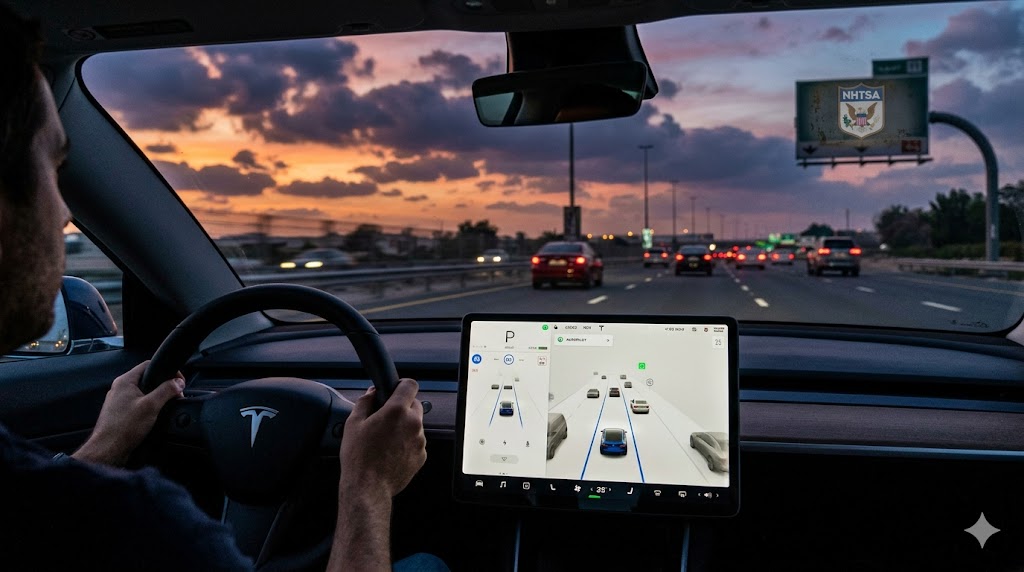
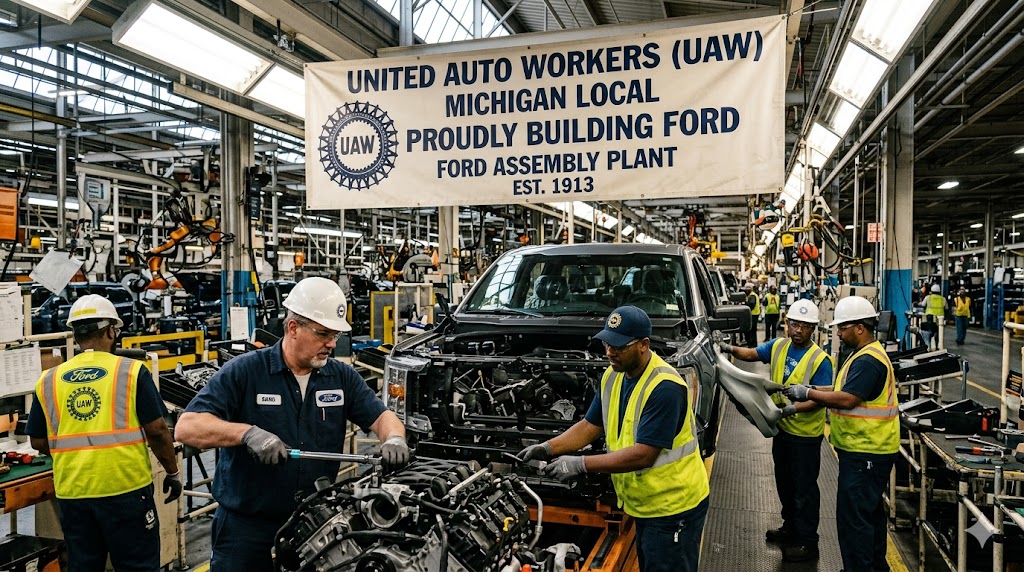
Walk the floor of an engine plant and you'll see why this debate exists. A traditional internal combustion engine is a small mechanical universe: a cast block, a crankshaft, pistons, valves, camshafts, a timing system, and a transmission bolted behind it with its own dense internal architecture of gears, clutches, and torque converters. Hundreds of precision-machined parts come together, and each one requires labor, whether from a person or a robot that a person still has to program, maintain, and feed. An electric drivetrain, by contrast, is startlingly simple: a battery pack, one or two electric motors, and a single-speed reduction gear standing in for what used to be a multi-speed transmission. Fewer parts means fewer assembly steps, and fewer assembly steps has always meant fewer labor hours per vehicle. That basic mechanical truth is the entire reason this is a live employment question rather than a settled one.
The Labor-Hour Gap Is Real, But It's Not the Whole Story
Industry analysts have long pointed out that EV powertrains require meaningfully less direct labor to assemble than ICE powertrains, simply because there is less physical complexity to assemble. No engine machining lines, no transmission sub-assembly, no exhaust and emissions-control hardware to integrate. If you only looked at the drivetrain in isolation, the conclusion would be straightforward: electrification shrinks the labor content of building a car. But a vehicle is not just a drivetrain, and a factory is not just a final assembly line. Bodies still need to be stamped and welded, interiors still need to be trimmed and installed, paint shops still run the same way regardless of what powers the wheels. The labor reduction is concentrated specifically in powertrain-related work, which means the overall effect on a given assembly plant's headcount is smaller than the drivetrain comparison alone would suggest, even though it is not zero.
This is where the conversation tends to get oversimplified in public debate. It's tempting to extrapolate straight from "EVs have fewer parts" to "the EV transition will shrink auto manufacturing employment," but that skips over where the new labor actually goes, and it skips over the fact that final assembly has never been the only place car-industry jobs live.
Gigafactories Create a New Job Category, With New Terms Attached
The most visible counterweight to the labor-hour gap is the sheer scale of battery manufacturing investment. Building lithium-ion cells at automotive volume requires large, capital-intensive plants, and those plants need workers to run electrode coating lines, cell assembly, module and pack integration, and quality testing. This is genuinely new manufacturing employment that did not exist in the ICE-only era, and in that sense electrification is not simply subtracting jobs, it is also creating a category that didn't exist before.
The nuance labor economists raise is about who fills these jobs and on what terms. Many battery plants are structured as joint ventures between automakers and battery manufacturers, which means they don't automatically inherit the wage scales, seniority systems, or union contracts that apply at legacy engine and transmission plants. Labor advocates have raised concerns that jobs at these new facilities can come with different pay structures and different bargaining relationships than the assembly and powertrain jobs they are, in effect, replacing in the broader employment picture. That doesn't mean the new jobs are bad jobs; it means they aren't automatically equivalent jobs, and the gap between "a job exists" and "a comparable job exists" is where much of the real debate lives. There's also a geographic dimension: battery plants are often sited based on access to raw materials, energy costs, logistics, and incentive packages, which doesn't always align with the location of the engine and transmission plants they're conceptually replacing. A worker's skill set and union seniority at a shuttered or downsized transmission plant doesn't automatically transfer to a battery plant several states away.
The Supplier Ecosystem Feels This More Than Final Assembly Does
If you want to find where electrification actually bites into employment, look past the automaker-owned assembly plant and into the vast supplier network that has spent decades building components an EV simply doesn't need. Companies that manufacture fuel injectors, exhaust systems, catalytic converters, transmission components, and the dozens of other parts specific to combustion powertrains face a more existential version of this transition than the automakers themselves. An assembly plant can often be retooled to build EVs on largely the same footprint with a different mix of labor; a company whose entire product line is a transmission component doesn't have an equivalent pivot available without fundamentally changing what it makes.
This is a critical distinction that gets lost when the conversation stays focused on automaker headcounts. The supplier tier is fragmented, less unionized in many cases, and more exposed to demand simply disappearing rather than shifting. Industry observers generally agree that this second- and third-tier supplier base is where employment disruption from electrification is most concentrated, even though it receives far less public attention than a headline about a single automaker's assembly plant.
The Pace of Transition Changes the Whole Calculus
None of this employment shift happens on a fixed timeline, and that matters enormously for how the impact actually unfolds. Earlier projections from several years ago assumed a faster, steeper adoption curve for EVs than what has actually materialized in a number of major markets. Consumer demand has been more uneven than forecast, charging infrastructure buildout has lagged in places, and automakers themselves have adjusted production plans and investment timelines in response, in some cases slowing planned EV output and leaning on hybrid models as a bridge technology. A slower transition doesn't eliminate the eventual employment question, but it does stretch it out, giving displaced supplier-tier workers, training programs, and regional economies more time to adjust than a rapid, compressed shift would allow. It also means that some of the more alarming employment projections built on faster adoption assumptions haven't yet been tested against reality, for better or worse.
This uncertainty cuts both ways in the debate. Slower EV adoption gives workforce transition planning more runway, but it can also mean that investment in new battery capacity and retraining programs proceeds more cautiously than optimists hoped, since automakers calibrate capital spending to the demand they actually see rather than the demand they once projected.
Why This Remains a Genuinely Open Question
What makes this topic difficult to resolve with a single verdict is that the net effect depends on variables that are still moving: how fast EV adoption actually climbs, how much battery production gets built domestically versus sourced from established overseas suppliers, whether new battery-plant jobs unionize and reach wage parity with the legacy jobs they're compared against, and how effectively supplier-tier companies and their workers adapt to a changed parts landscape. Labor economists studying this transition tend to avoid single-number predictions precisely because the inputs keep shifting. Anyone offering a confident, precise net-jobs figure for the EV transition is generally extrapolating further than the underlying data supports.
What can be said with more confidence is directional: final assembly employment is only modestly affected, powertrain-specific labor is meaningfully reduced, battery manufacturing is a real and growing offsetting category, the supplier ecosystem is the most exposed layer, and the terms of new battery jobs relative to legacy union jobs remain an active point of negotiation and concern rather than a resolved matter. Treating this as a settled story in either direction, whether "EVs will gut manufacturing jobs" or "battery plants will fully replace what's lost," overstates certainty that the industry itself doesn't yet have.
Key Takeaways
- EVs require fewer labor hours to assemble than ICE vehicles mainly because their drivetrains have far fewer components, but this affects powertrain-specific labor more than total assembly headcount.
- Battery gigafactories represent a genuine new category of manufacturing employment, partially offsetting losses elsewhere in the system.
- New battery-plant jobs, often structured as joint ventures, don't automatically match the pay, seniority, or union status of the legacy engine and transmission jobs they conceptually replace.
- The supplier tier making combustion-specific parts (fuel systems, exhausts, transmission components) faces more direct disruption than final vehicle assembly does.
- EV adoption has proceeded more slowly and unevenly than earlier projections assumed, stretching out the timeline over which this employment shift plays out.
- Bottom line: treat confident claims of a specific net job gain or loss from electrification with skepticism — the honest answer today is that the outcome depends on adoption speed, battery-plant labor terms, and supplier adaptation, none of which are yet settled.