Your car now has an IP address. It talks to satellites for navigation, to cell towers for emergency calls and remote diagnostics, to your phone over Bluetooth, and to the automaker's cloud servers every time it checks for a software update. A modern vehicle is no longer just a machine with an engine and a body — it is a rolling network of interconnected computers, and every one of those connections is a potential doorway. That shift is why cybersecurity has quietly become one of the most consequential engineering problems in the auto industry, on par with crash safety or emissions.
For most of automotive history, a car's vulnerabilities were mechanical: worn brake pads, a cracked timing belt, a rusted frame. You could see them, inspect them, and have a mechanic fix them. Digital vulnerabilities are different. They can be invisible to the owner, they can exist the moment the car leaves the factory, and they can potentially be exploited from a distance without anyone touching the vehicle. That is a genuinely new category of risk, one automakers are still learning to manage at scale.
Why Connectivity Creates a New Kind of Attack Surface
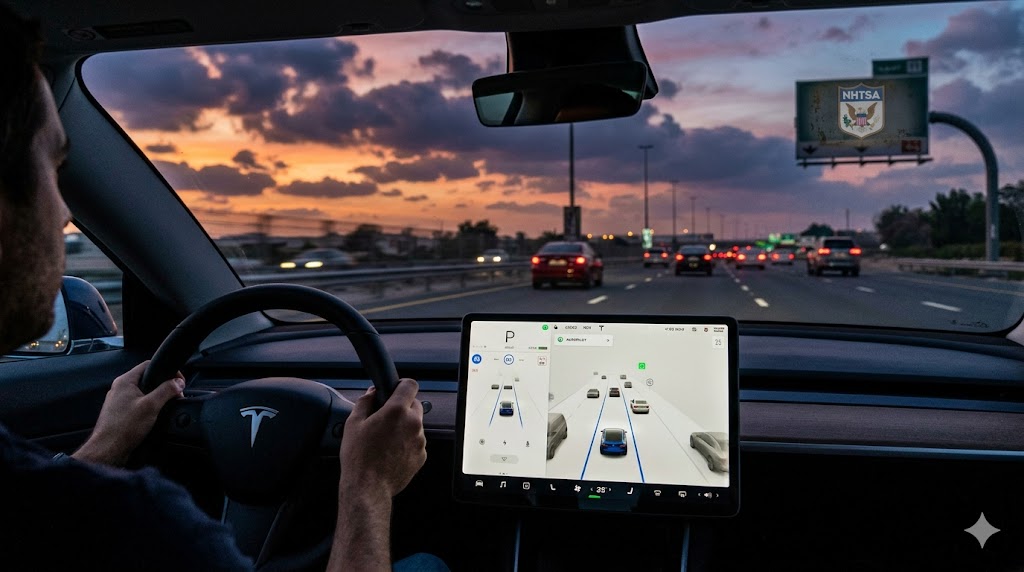
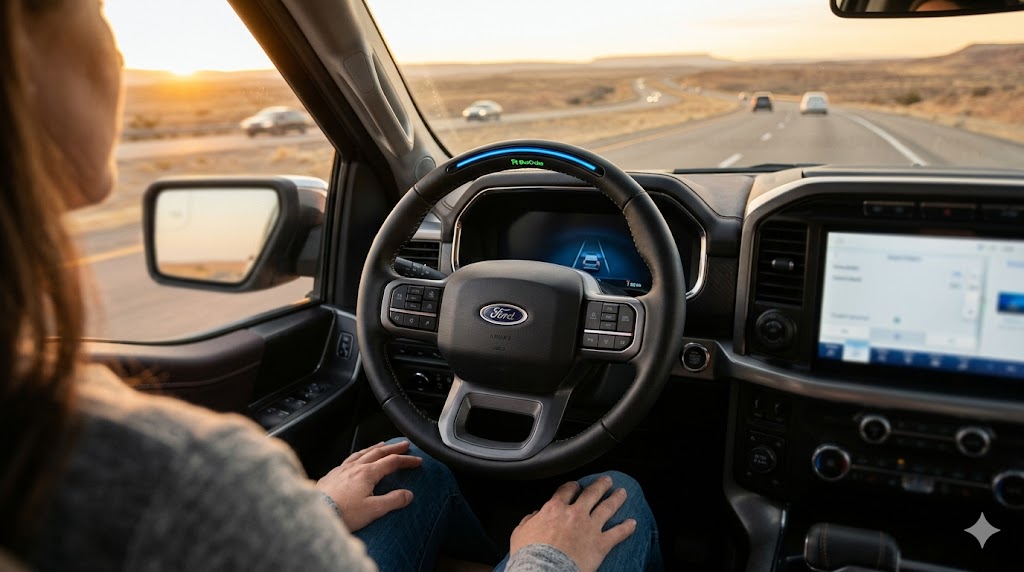
Think about everything in a contemporary car that sends or receives data. The telematics control unit maintains a near-constant cellular connection for features like automatic crash notification, remote start, and stolen-vehicle tracking. The infotainment system runs a full operating system, often connected to Wi-Fi and paired with your phone over Bluetooth, and increasingly it is bridged to safety-critical systems through the vehicle's internal network. Smartphone apps let you lock, unlock, locate, and even start your car from anywhere with a data signal, which means your car's security now depends partly on the security of your phone, your app credentials, and the automaker's backend servers.
Then there are over-the-air, or OTA, software updates, one of the signature features of software-defined vehicles. OTA updates let automakers patch bugs, add features, and fix safety issues without a dealership visit, a genuine improvement over the old model of recalls that required physical service appointments. But an update channel is also, by definition, a mechanism for pushing code into a vehicle remotely. If that channel isn't properly secured, authenticated, and encrypted, it becomes an attractive target, because compromising it doesn't just affect one car — it potentially affects every vehicle that trusts updates from that same source.
Layered on top of this is a supply-chain problem that's easy to underestimate. A vehicle's software stack is assembled from code written by the automaker, dozens of tiered suppliers, and third-party libraries, some of it open source. Nobody at the automaker has personally reviewed every line. A vulnerability introduced by a supplier two tiers down the chain can end up in millions of vehicles across multiple brands, since many automakers share suppliers for telematics hardware, infotainment platforms, and connectivity modules. That's precisely the kind of systemic exposure traditional automotive engineering, built around mechanical parts with well-understood failure modes, was never designed to catch.
What Real-World Attacks on Connected Cars Look Like
It helps to be concrete about what a compromised connected car actually enables, because the risks are more mundane, and more serious, than movie-style scenarios of someone seizing your steering wheel on the highway. The more realistic categories of concern involve unauthorized remote access to convenience functions: someone exploiting a flaw in an app's authentication to unlock a door, locate a vehicle in real time, or read out trip history and location logs without the owner's knowledge. Location data alone is sensitive — it can reveal where you live, work, and travel, and in the wrong hands it becomes a tool for stalking or theft rather than convenience.
Another category involves the vehicle's internal network. Modern cars use internal communication buses so different modules — brakes, steering assist, engine control, infotainment — can talk to each other. These buses were historically designed assuming anything already inside the car could be trusted, which made sense when the only way to access them was to physically wire into the vehicle. Connectivity breaks that assumption, because now there's a remote entry point, the infotainment or telematics unit, sitting on the same network as safety-relevant systems. Automakers have spent the past decade working to segment these networks and add gateways precisely because that architecture, left unaddressed, represents a real design weakness rather than a hypothetical one.
Weigh the benefits honestly too, because connectivity isn't purely a liability. Remote diagnostics let automakers and dealers spot developing mechanical problems before they strand a driver. Stolen-vehicle recovery systems have helped owners get cars back that would otherwise have vanished. OTA safety updates mean a defect discovered after production can sometimes be fixed overnight instead of requiring a physical recall visit, which historically has had frustratingly low completion rates. The trade-off is real on both sides: convenience and safety responsiveness weighed against expanded exposure.
Fleet-Wide Risk and the Software-Defined Vehicle
The industry is moving deliberately toward what's called the software-defined vehicle, where more functions are controlled by centralized computing platforms and updated through code rather than hardware changes. This consolidation brings real engineering benefits — fewer redundant control units, more consistent software quality, easier feature updates — but it also concentrates risk. Where older vehicles had dozens of relatively isolated electronic control units, each a small, separate target, newer architectures increasingly centralize control in a handful of powerful domain controllers connected to the cloud.
That centralization means a flaw in one widely used platform, or in the cloud backend managing an automaker's entire connected fleet, could theoretically have implications across far more vehicles than a flaw confined to a single component ever could. That's the essential difference between old-world and new-world automotive risk: a defective part might affect one production run of one model, but a vulnerability in a shared cloud service or common telematics module can, in principle, touch vehicles across an entire brand's lineup simultaneously. Automakers managing fleets through shared backend infrastructure are, in effect, also becoming operators of large-scale IT systems, with all the operational discipline that role demands.
Industry Standards and the Push Toward Baseline Security
The industry hasn't ignored this. ISO/SAE 21434 is the established joint standard covering cybersecurity engineering for road vehicles, laying out a framework for how automakers and suppliers should identify risks, build security into design from the start, and manage vulnerabilities throughout a vehicle's life rather than treating security as an afterthought. Separately, UNECE has cybersecurity regulations tied to vehicle type approval in a number of markets, requiring automakers to demonstrate a functioning cybersecurity management system before certain vehicles can be sold. The details of scope and enforcement vary by market and continue to evolve, so it's worth checking current published guidance rather than assuming uniform global rules.
What matters for you as a driver is less the standard's name and more what it represents: an acknowledgment that vehicle cybersecurity now needs the same structured, lifecycle-long discipline automakers already apply to crash safety. OTA patching capability is central to that shift, giving automakers a way to respond to newly discovered vulnerabilities without waiting for a model refresh. But a patching pipeline is only as good as the automaker's ability to detect problems quickly and push fixes reliably, and consumers generally have limited visibility into how rigorously any given automaker runs that process. No connected system, in cars or anywhere else, is perfectly secure, and the honest position is that this is a continuously managed risk rather than a problem that gets permanently solved.
What This Means for You as a Buyer or Owner
You aren't helpless here, even without deep technical expertise. Keep your vehicle's software and companion app updated promptly, since patches often close known gaps. Use strong, unique credentials for any automaker app tied to your car, and enable multi-factor authentication where it's offered, since app account security is now effectively part of your car's security. When shopping, it's reasonable to ask a dealer or check an automaker's published materials about how long software support and security updates are guaranteed for a given model, the same way you'd ask about a warranty. Connectivity isn't going away, and for most drivers the convenience and safety benefits are worth keeping — but treating your car's digital systems with the same basic hygiene you'd apply to a laptop or smartphone is no longer optional.
Key Takeaways
- Connected vehicles introduce a genuinely new risk category because telematics, infotainment, apps, and OTA update channels create remote attack surfaces that mechanical-era cars never had.
- Supply-chain software shared across suppliers and brands means a single flaw can potentially affect vehicles well beyond one model or manufacturer.
- The realistic risks today center on unauthorized remote access, location and data privacy exposure, and weaknesses at the boundary between infotainment and internal vehicle networks, not dramatic real-time takeovers.
- The industry's shift toward centralized, software-defined vehicle architecture and cloud-connected fleets raises the stakes of any single vulnerability.
- Standards like ISO/SAE 21434 and UNECE type-approval cybersecurity rules push automakers toward lifecycle security management, but consumers have limited visibility into how well any given automaker actually executes it.
- Bottom line: enjoy the real convenience and safety benefits of a connected car, but keep its software and app accounts updated and secured, and treat vehicle cybersecurity as an ongoing responsibility shared between you and the automaker, not a solved problem. �������������������������������������������������������������������������������������������������������������������������������������������������������������������������������������������������������������������������������������������������������������������������������������������������������������������������������������������������������������������������������������������