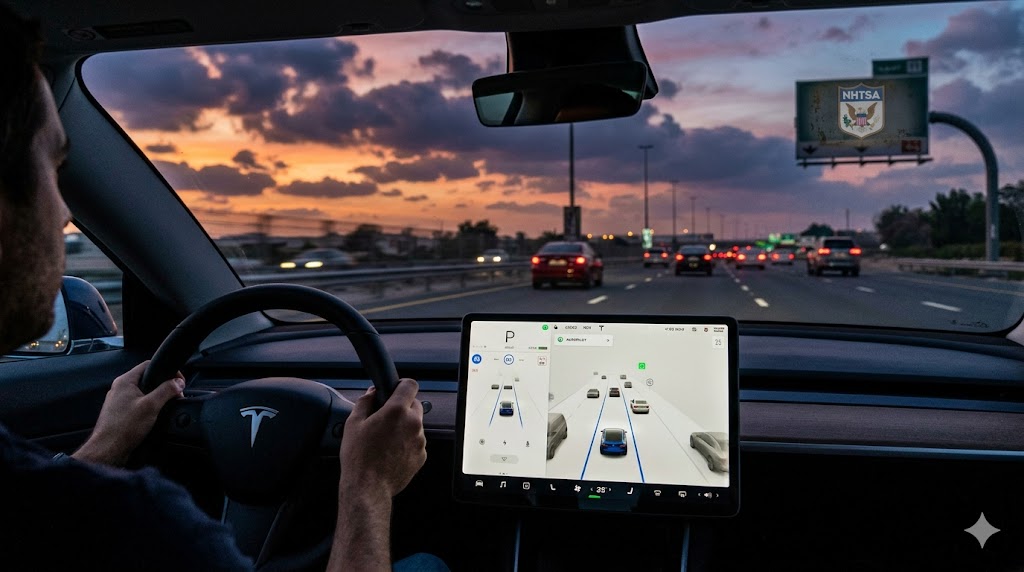
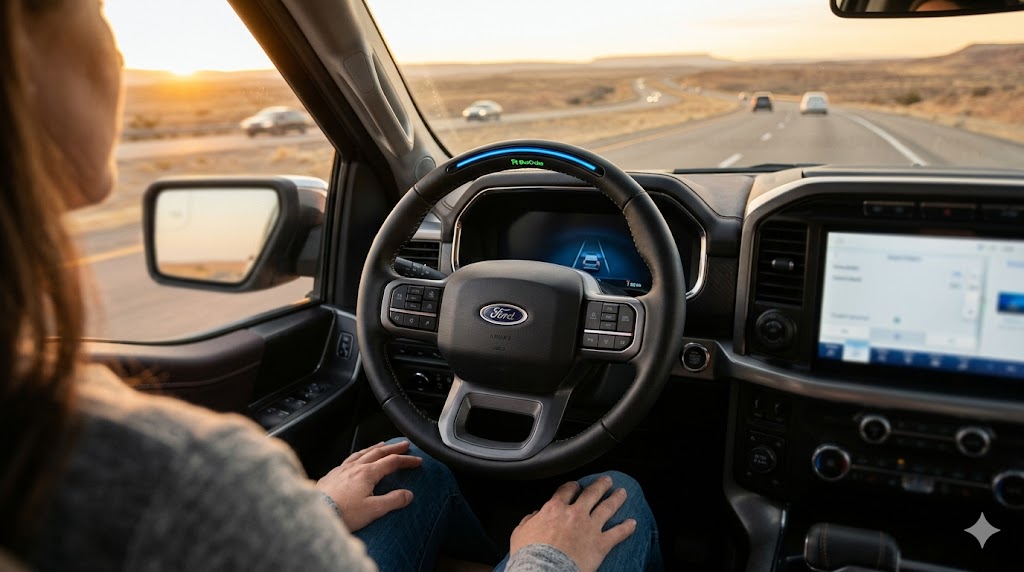
Drive a self-driving test vehicle across the Arizona-California border and, legally speaking, you've crossed into an entirely different regulatory universe. Nevada, Texas, and a dozen other states have their own rulebooks too. Meanwhile, the agency actually responsible for vehicle safety standards nationwide, the National Highway Traffic Safety Administration, still doesn't have a comprehensive rulebook written specifically for cars that drive themselves. This is not an oversight. It's the current state of American autonomous vehicle policy: a slow, uneven, and often contentious assembly of state permits, federal exemptions, and congressional attempts that have gone nowhere for years. Understanding how this framework is forming, piece by piece, matters more than tracking any single company's robotaxi launch, because the rules ultimately determine which companies survive, which cities get service first, and how much the public is told when something goes wrong.
Why States Got There First
The reason autonomous vehicles are regulated so unevenly traces back to a basic division of authority that predates self-driving technology by decades. The federal government, through NHTSA, sets safety standards for how vehicles are built — things like crash performance, braking systems, and equipment requirements. States, through their departments of motor vehicles, regulate who can drive and how vehicles operate on public roads — licensing, insurance, traffic law, and registration. Autonomous vehicles sit awkwardly across that line, because the "driver" is now software, and nobody had to write rules for that scenario before roughly the last decade.
States moved first simply because they could. California built out one of the most detailed frameworks in the country, splitting oversight between the DMV, which handles testing and deployment permits for the vehicles themselves, and the California Public Utilities Commission, which regulates any commercial passenger service, such as a robotaxi fleet charging fares. That division means a company can get a testing permit from one agency and still need separate authorization from another before it can charge the public a dime. Arizona took a different approach, courting AV developers with a comparatively light-touch permitting process that helped it become an early hub for testing, including in the years right after Waymo's predecessor program moved much of its real-world validation there. Texas has similarly positioned itself as welcoming to testing and deployment, with fewer preconditions than California, while Nevada was among the very first states to pass legislation explicitly authorizing autonomous vehicle operation. The result is that a company's rollout strategy today is shaped as much by which state's rules it can work with as by where the technology performs best or where demand exists.
NHTSA's Narrow but Real Role
Federal involvement hasn't been absent, just structurally limited. NHTSA's core job is writing and enforcing Federal Motor Vehicle Safety Standards, and many of those standards were written with the assumption that a human sits behind a wheel, uses pedals, and can see out a windshield. A vehicle designed without a steering wheel doesn't neatly comply, which is why NHTSA maintains an exemption process that allows manufacturers to petition for permission to deploy vehicles that depart from conventional design, provided they can demonstrate an equivalent level of safety. This exemption pathway has become one of the more consequential levers the federal government holds, because it's the closest thing to a federal gatekeeping function for genuinely novel AV designs, as opposed to vehicles that merely add self-driving software to an otherwise conventional car with a wheel and pedals still in place.
NHTSA also polices the technology after the fact, through its defect investigation and recall authority, and it has used that authority against advanced driver-assistance and automated driving systems when crash patterns raised concerns. That is meaningfully different from proactive rulemaking, though. The agency responds to problems that have already surfaced in the field rather than certifying, in advance, that a given autonomous system meets a defined federal bar for safe operation. Industry participants have pushed for NHTSA to modernize its safety standards more explicitly around automated systems, and the agency has undertaken incremental steps in that direction, but a full rewrite of the vehicle safety code for the AV era has not happened. That gap is precisely what keeps pulling states back into the driver's seat, so to speak, and it's the underlying tension that any discussion of a "federal AV framework" has to reckon with.
Congress Keeps Trying and Keeps Stalling
For years, members of Congress from both parties have introduced legislation aimed at creating a uniform national approach to autonomous vehicles, generally seeking to preempt the current state patchwork with a single federal standard for testing, deployment, and exemption caps. These efforts have repeatedly cleared initial committee stages or even passed one chamber, only to stall before becoming law. The recurring sticking points are familiar to anyone who follows transportation policy: how many exemption vehicles per manufacturer should be allowed before full compliance is required, what safety data companies must report and how publicly, how liability should be assigned in a crash involving an automated system, and whether state and local governments should retain the power to restrict or ban AV operation within their own jurisdictions even under a federal framework.
Safety advocates have generally pushed back on proposals they see as expanding exemption numbers too quickly without corresponding transparency requirements, while manufacturers and technology developers have argued that the current 50-state approach imposes duplicative costs and slows deployment of vehicles that could, in aggregate, reduce crashes caused by human error. Neither side has had enough leverage to force a compromise through a full legislative session, and that stalemate has now persisted long enough that it shapes corporate planning as its own kind of certainty: companies assume comprehensive federal legislation is not imminent and build their compliance strategies around the existing state-by-state and exemption-based system rather than waiting for Washington to simplify it.
The Case for a National Standard
The argument for federal preemption is straightforward and, on its face, persuasive. A company trying to deploy the same vehicle in California, Texas, Arizona, and a handful of other states currently has to satisfy overlapping but distinct permitting regimes, each with its own reporting requirements, insurance minimums, and definitions of what counts as a qualifying automated driving system. That duplication is expensive, and the expense falls hardest on smaller developers who can't spread compliance costs across a large fleet the way an established player can. A single federal standard, proponents argue, would let engineering and safety validation work double as regulatory compliance nationwide, accelerating deployment of vehicles that, according to most safety research on human driving error, could meaningfully reduce a category of crashes tied to distraction, impairment, and fatigue.
There's also a competitiveness argument that shows up frequently in industry lobbying: other countries and blocs, including parts of the European Union and China, have moved toward more centralized regulatory approaches for automated vehicles, and a fragmented US market is sometimes framed as a disadvantage in a global race for AV leadership. Whether that framing holds up is debatable, but it has real currency in Washington policy conversations.
The Case for Letting States Lead
The counterargument isn't just bureaucratic inertia. States closer to the roads in question have historically been faster and more willing to experiment than a federal agency writing rules meant to apply uniformly from Alaska to Florida. California's more cautious, multi-agency approach reflects genuine public concern in a state where AV testing has been most visible and, at times, most controversial, including incidents involving stalled robotaxis blocking emergency vehicles or confusing city traffic patterns. Allowing California, or any state, to impose tighter reporting and operational rules than a federal floor would require is a feature for people who want their local government responsive to local incidents, not a bug.
There's also a practical safety argument for keeping some authority local: disengagement reports, crash data, and operational design domain restrictions filed with a state DMV are, in several cases, more detailed and more publicly accessible than what companies are required to disclose to NHTSA. A federal standard that preempted state authority without replicating that transparency could, in practice, reduce the information available to the public and to safety researchers, even if it made life easier for manufacturers. The honest version of this debate isn't innovation versus obstruction; it's about which level of government the public trusts to demand accountability when a driverless vehicle behaves unpredictably on a street near their home.
What a Real Framework Would Need to Resolve
Whatever shape federal AV policy eventually takes, it will have to answer a handful of unresolved questions that current rules dodge rather than settle. Liability remains murky when an automated system, not a human, makes the decision that leads to a crash, and insurance frameworks built around human fault haven't fully caught up. Standardized, mandatory safety reporting — covering disengagements, near-misses, and crash data in a consistent format across manufacturers — doesn't yet exist at the federal level, which makes it difficult for regulators or the public to compare how safely different companies' systems actually perform. And the exemption process at NHTSA, while functional, was never designed to scale to the number of purpose-built autonomous vehicles that companies plan to deploy over the coming years, which means the current mechanism may simply run out of runway before Congress acts.
None of this means the system is failing outright. It means the policy framework is being built the way American regulation often gets built: reactively, unevenly, and through the accumulation of state experiments and federal patchwork fixes rather than a single decisive law. That process is frustrating for companies trying to plan a national rollout, but it has also meant that the states most exposed to AV testing have developed real expertise and real public accountability mechanisms that a rushed federal law might not have replicated on the first attempt.
Key Takeaways
- Autonomous vehicle regulation in the US is currently a patchwork, with states like California, Arizona, Texas, and Nevada setting their own testing and deployment rules.
- NHTSA's authority is real but narrow, centered on vehicle safety standards, an exemption process for non-conventional AV designs, and after-the-fact defect investigations rather than proactive AV-specific rulemaking.
- Congress has repeatedly attempted comprehensive federal AV legislation, but efforts have stalled over disputes on exemption caps, safety data transparency, and liability rules.
- Industry groups generally favor a single national standard to cut compliance costs and speed deployment, while safety advocates and some states favor retaining local authority for accountability and transparency.
- State-level programs currently produce more detailed public safety data in some cases than federal requirements demand, complicating arguments that federal preemption alone would improve outcomes.
- The bottom line: expect the current mix of state permits and federal exemptions to persist for the foreseeable future, with incremental adjustments far more likely than a single sweeping federal law.