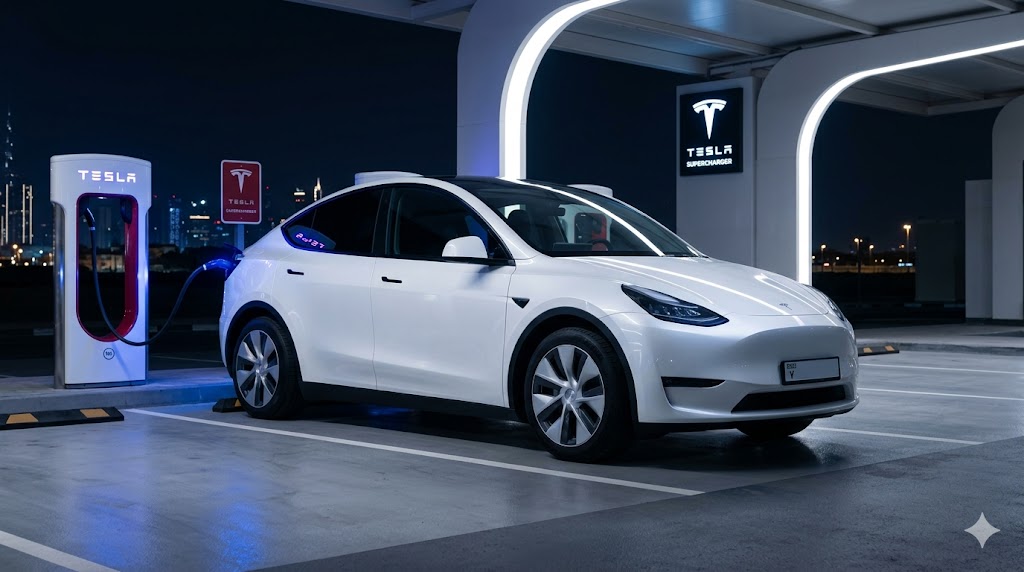
Pull up to a gas pump and the worst-case scenario is usually a card reader that wants you to go inside and pay the attendant. Pull up to a public EV charger and the worst-case scenario is a blank screen, a payment system that won't authorize, a plug that clicks in but never starts a session, or a stall that's simply been out of service for weeks with no signage warning you in advance. Both experiences are "refueling," but only one of them has a reliability problem serious enough that drivers routinely plan a backup charger before committing to a stop. That gap is real, it's well known among EV owners, and it's worth understanding why it exists rather than just accepting it as an inherent limitation of electric vehicles.
The honest answer is that the unreliability isn't really about electricity or batteries at all. It's about the maturity of an entire service industry that gasoline retailing spent nearly a century building out, standardizing, and stress-testing, compressed into a much shorter runway for charging infrastructure.
The Gas Station Model Solved Reliability Through Repetition and Standardization
A gasoline pump is a mechanically simple device performing one job it has done, in essentially the same form, for generations. The payment systems, the nozzle standards, the maintenance routines, and the regulatory inspections around fuel dispensing are all mature and largely uniform across brands and regions. When something does break, the fix is well understood because thousands of technicians have seen the same failure before. None of that happened by accident — it happened because the industry had decades to converge on shared standards and because the underlying task, moving liquid fuel through a hose, is mechanically forgiving.
Public charging equipment, by contrast, is a network of connected hardware and software: payment processors, cellular or Wi-Fi connectivity for the station to report its status, a screen and touch interface, power electronics that have to negotiate a charging session with the vehicle's own onboard computer, and often a backend cloud system that has to stay in sync with all of it. Every one of those layers is a separate point of failure, and unlike a mechanical pump, many of those failures are invisible until a driver actually tries to plug in. A screen can go dark, a network connection can drop, or a session can fail to authorize, and none of it is obvious from across the parking lot the way a "temporarily out of order" bag over a gas nozzle is.
Hardware Diversity Has Made Maintenance Harder Than It Needed to Be
Unlike gas pumps, which are mechanically almost interchangeable across brands, public chargers have historically come from many different manufacturers, running different software, using different connector standards, and maintained by different operators with varying levels of investment in field service. A technician qualified to fix one manufacturer's hardware often can't service another's, which fragments the pool of people capable of doing repairs and slows down response times when something breaks. A station operator managing a mixed fleet of equipment from several vendors is effectively running several different maintenance operations at once, each with its own quirks and parts inventory.
This fragmentation compounds with a second factor: many charging stations, especially older installations, were deployed with less redundancy than gas stations typically have. A gas station with one broken pump still has several working ones and an attendant to flag the problem. Some charging locations have historically been installed in smaller clusters, so a single hardware or network fault can take out a meaningful share of the site's total capacity, and there isn't always staff on-site to notice or respond quickly.
Payment Friction Is Its Own Reliability Problem
Even when the hardware itself is functioning, payment has been a persistent sore spot. Where a gas pump accepts a simple card swipe or tap that has worked reliably for decades, some charging stations have required a dedicated network app, a account sign-up, or a proprietary RFID card, layering extra points of failure onto a transaction that should be simple. A driver whose phone has no signal in a parking garage, or whose app hangs during authorization, experiences that as a broken charger even if the actual power electronics are fine. The industry has recognized this as a genuine adoption barrier, not just an inconvenience, and it's one of the more visible fronts where change has been happening.
What's Actually Changing: Standardization, Reporting, and Redundancy
The most significant industry-wide shift in recent years has been the move toward a more unified charging connector standard across the North American market, following widespread adoption of what was originally a single automaker's proprietary connector as a shared standard adopted more broadly across the industry. Standardizing the physical connector doesn't fix software or payment reliability on its own, but it reduces one major source of fragmentation and makes it more realistic for automakers, charging networks, and equipment makers to build toward common expectations rather than maintaining parallel hardware ecosystems indefinitely.
Alongside that, there's been a broader push toward reliability reporting and accountability. Various industry groups, government-funded infrastructure programs, and individual charging networks have begun publishing or committing to publish uptime and functionality data, and some funding programs now attach reliability requirements to the public money that helped build the stations in the first place. The specifics vary by program and are still evolving, but the direction is consistent: treating charger uptime as a metric that should be measured and disclosed rather than something drivers just have to discover for themselves in a parking lot.
Charging network operators have also been investing in better field maintenance practices, including more proactive remote monitoring that can flag a failing station before a driver ever encounters it, rather than waiting for a customer complaint to trigger a repair ticket. Some newer station deployments are being built with more redundant stalls per site and simpler, more standardized payment options, including plug-and-charge style systems that authorize automatically without requiring an app or card at all. None of these fixes happen instantly across a national network built over the better part of two decades, but the trend across new installations and network upgrades is clearly toward fewer points of failure rather than more.
The Gap Is Narrowing, Not Closed
None of this means charging reliability has caught up to the gas pump, and it would be misleading to suggest otherwise. Drivers on unfamiliar routes still benefit from having a backup station in mind, and "the app showed it as available" is not yet a guarantee the way "the gas station is open" almost always is. But the reasons behind the gap are structural and addressable rather than some permanent ceiling on what electric charging can achieve. Standardizing connectors, requiring and publishing reliability data, building redundancy into new sites, and simplifying payment are all the kinds of unglamorous, incremental fixes that eventually solved reliability problems in plenty of other infrastructure categories, and there's no fundamental reason charging should be the exception.
What This Means for You as a Driver Right Now
In practice, this is a reason for cautious optimism rather than either panic or complacency. If you're planning a trip today, it still makes sense to have a backup charger in mind and to lean on crowdsourced status reports rather than trusting a single data source blindly. But it's also fair to expect the experience to keep improving meaningfully year over year, because the industry has correctly identified reliability as the single biggest obstacle to broader EV adoption and is allocating real attention and investment toward closing it.
Key Takeaways
- Charging reliability lags gas pumps mainly because charging stations are networked electronic systems with far more points of failure than a mechanically simple fuel pump.
- Hardware and software fragmentation across charger manufacturers has made maintenance slower and less standardized than the gas station model.
- Payment friction — apps, accounts, proprietary cards — creates failures that look identical to broken hardware from the driver's seat.
- Connector standardization across the industry is reducing fragmentation and pushing the market toward more unified expectations.
- Reliability reporting requirements and better remote monitoring are pushing operators to catch and disclose failures before drivers encounter them.
- Bottom line: the reliability gap is real today but is shrinking due to identifiable, ongoing industry fixes, so keep a backup charger in mind while expecting steady improvement.