Pop the hood on a used electric car and you will find almost nothing to inspect. No dipstick to pull, no belts to squeeze, no exhaust note to listen for hints of a tired engine. That absence isn't a shortcut — it's a trap for anyone who walks into a used EV purchase carrying the same mental checklist they used on their last gas car. The entire due-diligence process shifts. The transmission fluid check, the compression test, the exhaust smoke inspection — all of that institutional knowledge built up over decades of buying used cars becomes mostly irrelevant. What replaces it is a much narrower, much more consequential set of questions, and if you only remember one thing from this guide, make it this: battery health is the single factor that determines whether a used EV is a smart buy or an expensive mistake, and it is invisible to the naked eye.
That last part is what trips people up. A used EV can look immaculate, smell new, have a spotless interior and a glowing CarFax, and still be hiding a battery pack that has lost a meaningful chunk of its usable capacity. Unlike an engine, which announces its problems through noise, vibration, smoke, or a check-engine light tied to decades of standardized diagnostic codes, a battery pack degrades quietly. The car still starts. It still drives. It just doesn't go as far as it used to, and there's no dashboard warning that says "you've lost a noticeable percentage of your original range." Skipping the battery check is, without much competition, the single biggest mistake a used EV buyer can make.
Why Battery Degradation Changes Everything
Every lithium-ion battery pack loses some capacity over time — that's chemistry, not a defect. The question for a used-car buyer isn't whether degradation happened, it's how much, and whether the number is normal for the car's age and mileage or a sign that something went wrong along the way. The encouraging news, borne out by several years of real-world fleet data now that EVs have been on the road long enough to study, is that most battery packs are holding up better than early skeptics predicted. Modern battery management systems, improved thermal regulation, and more sophisticated cell chemistry have made catastrophic degradation far less common than the doom-laden headlines from the early 2010s suggested.
But "most batteries age gracefully" is a fleet-wide statistic, not a guarantee about the specific car in front of you. Individual vehicles can absolutely have been treated poorly by a previous owner, and the range of outcomes across otherwise-identical cars can be wide. This is precisely why you can't extrapolate from a test drive. A short spin around the block will tell you how the car accelerates and handles, but it will not reveal whether the pack has quietly lost a significant slice of its original capacity. Range estimates displayed on the dashboard are notoriously optimistic and can shift with temperature, driving style, and recent charging patterns, so they're not a reliable proxy for genuine state-of-health either. You need a real number, and getting one requires more than a glance at the instrument cluster.
How Charging Habits Shape the Battery You're Buying
The way a previous owner charged the car matters just as much as how many miles they drove. Battery chemistry responds to heat and stress, and certain charging patterns accelerate wear more than others. Frequent reliance on DC fast charging, for instance, pushes more current into the cells in a shorter window than a slower Level 1 or Level 2 home charge, and repeated fast-charging sessions — especially in hot climates or on a car without robust thermal management — can contribute to faster capacity loss over time compared with a car that was charged gently at home most nights.
Storage habits matter too. A battery that spent long stretches sitting at a very high state of charge, or was routinely run down to near-empty and left there, tends to experience more stress than one kept in a moderate charge range day to day. None of this means a fast-charged or hard-driven EV is automatically damaged goods — plenty of high-mileage, fast-charging-heavy EVs still test out fine. It means charging history is a genuine variable worth asking about, not a formality. A previous owner who used the car primarily as a long-distance highway commuter with frequent fast-charging stops has put different stress on the pack than a suburban driver who plugged in at home every night and rarely left the local area, even if their odometers land on the same number.
Verifying Battery Health Before You Buy
Talk is one thing; verification is another, and this is where the actual legwork of a used EV purchase happens. Start by asking the seller or dealer whether a manufacturer battery health report is available — many automakers now offer some form of diagnostic readout, often accessible through the car's infotainment system, a dealer service visit, or a manufacturer app, that estimates the pack's remaining capacity relative to when it was new. If the seller can't produce one, treat that as a prompt to get one yourself before finalizing the deal, not as a reason to skip the step.
Independent, third-party inspection services have also grown up around this exact need, offering battery diagnostic scans that plug into the vehicle and pull state-of-health data directly from the battery management system. These services exist precisely because buyers can't assess pack condition visually, and paying for one is a small cost relative to the price of the car and the risk of buying a degraded pack unknowingly. It's the EV equivalent of a pre-purchase mechanical inspection, and treating it as optional defeats the purpose of shopping carefully.
Just as critical: check the remaining battery warranty. Automakers typically cover battery packs against excessive degradation for a set number of years or miles, whichever comes first, but exact terms vary considerably by manufacturer and model year, and coverage details have shifted over time as the technology has matured. Don't rely on general assumptions — look up the specific warranty terms for the exact model year you're considering, confirm how much of that coverage window remains, and understand what threshold of capacity loss would actually trigger a warranty replacement. A car still comfortably inside its battery warranty period carries meaningfully less risk than one that just aged out of coverage.
Charging Equipment, History, and Compatibility
Beyond the pack itself, look closely at what comes with the car and how it fits into your actual charging routine. Confirm which charging cable is included — a portable Level 1/Level 2 unit, a proprietary fast-charging adapter, or nothing at all if the previous owner kept their home equipment. Missing cables are a real out-of-pocket cost, so factor that into your offer if the car arrives without one.
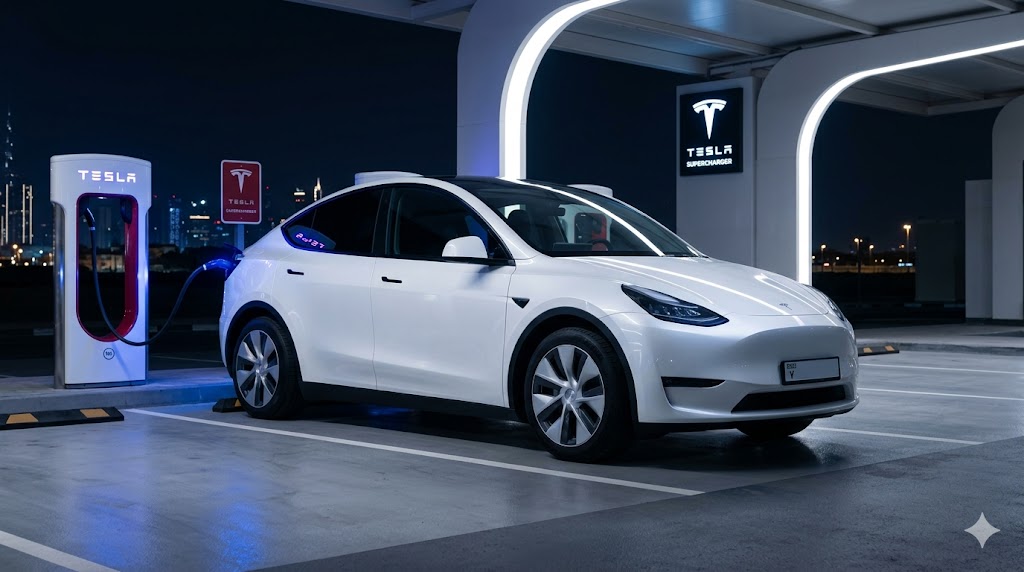
Connector type deserves attention too, particularly for road-trip planning and fast-charging network compatibility. Charging standards and adapter requirements have been in flux industry-wide, and what plugs in easily at a given fast-charging network today may require an adapter — or may not be supported at all — depending on the car's connector and the charging network's hardware. Check current compatibility for the specific model before assuming you'll have frictionless access to the fast-charging network near you. If you plan to charge primarily at home, verify that your existing home charger, or the one you intend to install, matches the car's onboard charging capability, since pairing a slow onboard charger with an expensive high-output home unit wastes money without speeding up your charging times.
Software, Subscriptions, and Ecosystem Handoff
The last category that has no real analog in gas-car shopping is software. Many EVs gate certain features — enhanced driver-assistance functions, premium infotainment services, even some connectivity features — behind subscriptions that may or may not transfer to a new owner, and terms vary by automaker. Ask directly whether any features the car currently displays are subscription-dependent, whether that subscription is active or lapsed, and what it costs to reactivate if you want it.
Equally important is making sure the previous owner's account is fully disconnected from the vehicle. Many EVs link to an owner's phone-based app account for remote start, climate preconditioning, location tracking, and even software updates. If that account isn't properly removed during the sale, you can end up with reduced functionality, delayed access to manufacturer updates, or an awkward situation where a stranger's app retains some visibility into your car. Work with the seller and, if needed, the manufacturer or dealer, to complete a proper account transfer as part of the sale. Finally, confirm the vehicle is still within its window for receiving manufacturer software updates, since some updates address battery management, charging efficiency, and safety features — an EV that's fallen out of the update cycle may be missing improvements that a newer example of the same model already has.
Key Takeaways
Used EV shopping requires an entirely different checklist than used gas car shopping, since there's no engine or transmission to inspect the traditional way. Battery degradation is the central risk, and it cannot be assessed by eye, by test drive, or by trusting the dashboard's range estimate. Most EV batteries are aging better than early skeptics predicted, but individual cars can still have been treated harshly, so a clean-looking used EV can still hide meaningful range loss. Insist on a manufacturer battery health report or a third-party diagnostic inspection, and check the remaining battery warranty terms for that specific model year before you buy. Ask about charging history, confirm which charging cables are included, and verify connector compatibility with your home charger and preferred fast-charging network. Bottom line: skipping the battery health check is the single biggest mistake you can make when buying a used EV, so treat it as non-negotiable, not optional.