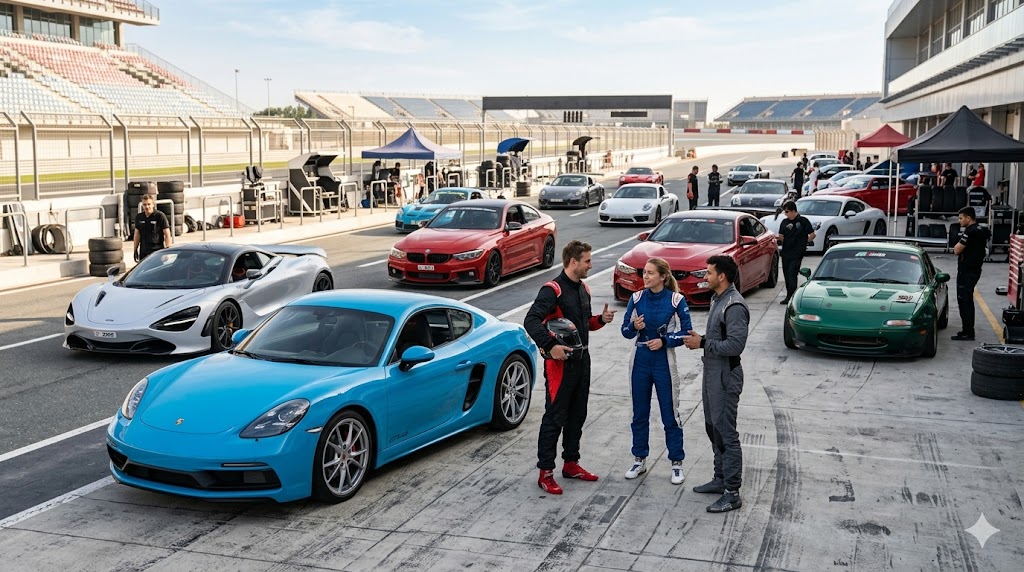

The first track day is almost always different from what the driver imagined beforehand. The fantasies involve late braking, opposite-lock slides, and the sensation of driving at the absolute limit of a car's capability. The reality, at least in the first session, involves driving more slowly than you thought you would, learning that you don't know where you brake for Turn 3, and discovering that the other drivers on track are paying considerably less attention to what you're doing than your self-consciousness suggested.
This is not a criticism of the experience - the gap between expectation and reality is useful information, and the process of closing it is the track day's actual value proposition. Understanding what actually happens helps first-time participants get more from the day rather than spending half of it managing the difference between expectation and experience.
High Performance Driving Events, organized by car clubs, manufacturers, and independent organizations, operate on a structured format that prioritizes safety and learning over raw speed. First-time participants are placed in the novice run group, which typically runs on the track with instructors in the passenger seat for at least the first session. The instructor's job is not to make you go faster - it's to show you the correct line, the braking zones, and the car's limits in a sequence that builds confidence over multiple sessions.
The car preparation requirements for most HPDEs are modest. Fresh brake fluid, adequate brake pad material, tires within their wear limits, and fluids filled to correct levels are the typical minimums. Many events require removing floor mats and loose items from the interior. Helmet requirements vary by event and organization - some provide loaners, others require drivers to source their own. A Snell M2015 or M2020-rated motorcycle helmet is accepted at most HPDEs and provides a lower-cost entry point than HANS-device-compatible auto helmets.
Brake pads wear faster on track than on the street. If your car is equipped with softer street pads, plan for a pad change within a session or two of hard use. High-performance street or entry-level track pads - EBC Orangestuff, Hawk HPS, or equivalent - provide better fade resistance than standard street pads at modest cost. Brake fluid should be fresh DOT 4 or better; stock fluid in most cars absorbs moisture over time, which reduces its boiling point and creates the spongy pedal feel that degrades braking confidence under hard use.
The most important mental preparation is accepting that your first session's goal is learning the track layout rather than going fast. The drivers who try to set fast times in their first session without knowing the braking zones are the drivers who make mistakes. The drivers who focus on learning the track and building their understanding systematically improve faster and have more fun.
Summary
What it is: A practical guide for first-time track day participants covering event structure, car preparation requirements, and the realistic expectations that help beginners get the most from their first HPDE.
Best for: Street drivers considering their first track day experience who want an honest preview of what to expect and what preparation is actually necessary.
Biggest cost/risk factor: Brake fade from inadequate pad and fluid preparation; attempting speeds beyond track knowledge before the layout is learned.
When to act: Register for a club or manufacturer event near you - most have beginner-specific run groups and provide instruction that removes the experience barrier.
AutosAdvisor is not a certified driving instructor. Track driving carries inherent risk. Instruction from qualified instructors at approved events is the appropriate pathway for developing track driving skills.