Hook up a loaded trailer to an electric vehicle and you'll learn a truth combustion owners rarely think about: towing is the single most punishing thing you can do to a battery pack. Wind resistance from a trailer box, the added rolling mass, and the constant power draw of hauling weight uphill can cut an EV's usable range dramatically compared to its unloaded rating. That doesn't mean towing with an EV is a bad idea. It means the question in the headline deserves a real answer instead of a marketing footnote, because the gap between "can tow" and "tows well" is enormous in this category.
The short version is that a handful of electric trucks and SUVs are engineered from the ground up with towing as a core use case, while most electric sedans and crossovers either can't tow at all or are only rated for light-duty loads like a small utility trailer or a couple of jet skis. Trucks such as the Ford F-150 Lightning, Rivian R1T, and Chevrolet Silverado EV were designed alongside their gas-powered towing missions in mind, and SUVs like the Rivian R1S, Tesla Model X, Kia EV9, and Volvo EX90 were built with trailer hitches and load ratings as a stated feature rather than an afterthought. Compare that to something like a Tesla Model 3 or Hyundai Ioniq 6, which either lack a factory tow rating entirely or cap out at a level suitable only for bikes or a small camper shell. If towing matters to you, the body style you're shopping in narrows the field before you even look at a spec sheet.
Why Towing Hits EVs Differently Than Gas Trucks
A gasoline truck towing a trailer sees its fuel economy drop, sometimes by half, but the truck still has a wide operating range and the convenience of a five-minute refuel at nearly any exit. An EV towing the same load sees a proportionally similar or worse hit to its efficiency, but that hit lands on a battery that already has a fixed, finite range and a recharge process measured in tens of minutes rather than minutes. Aerodynamic drag scales with the frontal area of whatever you're pulling, and most trailers are essentially a wall pushed through the air. Electric motors don't care about that drag any less than a gas engine does; if anything, the instant torque that makes EVs fun to drive also makes it easy to draw enormous current under load, which compounds the range penalty at highway speeds specifically, which is exactly when road-trip towing happens.
This is why you'll see real-world reports of electric trucks losing a large share of their unloaded range once a trailer is attached, particularly on the highway. Manufacturers don't advertise this prominently, and you should treat any casual claim about a specific percentage loss with skepticism, including ones you might read elsewhere, because it depends heavily on trailer weight, shape, road grade, speed, and temperature. The honest takeaway is qualitative rather than numeric: expect a substantial reduction in range whenever you tow, plan for more charging stops than the unloaded range would suggest, and treat the manufacturer's published unloaded range as close to irrelevant once you're pulling a trailer.
The Trucks Built for the Job
Among purpose-built electric trucks, the Ford F-150 Lightning, Rivian R1T, and Chevrolet Silverado EV represent the current class of vehicles where towing was part of the original design brief rather than a bolt-on capability. These trucks come with factory tow packages, trailer brake controllers, and towing-specific driver assistance features like trailer sway control and camera systems that help with hitching and blind spots. Ford in particular has leaned into towing-focused software features for the Lightning, and Rivian has emphasized off-road and adventure-trailer use cases for the R1T. GMC's Hummer EV pickup also falls into this category, though its weight and price position it differently than the other three.
What you won't get from any manufacturer, and shouldn't expect, is a towing capacity number that holds steady regardless of configuration. Battery size, single- versus dual-motor setups, and trim level all shift the tow rating meaningfully within a single model line. A base trim of one of these trucks may be rated well below its top trim, so shopping by nameplate alone isn't enough. Always pull the specific trim's published towing capacity directly from the manufacturer's current configurator or spec sheet rather than relying on a headline number you saw in a review, because these figures get revised across model years.
SUVs and Crossovers That Can Actually Pull a Trailer
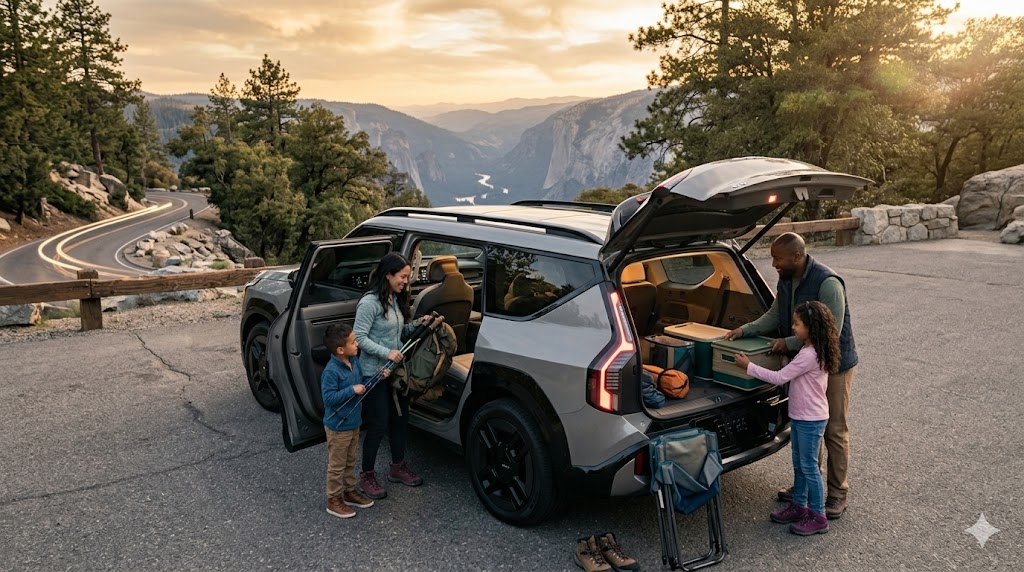
Electric SUVs occupy a wider range of capability than trucks do. At the higher-capability end, the Rivian R1S, Tesla Model X, Kia EV9, and Volvo EX90 all offer meaningful trailer ratings suitable for boats, small campers, or enclosed cargo trailers, and each provides some version of a factory or dealer-installed tow hitch and wiring package. These are three-row or near-three-row electric SUVs that were positioned partly as family-and-adventure vehicles, so towing capability was a deliberate part of their pitch to buyers cross-shopping against gas-powered SUVs like the Toyota Highlander or Chevrolet Tahoe.
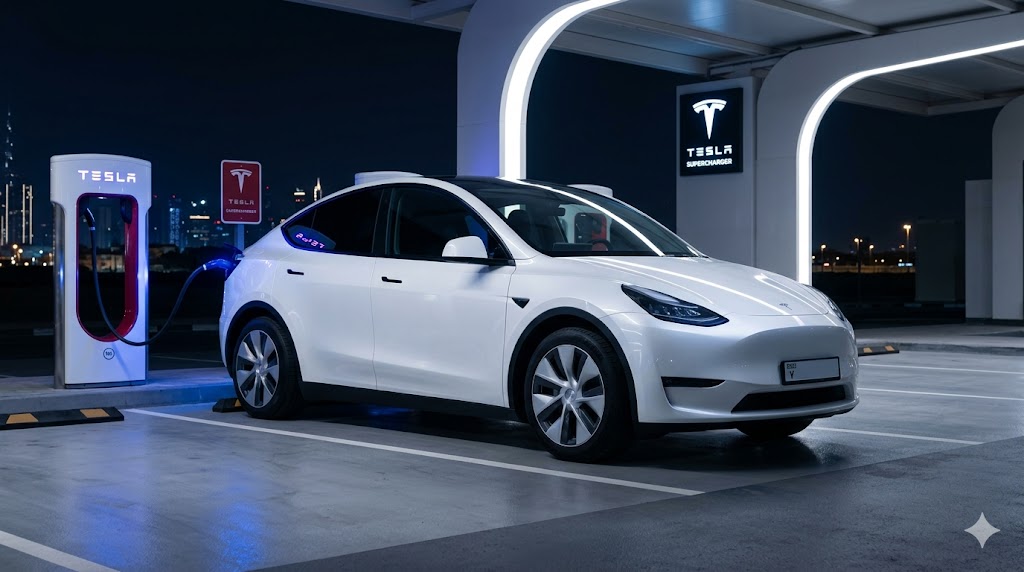
Below that tier, many mainstream electric crossovers, including most versions of the Tesla Model Y, Ford Mustang Mach-E, and Chevrolet Equinox EV, either offer no tow rating or a modest one intended for light loads such as a small utility trailer, a couple of kayaks, or a pop-up tent trailer. Some of these vehicles gained tow ratings in later model years after not offering one at launch, so if towing is a requirement, verify the rating for the exact model year and trim you're considering rather than assuming capability carries across the nameplate's history. This is a fast-moving spec category, and automakers update tow ratings more often than most buyers expect.
Charging Strategy Becomes Part of the Trip Plan
Owning a truck or SUV that can legally and safely tow a trailer is only half the equation. The other half is accepting that your road-trip planning changes shape entirely. Fast-charging stations aren't universally built with pull-through access for a truck-and-trailer combination, which means some stops require unhitching the trailer before you can charge, then rehitching afterward. This is a genuine hassle that doesn't show up in any spec sheet, and it's worth researching charging network layouts along your specific towing routes before you commit to a long trip. Some networks have begun adding pull-through stalls at select locations specifically because of this feedback from EV truck owners, but coverage remains inconsistent.
Because towing range drops so much, trip planning software and route-mapping tools built into some of these vehicles have started accounting for trailer weight as an input, adjusting charging stop recommendations accordingly. That's a meaningful improvement over guessing, but it's still wise to build in a buffer beyond what any trip planner suggests, especially in hilly terrain, cold weather, or high winds, all of which independently worsen towing efficiency on top of the baseline hit.
Weighing an EV Truck Against a Gas Alternative for Towing
If towing is a frequent, serious part of your life, such as hauling a travel trailer several times a month or regularly moving heavy equipment, it's fair to ask whether an EV is the right tool yet. The convenience of overnight home charging and instant torque off the line are real advantages, but the combination of reduced range under load and the logistics of finding trailer-friendly charging infrastructure can turn a simple weekend trip into a more deliberately planned outing than the same trip in a diesel or gas truck. For occasional towing, such as a few trips a year with a small trailer, an EV truck or capable SUV can work well and save money on fuel the rest of the year. For heavy, frequent, long-distance towing, many owners still find a combustion or hybrid truck more practical today, and that calculus is likely to keep shifting as charging infrastructure and battery technology improve.
The right move before buying is to treat the manufacturer's specification page as a starting point, not a final answer. Confirm the tow rating for your exact trim and model year, ask a dealer directly about real-world range loss reports from current owners if possible, and map out charging options along routes you'd actually drive with a trailer attached.
Key Takeaways
- Only a specific subset of EVs, mostly purpose-built trucks like the F-150 Lightning, Rivian R1T, and Silverado EV, plus larger SUVs like the Rivian R1S, Kia EV9, and Volvo EX90, are rated for serious trailer towing.
- Towing dramatically reduces usable range in any EV due to aerodynamic drag and added load, so unloaded range figures should not be used to plan a towing trip.
- Tow ratings vary significantly by trim and battery size within the same model, so always confirm the specific configuration's current published rating rather than a general nameplate figure.
- Charging infrastructure isn't uniformly trailer-friendly, and unhitching to charge is still a common reality on long tows.
- Occasional or light towing suits many current EVs well, but frequent, heavy, long-distance towing still tends to favor gas or hybrid trucks for most owners today.
- Bottom line: shop by trim-specific tow rating and realistic range expectations, not by nameplate reputation alone.