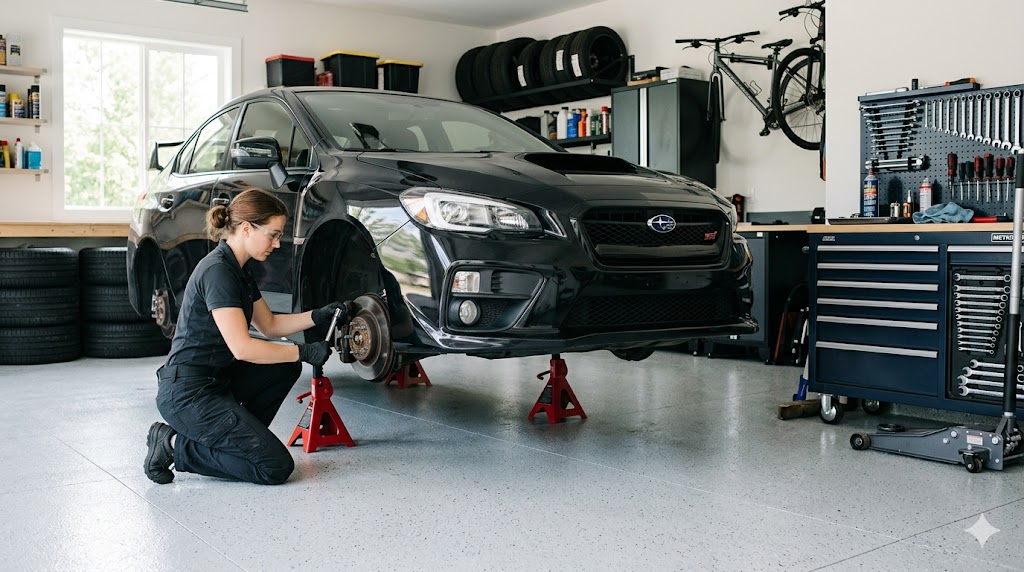

Tire rotation is the maintenance task with the clearest cost-benefit math in vehicle ownership: tires wear unevenly based on their position on the vehicle, rotation extends the usable life of all four tires by evening out that wear, and the cost of doing it correctly yourself is essentially zero beyond the jack and stands required. Dealer and shop pricing for tire rotation runs $25-$60. On a vehicle that needs rotation every 5,000-7,500 miles, the lifetime savings of doing it yourself adds up to meaningful money.
What complicates DIY tire rotation is that the correct rotation pattern isn't universal. Vehicles with different drivetrain configurations, directional versus non-directional tires, and staggered fitments (where front and rear tires are different sizes) all require different approaches. Rotating tires in the wrong pattern for a specific vehicle doesn't provide the expected wear benefit and, in some cases, moves tires into positions that stress them inappropriately.
The most common rotation pattern for front-wheel-drive vehicles moves the rear tires to the front positions in a straight swap, and crosses the front tires to the rear - right front to left rear, left front to right rear. This cross-and-forward pattern accounts for the front tires' greater wear from both drive and steering loads.
Rear-wheel-drive vehicles and AWD vehicles without staggered fitments typically use the X-pattern rotation - crossing all four tires diagonally. Right front to left rear, left front to right rear, right rear to left front, left rear to right front. This pattern ensures all tires experience all positions over multiple rotation cycles.
Directional tires - those with an asymmetric tread pattern designed to rotate in one specific direction - can only move front-to-back on the same side of the vehicle. Moving them to the opposite side would reverse their rotational direction, which both compromises the tread design's function and increases noise and wear.
Staggered fitments, where the rear tires are wider or a different size than the fronts, cannot be rotated conventionally. Staggered vehicles require dismounting tires from their rims and remounting them, which makes DIY rotation impractical without a tire machine. Most staggered-fitment performance vehicles are designed with this limitation in mind and require professional tire rotation or full tire replacement.
The jack and jack stand requirement is non-negotiable. Tire rotation requires lifting all four corners of the vehicle either simultaneously (with a lift, which most DIYers don't have) or in a sequence that requires two tires off the ground at a time. Working under a vehicle supported only by a floor jack is unsafe. A pair of quality jack stands is the essential investment for any DIY suspension or wheel work.
Summary
What it is: A guide to DIY tire rotation - the correct patterns for different vehicle configurations, the process, and the common mistakes that reduce the benefit of rotating.
Best for: Vehicle owners with non-staggered, non-directional tire fitments who want to capture the tire life extension benefits of rotation without paying shop prices.
Biggest cost/risk factor: Rotating directional tires to the opposite side of the vehicle reverses their intended direction, compromising function and increasing wear.
When to act: At every other oil change for most vehicles, or per your owner's manual interval recommendation.
AutosAdvisor is not a licensed mechanic. This guide is educational. Always use proper jack stands and follow vehicle-specific guidance.