Most motorsport events that debuted around the same era as the Rolex 24 at Daytona are gone, folded into history books or reduced to a footnote on a circuit's Wikipedia page. Racing series rise and fall with sponsorship cycles, manufacturer interest, and television deals that dry up as quickly as they appear. The Rolex 24 has instead done something rarer: it kept drawing top teams, top drivers, and paying fans across sixty years of a sport that changed almost beyond recognition around it. That longevity is not an accident of scheduling. It comes from a handful of specific choices about format, timing, and identity that the event has protected even as everything else in racing shifted.
The Format Itself Is the Draw
A twenty-four-hour race is not just a longer version of a normal race; it is a fundamentally different competitive problem, and that difference is the core of the Rolex 24's appeal. Sprint races reward outright speed over a short, controlled window. A round-the-clock event forces teams to solve for reliability, driver rotation, tire and fuel strategy, night driving, and the unpredictability of dozens of cars sharing the track for a full day and night. That complexity is inherently more compelling to watch and more prestigious to win, because it tests a car and a team in ways a ninety-minute race simply cannot. Fans who tune in at 3 a.m. are not watching for a single dramatic overtake; they are watching a slower-building story about attrition, strategy, and which teams manage to keep their cars intact and competitive when everyone is exhausted and conditions are at their least forgiving.
That format has proven durable precisely because it does not depend on any single car class or technology being fashionable. Whether the fastest cars on track in a given era are prototypes or grand touring cars, whether engines are naturally aspirated or turbocharged, the twenty-four-hour structure keeps generating the same kind of drama: cars that looked dominant at midnight fading by dawn, and underdogs who managed their equipment well enough to still be running when it matters. The format is the constant. Everything else around it has been allowed to evolve.
Multi-Class Racing Keeps the Field Meaningful
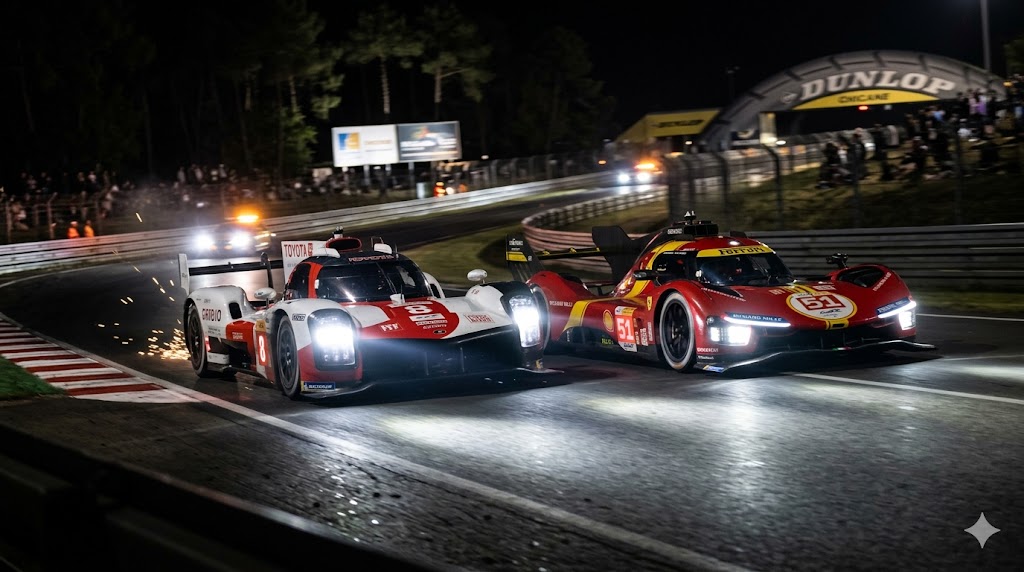
One of the quieter reasons the Rolex 24 has kept its relevance is that it never insisted on a single class of car competing for overall victory. Different classes of cars, separated by speed and specification, share the same track at the same time, which means a slower class competitor still has a race to run even while a much faster prototype-style car laps past it. This multi-class structure means the event does not live or die based on whether one specific category of racing is currently popular. When interest in one class cools, another tends to fill the gap, and the overall event keeps its depth of field and its competitive stakes.
It also creates a layered viewing experience that rewards attention over the full twenty-four hours rather than just the opening and closing stretches. A fan can follow an overall battle at the front while also watching a tighter, closer fight in a class further down the order, and often the class battles produce more genuine wheel-to-wheel racing than the overall lead does. That depth gives the event staying power with dedicated fans who return year after year, because there is always a storyline developing somewhere on track even during the quieter overnight hours.
The Calendar Slot That Racing Built Around
Running at the start of the season, before most other major championships have gotten underway, has given the Rolex 24 a calendar position that other events have struggled to replicate. It functions as a season-opening spectacle rather than one race among many in a crowded midyear schedule, which raises its profile simply by being first. Teams and manufacturers treat it as a proving ground and a statement event, a place to show what a new car or a new driver lineup can do before the rest of the year's competition even begins. That early-season timing also means the race benefits from a fresh appetite among fans who have been waiting through the off-season for racing to return.
Because of that positioning, the event has become something teams build a broader season around rather than treat as an isolated date. A strong result there sets a tone, generates coverage, and gives sponsors an early return on their investment for the year. A poor result forces a team to spend months answering questions about what went wrong. That kind of weight, attached to a single fixed point on the calendar, is difficult to manufacture artificially, and it is part of why the race has kept its status even as other events around it have lost relevance or disappeared entirely.
A Track and a Setting That Reward Repetition
Daytona International Speedway itself contributes to the race's staying power in a way that is easy to underestimate. Its combination of high-banked oval sections and an infield road course creates a layout unlike most other circuits used for endurance racing, forcing teams to set up cars for two very different demands within the same lap. That technical variety keeps the race interesting to engineers and drivers season after season, since the setup compromise required at Daytona does not simply repeat what a team already knows from other circuits.
The setting also gives the event an atmosphere that has become part of its identity. Fans camp trackside for the full twenty-four hours, a tradition that has passed across generations of the same families in some cases, turning the race into as much a cultural gathering as a competition. That kind of generational fan loyalty is not built quickly, and it is not easily transferred to a new event even if that event copies the format. It has to be earned over decades, and the Rolex 24 has had the time to earn it.
Surviving Change Without Losing Identity
Perhaps the most important reason the race has lasted sixty years is that its organizers have generally allowed the cars, classes, and technical rules to evolve with the sport while protecting the core elements that make the event what it is: the twenty-four-hour duration, the Daytona circuit, and the season-opening timing. Racing series that try to reinvent themselves too aggressively often alienate the fan base that made them worth watching in the first place. Series that refuse to adapt at all eventually look dated and lose relevance to newer competition. The Rolex 24 has generally threaded that needle, updating the cars and categories that compete while keeping the structural identity of the race itself intact. That balance, sustained across six decades of a sport that has changed dramatically in almost every other respect, is the clearest explanation for why the event is still on the calendar today while so many of its contemporaries are not.
Key Takeaways
- The twenty-four-hour format creates a fundamentally different, more compelling competitive test than sprint racing, and that structure has never gone out of style.
- Multi-class competition keeps the field deep and meaningful even when interest in any single category of car rises or falls.
- A season-opening calendar slot gives the race outsized influence, turning it into a proving ground teams build their year around.
- Daytona's mixed oval-and-road-course layout keeps the technical challenge fresh for teams year after year.
- Decades of trackside fan tradition have built a cultural loyalty that newer endurance events cannot easily replicate.
- Bottom line: the Rolex 24's longevity comes from evolving its cars and rules while protecting its core format and identity — a balance most legacy motorsport events fail to strike.