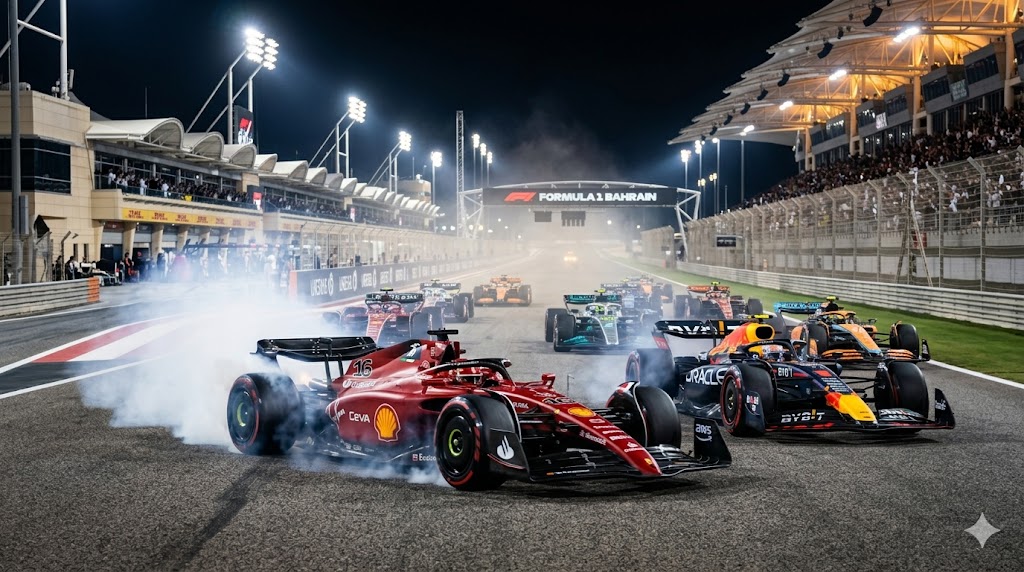

Formula 1 has structured its history around periods of regulatory stability punctuated by wholesale rule changes that redistribute competitive advantage among teams and manufacturers. The 2026 regulations represent one of the sport's most comprehensive technical overhauls, touching both the power unit regulations and the aerodynamic framework simultaneously - a combination that amplifies the uncertainty about which teams and manufacturers will emerge with advantage in the new era.
The power unit changes are the more fundamental shift. The 2022 aerodynamic regulations created the current field's competitive order; the 2026 power unit regulations may create a different one.
The 2026 Power Unit Regulations
The 2026 power unit architecture mandates a roughly equal split between internal combustion power and electrical power - approximately 50/50 thermal-to-electrical ratio compared to the current roughly 80/20 distribution. The MGU-H (Motor Generator Unit - Heat), which recovered energy from exhaust gases, is eliminated, simplifying the powertrain but removing a significant aerodynamic complexity that current power unit manufacturers have invested heavily in mastering.
This simplification is designed to attract new manufacturers. Audi's announced entry as an engine supplier - paired with the Sauber/Alfa Romeo team that will rebrand - was conditioned partly on the 2026 regulations making power unit development more accessible to new entrants.
The increased electrical power share has implications for deployment strategy. Battery charging rates and energy recovery from braking become more critical; the strategic dimension of power unit management deepens.
The Aerodynamic Framework
The 2026 aerodynamic regulations reduce downforce levels relative to the current era and introduce "active aerodynamics" - movable bodywork elements that change configuration between high-downforce and low-drag modes under driver control. The complexity this introduces to chassis development is significant and teams' ability to optimize across the range of configurations will differentiate performance.
The combination of new power units and new aerodynamic rules creates the conditions for the widest potential competitive redistribution since 2014 - when Mercedes dominated comprehensively with a power unit advantage that took multiple seasons for competitors to close.
Summary
What it is: A technical and competitive preview of the 2026 Formula 1 season, covering the new power unit regulations, aerodynamic framework, and implications for the championship battle.
Best for: F1 fans who want to understand the technical underpinnings of the competitive changes and what to watch for in the opening races of the new regulation era.
Biggest cost/risk factor: Predicting which teams will dominate under new regulations has a historically poor track record - genuine uncertainty is the defining characteristic of the 2026 opening.
When to act: Pre-season testing and the first three to four races will reveal more than any preview analysis about where advantage actually lies.
AutosAdvisor is not affiliated with Formula 1, FIA, or any constructor. This preview reflects editorial analysis.