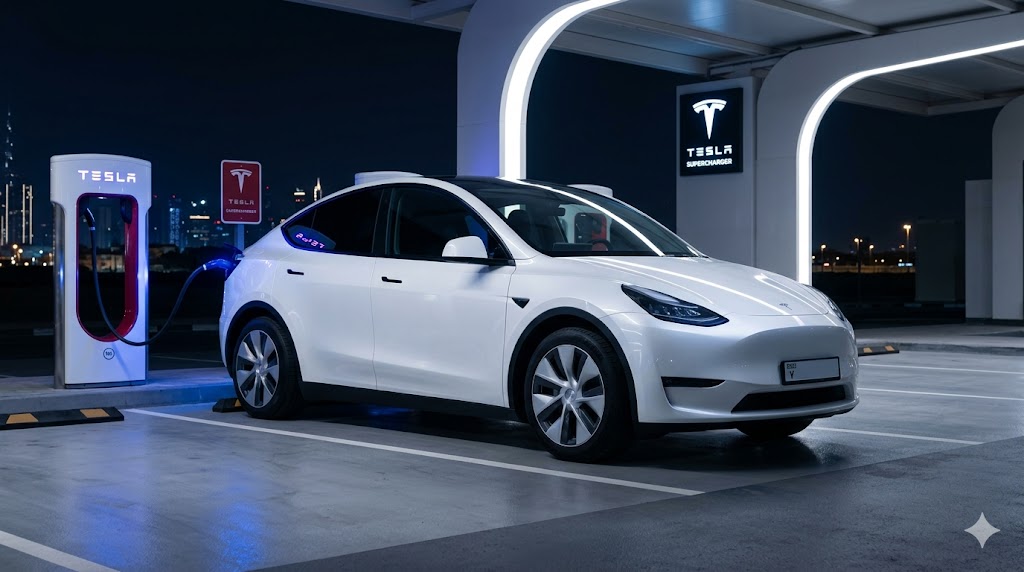
Nobody hands new EV owners a rulebook for public charging, which is exactly why so much low-grade friction exists at charging stations that has nothing to do with the technology and everything to do with human behavior. A gas station has a century of obvious social norms behind it: pump your gas, pay, leave, because someone is idling behind you and the whole system depends on turnover. Public EV charging has none of that inherited etiquette, the sessions last far longer than a fill-up, and the result is a set of unwritten rules that experienced EV drivers have worked out through friction and frustration, mostly around one core issue: a charging spot is a shared, finite resource, and someone's convenience often comes at someone else's expense.
The single rule that nearly every piece of specific etiquette traces back to is this: do not treat a charging spot as a parking spot once your session ends. That habit alone, more than any other, is responsible for the majority of frustration experienced EV drivers report about public charging, and it is worth understanding exactly why it matters so much before getting into the more specific situations.
Move your car when you are done, not when you are ready to leave
Charging stalls, especially DC fast chargers along travel corridors, exist to move electrons into batteries as quickly as possible, not to serve as convenient parking while you shop, eat, or run errands after your car has already reached the state of charge you needed. A car sitting in a fast-charging stall at 100 percent while its owner finishes a meal inside a restaurant is blocking that stall from anyone else who actually needs to charge, and at a station with only a handful of stalls, this single habit can create a real bottleneck, particularly during busy travel periods when every stall is in demand.
The etiquette here is straightforward even if it is inconvenient: many charging apps and in-car notifications will alert you when your session is complete or nearing your target percentage, and the expectation among considerate EV drivers is that you return to move your car within a reasonable window rather than treating the charger as a free parking space for however long your errand takes. Some networks have started implementing idle fees specifically to discourage this behavior financially, but the social expectation existed before the fees did and remains the more important motivator for most drivers who care about being decent to fellow EV owners.
Charging to 100 percent at a shared fast charger is usually unnecessary and unkind
Because DC fast-charging speed tapers dramatically after roughly 80 percent state of charge, continuing to charge all the way to full at a busy public station takes disproportionately longer for the last fraction of range than it took for the bulk of the session, and it does so while occupying a stall that someone else, possibly with a much lower state of charge and a more urgent need, cannot use. The generally accepted etiquette among experienced drivers is to charge to whatever percentage gets you comfortably to your next stop, typically somewhere around 80 percent, rather than chasing a full battery at a shared fast charger, and to save the full top-off for charging at home or at a destination charger where you are not competing with other drivers for a limited resource.
This is not a hard rule, and there are legitimate reasons to charge further, particularly if your next leg is long and chargers are sparse ahead of you. But treating a busy fast-charging station like your home garage, where charging to 100 percent costs nothing to anyone else, ignores the fact that you are sharing a resource that others are actively waiting on.
Do not unplug someone else's actively charging vehicle
This should be an obvious rule, but it comes up often enough in EV owner forums to be worth stating plainly: unplugging another driver's car to free up a stall for yourself, even if their session appears to have stalled or their car looks unattended, is not acceptable, and doing so can actually interrupt a legitimate session and leave the other driver with a much lower charge than they expected when they return. If a stall appears to be occupied by a car that is not actively charging, or by a session that has clearly finished and the owner is nowhere in sight after a reasonable wait, the appropriate response is to look for another stall, try contacting the network's support line for guidance, or simply wait, not to take matters into your own hands with someone else's vehicle.
Ice-ing is not just a parking violation, it is a real logistical problem
"Ice-ing" refers to a gasoline vehicle parking in a charging stall, and while it is sometimes dismissed as a minor annoyance, at a station with limited stalls it can genuinely strand an EV driver who has no other charging option nearby, particularly in rural areas where the next station might be a significant detour away. EV drivers should treat this the same way when the shoe is on the other foot: never park an EV in a charging stall without actually plugging in and charging, even briefly, because the stall's entire purpose is charging access, not general parking convenience, regardless of how empty the lot looks at that particular moment.
Communicate at busy stations rather than assuming
At stations with more demand than available stalls, a small amount of direct communication goes a long way toward defusing tension that might otherwise build silently. Letting a waiting driver know roughly how much longer your session needs, or asking a driver whose car appears to be finished whether they are close to done, is generally well received and considered good practice rather than intrusive, particularly compared to the alternative of drivers silently fuming in their cars or leaving passive-aggressive notes. Many experienced EV drivers have found that a quick, friendly conversation resolves far more charging-station friction than any app feature or posted signage ever could, precisely because the etiquette gap in this relatively new activity is still being worked out person by person rather than through any formal system.
Why this all matters more as adoption grows
None of these norms are enforced by law in most places, and none of them are complicated, but they matter increasingly as more drivers rely on public charging and station demand climbs in specific corridors and busy periods. A charging network with technically sufficient stall count can still feel scarce if a meaningful share of drivers are treating stalls as parking spots or chasing unnecessary full charges during peak hours, and the informal culture that EV drivers build around these unwritten rules will do more to solve that scarcity day to day than any amount of new hardware being installed.
Key Takeaways
- Move your vehicle promptly once charging finishes; treating a fast-charging stall as a parking spot creates real bottlenecks for other drivers.
- Charging to around 80 percent rather than 100 percent at busy shared fast chargers respects the tapering charge curve and frees the stall sooner.
- Never unplug another driver's actively charging vehicle, even if the session appears stalled or the car looks unattended.
- Never park a gasoline vehicle, or an EV that is not charging, in a dedicated charging stall.
- Brief, direct communication with other drivers at busy stations resolves far more friction than silence or assumptions.
- Bottom line: public charging etiquette exists because the resource is shared and finite—treat every stall as something the next driver may urgently need.