A service advisor tells a customer their power steering fluid is due for a flush. The customer's previous car needed that exact service every 50,000 miles or so. But this car has no reservoir to check, no fluid to flush, and no pump to fail. The advisor either doesn't know the difference or is hoping the customer doesn't. Either way, the fluid doesn't exist, because the steering system was never built to use any.
This mix-up happens constantly because two completely different technologies have shared the same name for decades. "Power steering" used to mean one thing: a hydraulic pump, pressurized fluid, and a network of hoses that made turning the wheel effortless. Now it often means an electric motor bolted to the steering column or rack, controlled by a computer, with no fluid anywhere in the system. Knowing which one sits under your hood isn't trivial trivia. It determines whether a shop's fluid-service recommendation is legitimate maintenance or an upsell built on outdated assumptions.
Two Systems, One Name, Completely Different Mechanics
Hydraulic power steering has been around since the 1950s and dominated the market for most of automotive history. A belt-driven pump, spun by the engine, pressurizes fluid and pushes it through hoses to a steering gear or rack. When you turn the wheel, a valve redirects that pressurized fluid to assist the turn, multiplying your input force many times over. The system relies on a closed loop of fluid, seals, hoses, and a reservoir you can typically find under the hood, often with a dipstick or fill line marked directly on the cap.
Electric power steering, or EPS, throws that entire mechanism out. Instead of fluid pressure, an electric motor — usually mounted on the steering column or directly on the rack — provides the assist. A torque sensor detects how hard and which direction you're turning the wheel, feeds that data to a control module, and the module commands the motor to apply the appropriate amount of help. There's no pump, no belt drawing power from the engine, no hoses, and critically, no fluid circulating anywhere in the assist mechanism. The steering rack itself may still contain a small amount of grease for the internal gear mechanism, but that's a sealed, lifetime lubricant unrelated to the fluid reservoirs and flush intervals associated with hydraulic systems.
Why EPS Eliminates the Fluid-Service Question Entirely
The reason EPS needs no fluid service isn't that manufacturers found a longer-lasting fluid or stretched out the maintenance interval. It's that the fluid-based assist mechanism was removed from the design altogether. Hydraulic fluid in a power steering system does real work: it transmits force, and under that constant pressure and heat cycling, it degrades. Seals wear, contaminants accumulate, and the fluid itself breaks down chemically over time, which is why manufacturers specify periodic flushes or at least fluid inspections. Take away the pump, the hoses, and the pressurized fluid loop, and you take away every reason for that service to exist.
This is also why EPS represents a genuine engineering shift rather than a marketing rebrand. Electric assist is quieter, doesn't sap engine power the way a belt-driven pump does, allows for variable assist levels at different speeds, and enables features like lane-keeping assist and self-parking that need precise, computer-controlled steering input. The fact that it also eliminates a maintenance item is almost a side benefit, but it's the one most drivers actually notice at trade-in time when a mechanic tells them there's simply nothing to flush.
How to Tell Which System Your Car Has
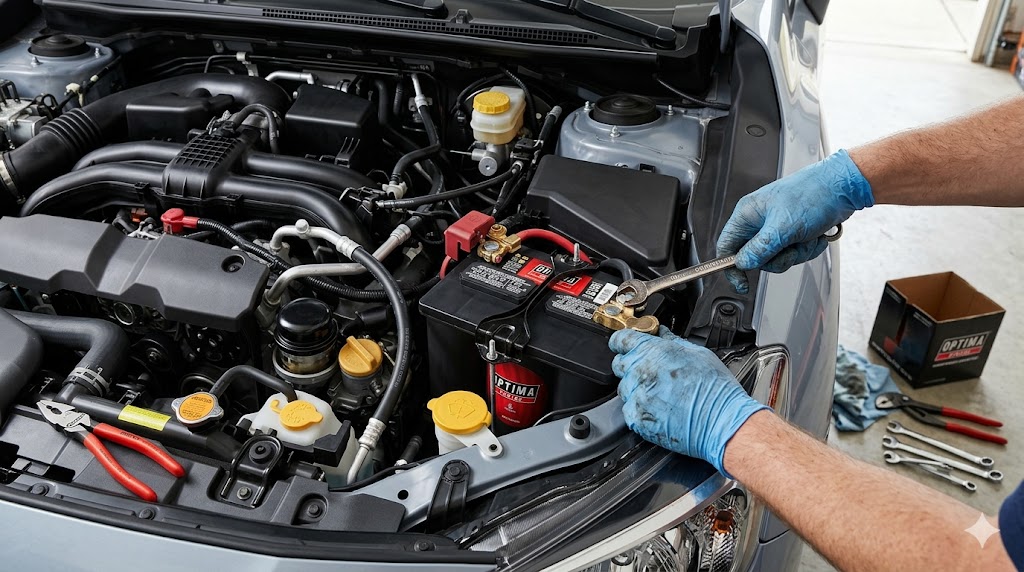
If you're not sure which type of power steering your vehicle uses, a few quick checks will settle it. Pop the hood and look for a power steering fluid reservoir — usually a small plastic tank, often with a cap labeled "power steering fluid" or marked with a steering wheel icon, connected to hoses running toward the engine or firewall. If you find one, you have hydraulic assist, and that fluid needs periodic attention. If you search and find no such reservoir, no hoses of that type, and no belt-driven pump on the engine that isn't accounted for by the air conditioning or alternator, you're very likely looking at EPS.
Your owner's manual will also state this directly, usually in the maintenance schedule section, either by listing a power steering fluid change interval or by omitting it entirely and instead describing the assist as "electric" in the specifications section. Many compact cars, hybrids, and newer vehicles across nearly every segment have shifted to EPS over the past couple of decades, since it's become an increasingly standard choice across the industry due to its efficiency and compatibility with modern driver-assist features. Larger trucks and some performance or heavy-duty vehicles have been slower to adopt it, since hydraulic systems can still offer certain feel and force advantages under heavy loads. When in doubt, the manual or a quick call to a dealership parts department will confirm it faster than guessing from what you see in the engine bay.
What Hydraulic Systems Still Need From You
If your car does have hydraulic power steering, the fluid isn't something you can ignore indefinitely. Most manufacturers recommend checking the fluid level periodically and inspecting its color and clarity — fresh fluid is typically translucent red, amber, or clear depending on the specified type, while degraded fluid turns dark brown or black and may smell burnt. Contaminated or low fluid accelerates wear on the pump, the rack's internal seals, and the hoses, and in the worst cases, it leads to pump failure or fluid leaks that leave you with heavy, manual-feeling steering at low speeds. Always check your owner's manual for the exact fluid type specified for your vehicle, since hydraulic power steering fluids vary by manufacturer and using the wrong one can degrade seals over time. A flush every 50,000 to 100,000 miles is a common general guideline, but the interval and even the necessity of a full flush versus a simple top-off varies enough by manufacturer that the manual is the only reliable source.
What Actually Goes Wrong With Electric Power Steering
Removing fluid from the equation doesn't make EPS invincible, and it would be a mistake to treat it as a maintenance-free system forever. The components that replaced the hydraulic hardware can fail in their own ways. Torque sensors can drift out of calibration or fail outright, producing steering that feels inconsistent, too light, too heavy, or that triggers a dashboard warning light. The electric motor itself, along with its control module, is subject to electrical faults, connector corrosion, and — in rare cases — outright motor failure, any of which can cause a sudden loss of assist. Steering racks in EPS-equipped vehicles still wear mechanically over tens of thousands of miles, and the internal grease, while not something you service yourself, isn't infinite either. When something does go wrong with EPS, diagnosis usually requires a scan tool to read sensor and module fault codes rather than a visual inspection, and repairs often mean replacing an entire motor-and-sensor assembly rather than swapping a hose or seal.
This is where hydraulic systems, for all their fluid demands, still hold an advantage in one respect: when they fail, the failure is usually mechanical, visible, and repairable in pieces. A leaking hose, a worn pump, or a bad seal can often be replaced individually and relatively affordably by an independent shop. EPS failures, by contrast, tend to be electronic and modular, sometimes requiring dealer-level diagnostic equipment and pricier component-level replacement. Neither system is strictly better in every scenario — one trades ongoing fluid maintenance for generally cheaper, more transparent repairs, while the other trades that maintenance burden away in exchange for repairs that can be more specialized and less predictable when they eventually happen.
- Hydraulic power steering uses a fluid-filled pump-and-hose system that requires periodic fluid checks and flushes, while electric power steering (EPS) uses a motor and sensor with no fluid to service.
- EPS eliminates fluid maintenance because the entire hydraulic mechanism was removed from the design, not because a longer-life fluid was developed.
- You can identify your system by checking for a power steering fluid reservoir under the hood or by reading your owner's manual's maintenance schedule.
- Hydraulic systems still need fluid level checks, condition inspections, and occasional flushes using the manufacturer-specified fluid to avoid pump and seal damage.
- EPS isn't maintenance-free forever — torque sensors, electric motors, and steering racks can still fail and typically require scan-tool diagnosis and component replacement rather than a simple fluid top-off.
- Bottom line: check your owner's manual to confirm which system you have, keep up with fluid service only if you actually have a hydraulic system, and don't let anyone sell you a power steering flush your EPS-equipped car doesn't need.