
The plug-in hybrid occupies a specific and genuinely useful position between conventional vehicles and battery-electric vehicles. It delivers electric-only range for daily commuting, gasoline backup for longer trips, and doesn't require the charging infrastructure commitment that makes full EV ownership more complex for some buyers. For the buyer it's designed for, the PHEV is the most rational powertrain choice available. For the buyer it's not designed for, it's an expensive, complex vehicle that delivers neither the full efficiency of a full EV nor the simplicity of a full hybrid.
The distinction matters enough to work through carefully before purchasing, because PHEVs carry a price premium over conventional and full-hybrid alternatives that only pays back if the vehicle's electric range is actually used regularly.
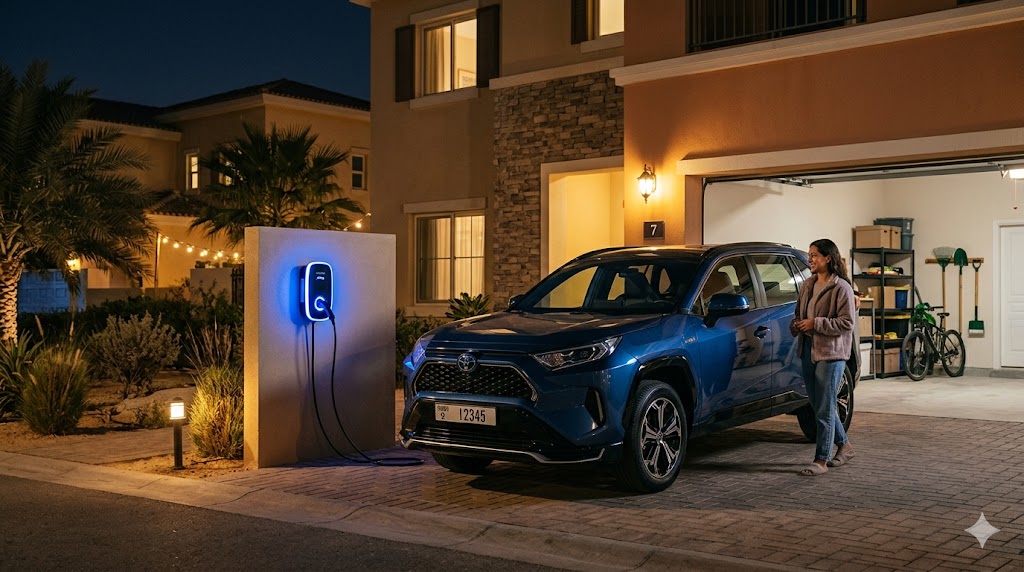
The value proposition rests on a specific behavioral foundation: the PHEV owner charges the vehicle regularly at home and drives distances within the electric range for a meaningful share of their total driving. A Toyota RAV4 Prime with 42 miles of electric range, charged each night, will cost significantly less per mile to operate than the same driver's conventional RAV4 - electricity is cheaper than gasoline per equivalent mile in virtually every US market, and the operational cost advantage compounds over a typical ownership period.
The same Toyota RAV4 Prime, never plugged in, costs more to buy than the standard RAV4 Hybrid and delivers slightly worse fuel economy on gasoline than its simpler sibling. The larger battery adds weight, and without charging, the PHEV's efficiency advantage over a conventional hybrid essentially disappears.
Home charging access is therefore the primary qualification. An owner in a house with a garage or driveway, able to install a Level 2 home charger, can fully capture the PHEV's efficiency advantage with minimal behavioral change - the car charges overnight like a phone. An apartment dweller relying on public charging for a daily top-up faces a different calculation where the charging logistics may not support the efficiency advantage.
The vehicles worth considering in 2026 include the Toyota RAV4 Prime - which remains the dominant PHEV SUV by sales for reasons that include strong electric range, Toyota reliability, and reasonable pricing - the Jeep Grand Cherokee 4xe for buyers who need off-road capability alongside electric range, the Ford Escape PHEV at an accessible price point, and the Hyundai Tucson PHEV for buyers in the compact segment.
Summary
What it is: A practical guide to plug-in hybrid vehicles - how they work, when they make financial sense, and which 2026 models deliver the best value for the right buyer.
Best for: Drivers with home charging access, regular daily commutes within 30-50 miles, and occasional longer trips that benefit from gasoline backup.
Biggest cost/risk factor: Purchasing a PHEV without home charging access and primarily using gasoline power - this captures the purchase premium without the efficiency benefit.
When to act: After honestly evaluating home charging access and your driving pattern - the financial case depends entirely on how regularly you'll use the electric range.
AutosAdvisor is not a licensed financial advisor. Fuel economy and operating costs vary by driver, charging access, and market conditions.