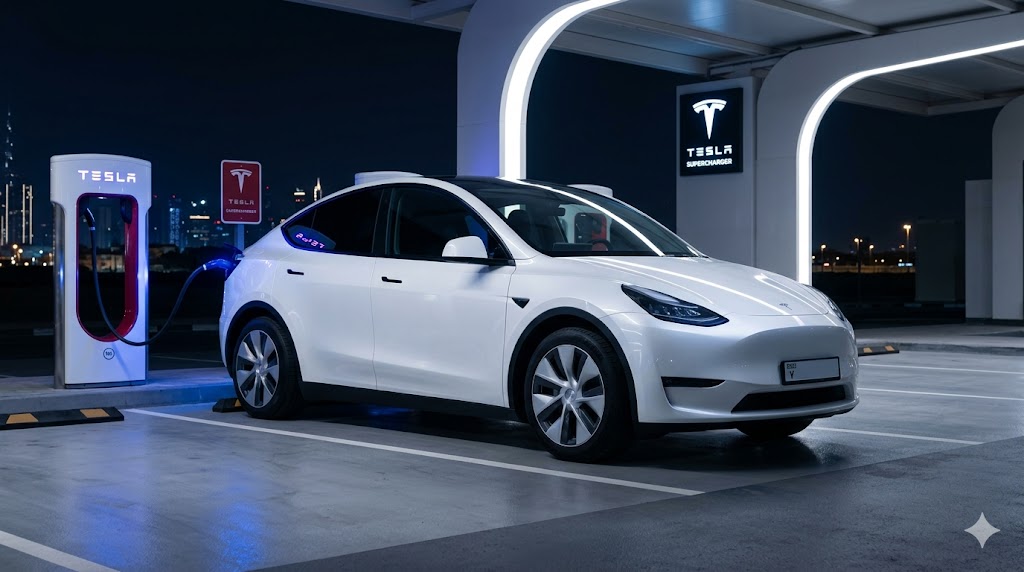
For years, buying an EV in the United States meant picking a side in a plug war most drivers never asked to join. CCS, the Combined Charging System, was the default standard for nearly every non-Tesla automaker, while Tesla ran its own proprietary connector across its Supercharger network. That standoff is unwinding fast, and it is unwinding in one direction: toward Tesla's connector, now standardized and rebranded as NACS, the North American Charging Standard. The war is not entirely over, and CCS is not disappearing overnight, but the direction of travel is no longer ambiguous, and that has real, practical consequences for anyone shopping for an EV or a home charger right now.
The shift began when Tesla opened its connector design for other automakers to adopt and rebranded it as an open standard rather than a proprietary one. What followed was a cascade of major automakers announcing plans to adopt NACS for future vehicles and to give existing CCS-equipped owners access to Tesla's Supercharger network through adapters. That cascade is the actual substance of "the war is almost over"—not a single dramatic event, but a steady stream of manufacturer commitments that collectively made NACS the presumptive future standard for new EVs sold in North America, even though millions of CCS vehicles remain on the road today and will for years to come.
Why NACS pulled ahead instead of CCS
The core appeal of NACS to automakers was never really about the physical connector's engineering, which is broadly comparable to CCS in terms of capability. It was about access to Tesla's Supercharger network, widely regarded as the most reliable and extensive fast-charging network in North America. Automakers building CCS-only vehicles were watching their customers deal with a smaller, more fragmented set of non-Tesla fast chargers with historically higher rates of broken or malfunctioning stalls, while Tesla owners enjoyed a dense, well-maintained network purpose-built around their cars. Once Tesla made that network accessible to other brands, the competitive pressure on every other automaker to follow became difficult to resist.
There is also a simple physical advantage: the NACS connector is smaller and lighter than the CCS connector, which combines a Type 1 or Type 2 AC inlet with a separate DC section, making the plug noticeably bulkier to handle, especially in cold weather when cables stiffen. That ergonomic difference is minor in isolation, but it added to the sense that NACS was the more modern, more refined design, reinforcing the shift already happening for network-access reasons.
What this actually changes for CCS owners today
If you already own a CCS-equipped EV, the immediate practical change is access, not obsolescence. Adapters allowing CCS vehicles to charge at Supercharger stations have rolled out for many popular models, and automakers have worked with Tesla to enable this access at scale rather than through niche third-party adapters alone. That means a car you bought expecting to be limited to CCS-only public charging may now have access to a much larger network than it did at the time of purchase, which is a genuinely rare instance of a vehicle's utility improving after the sale rather than degrading.
The friction points are real, though. Adapter-based charging has occasionally shown compatibility quirks depending on the specific vehicle and adapter combination, with some owners reporting inconsistent charge initiation or rates that lag what native NACS vehicles see on the same stalls. CCS public charging infrastructure is not going away in the near term either, so CCS owners are not being pushed off a cliff—they are gaining an additional option while keeping their existing one, at least for the foreseeable future.
What this means if you are buying a new EV right now
If you are shopping for a new EV today, checking which connector a specific model uses, and what its charging network access looks like, has become a genuinely important part of the buying decision in a way it was not a few years ago. Many automakers have already transitioned new model years to a native NACS port, while others are still selling CCS-equipped vehicles with an adapter included or available for Supercharger access. Neither approach is wrong, but they are meaningfully different ownership experiences, and the details vary enough by brand and model year that you should verify the specific configuration of the exact vehicle and trim you are considering rather than assuming based on the brand's general direction.
It is also worth resisting the urge to treat this transition as fully settled. Some automakers have been more aggressive than others in committing to NACS timelines, and public charging infrastructure providers—the non-Tesla networks like Electrify America and EVgo—have themselves been rolling out NACS-equipped stalls alongside their existing CCS hardware, rather than replacing one with the other outright. The result over the next several years will likely be a charging landscape where most new fast chargers offer both connector types, either natively or through included adapters, which is a genuinely better outcome for drivers than the fragmented standoff of the past several years, even if it takes time to fully materialize.
The practical takeaway for home charging too
The NACS transition is not just a public fast-charging story. Home Level 2 chargers are increasingly being sold with NACS connectors, or with swappable connector heads that let a single unit serve either standard, which is a sensible hedge for buyers uncertain about their next vehicle purchase. If you are installing a home charger now and expect to change vehicles within the connector's useful life, it is worth checking whether the unit you are considering supports a connector swap or ships with an adapter, rather than locking yourself into hardware built for a standard that may be less common in a few years.
None of this means CCS was a failure or that owners of CCS-only vehicles made a mistake. It means the industry converged on a single physical standard faster than most analysts expected, largely because one network's reliability advantage made the decision for automakers rather than a standards body doing it through negotiation. That is an unusual way for an industry standard to consolidate, and it is worth understanding that history if you want to make sense of why your next EV, regardless of brand, is increasingly likely to have a NACS port built in from the factory.
Key Takeaways
- NACS has become the de facto future standard for EV charging in North America, driven by automaker access to Tesla's Supercharger network rather than a formal standards mandate.
- CCS is not disappearing soon; existing CCS vehicles and infrastructure will coexist with NACS for years.
- Adapters give many CCS vehicles access to Superchargers now, though compatibility and charge-rate consistency can vary by vehicle and adapter combination.
- New EV shoppers should verify the specific connector and network access of the exact model and trim they are considering rather than assuming based on brand-wide announcements.
- Home charger buyers should consider units with swappable connector heads or adapter support given the ongoing transition.
- Bottom line: the connector war has a clear direction, but a fully NACS charging landscape is a multi-year transition, not a finished fact.