Plenty of EV owners plug in every night, charge to 100%, and let the car sit fully charged until morning without giving it a second thought. It feels responsible — the tank is full, the range anxiety is gone, the car is ready for anything. It's also one of the quietest ways to accelerate battery wear over the years you own the vehicle. Lithium-ion cells don't age uniformly across their charge range; they age faster the longer they sit near full, and faster still when heat is involved. None of this is exotic knowledge locked away in a lab. It's basic electrochemistry that EV manufacturers know well and that most owners never hear explained in plain terms. The good news is that the habits that matter most are entirely within your control, and adjusting them costs you nothing but a little bit of planning.
Why State of Charge Matters More Than Most Owners Realize
Every lithium-ion battery ages through two parallel processes: cycle aging, which comes from the act of charging and discharging, and calendar aging, which happens just from time passing, accelerated by heat and by how full the battery is while it sits. This second point is the one most owners miss. A battery parked at a high state of charge experiences more internal chemical stress than one resting in a moderate range, even if neither car moves an inch. That stress compounds over months and years, and it's a major reason two identical vehicles with similar mileage can show noticeably different capacity retention after several years, depending purely on how their owners treated the state of charge day to day.
This is why the single highest-leverage habit you can adopt is charging for your daily routine rather than charging to full out of habit. Most daily driving in the United States covers well under a hundred miles, and a battery kept in a moderate range for that kind of use will typically hold up better over time than one topped off to 100% every night regardless of need. Nearly every EV lets you set a daily charge limit — commonly somewhere in the 70-85% range — while still allowing a manual override to 100% before a longer trip. Using that limit as your default and treating full charges as the exception, not the rule, is the most impactful single change you can make, and it costs you nothing except remembering to bump the slider before a road trip.
The Charging Speed Trade-Off You're Making Without Realizing It
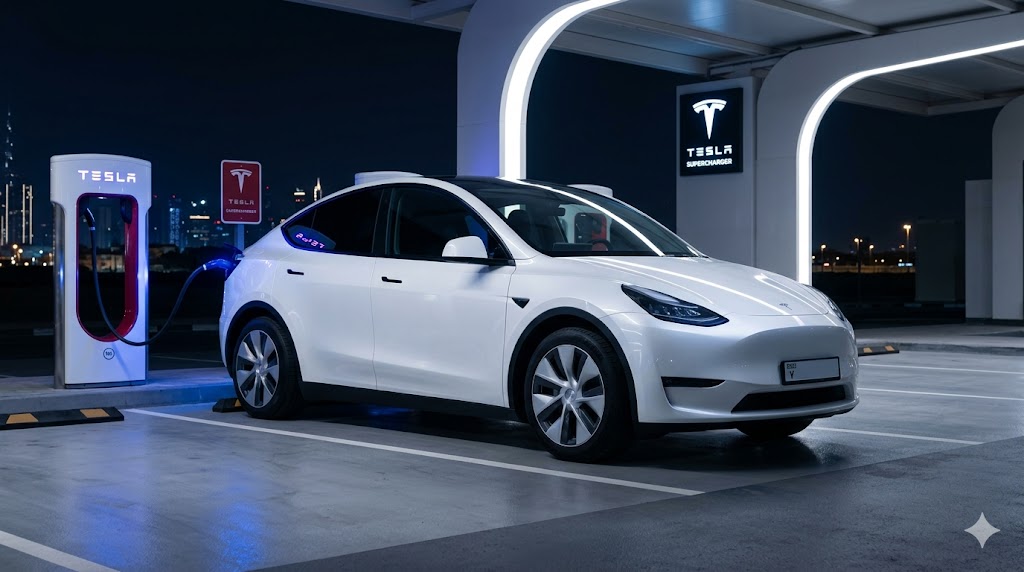
Fast charging is one of the best conveniences of EV ownership, and also one of the more stressful things you can regularly do to a battery pack. Pushing high current into cells generates significant heat, and heat is the accelerant behind nearly every degradation mechanism in lithium-ion chemistry. That doesn't mean DC fast charging is dangerous or that you should avoid it out of fear — battery management systems are specifically engineered to throttle charging speed and protect cells from thermal extremes, and manufacturers design packs expecting owners to fast-charge periodically. The distinction that matters is between occasional fast charging, which the system handles well, and making it your exclusive or near-exclusive method of charging, which asks the pack to absorb repeated heat cycles it would otherwise rarely see.
If you have the option to charge at home overnight on a standard Level 2 charger, treating that as your primary method and reserving fast charging for road trips or genuine top-up needs is the more conservative approach for long-term capacity retention. It's also worth noticing that most fast chargers taper their speed as the battery approaches full, precisely because the last portion of a charge generates disproportionate heat and stress relative to the range it adds — another argument, from a pure charging-efficiency standpoint, for not routinely pushing to 100% on a fast charger when you don't need every mile.
Heat Is the Real Enemy, Not Just Fast Charging
Charging speed is only one piece of a bigger picture: ambient and operating temperature drive battery aging more than almost any other single factor. A pack that regularly sits in direct summer sun, gets driven hard immediately after a fast-charge session, or is charged to full and then left in a hot garage all day is accumulating thermal stress that shows up as capacity loss over the years, even if the owner never once thinks about charge habits. Most modern EVs use active thermal management — liquid cooling loops that keep the pack in a reasonable operating window — but that system has limits, and it works far better when you're not actively fighting it.
Practical heat management looks unglamorous: parking in shade or a garage when you can, avoiding back-to-back fast-charging sessions in extreme heat, and giving a pack a few minutes to cool after a hard drive before plugging into a fast charger if you have the choice. None of these steps eliminate degradation — nothing does, since it's a fundamental property of the chemistry — but they reduce the cumulative thermal load the battery experiences over its life, which is the variable you're actually trying to manage. Owners in hot climates like Arizona or Texas will generally see faster capacity decline than owners in milder climates, all else being equal, simply because ambient heat is doing extra work in the background every single day.
Depth of Discharge and the Case for Shallow Cycling
Discharging a battery from 90% down to 20% is gentler on the cells than repeatedly draining it from 100% down to near 0%, because deep discharges push cells through a wider and more electrochemically stressful range, particularly at the bottom end where voltage drops sharply. This is part of why manufacturers build in a buffer below the displayed 0% — the pack rarely lets you touch the absolute floor of its chemical capacity, but routinely flirting with the low end of the usable range still asks more of the cells than staying comfortably in the middle. In practical terms, this reinforces the same behavior that helps with calendar aging: keeping your regular driving within a moderate band, roughly 20% to 80%, rather than habitually running the battery from empty to full, treats the pack more gently on both ends of the range.
This doesn't mean you should panic about occasionally running low before a charging stop, or feel guilty about a single deep discharge on a long trip. Batteries are designed to be used, and occasional full-range cycling is completely normal and accounted for in how these systems are engineered. The concern is with routine, repeated patterns rather than occasional exceptions — the difference between the habit you default to every day and the thing you do once a month when circumstances require it.
Climate, Chemistry, and Realistic Expectations
Not every battery ages the same way, and it's worth being honest about the variables outside your control. Lithium iron phosphate (LFP) chemistry, increasingly common in more affordable EVs, tolerates high states of charge and frequent full charging noticeably better than nickel-based chemistries like NMC, which are more common in longer-range vehicles and more sensitive to the habits described above. If you're not sure which chemistry your car uses, your owner's manual or manufacturer's app usually says so, and it's worth checking, because the advice about avoiding regular 100% charges applies with much less urgency to an LFP pack than to an NMC one. Climate, typical trip length, how often you fast-charge, and even how the car is driven all interact with chemistry to produce real-world outcomes that vary meaningfully between two owners of the same model.
None of this advice is free of trade-offs. Setting a lower daily charge limit means occasionally having less range available than you'd like on a day that turns out busier than planned. Avoiding fast chargers means longer stops on trips. Babying the battery every single day can start to feel like more mental overhead than the marginal capacity benefit is worth to some owners, and that's a legitimate personal calculation, not a failure to optimize. The goal isn't perfection — it's shifting your defaults in a direction that reduces cumulative stress, while still using the car the way you actually need to.
- Set your daily charge limit to a moderate range, commonly around 70-85%, and reserve full 100% charges for trips where you genuinely need the extra range.
- Favor home Level 2 charging for routine use and treat DC fast charging as a convenient tool for road trips rather than your everyday method.
- Protect the battery from unnecessary heat exposure by parking in shade or a garage when possible and avoiding back-to-back fast charges in extreme temperatures.
- Keep regular driving within a moderate state-of-charge band, roughly 20-80%, rather than habitually cycling from empty to full.
- Check your vehicle's battery chemistry, since LFP packs tolerate high charge levels far better than NMC packs and warrant less strict charge-limiting.
- Bottom line: small, consistent adjustments to charging habits and heat exposure — not dramatic lifestyle changes — are what meaningfully protect long-term battery capacity.