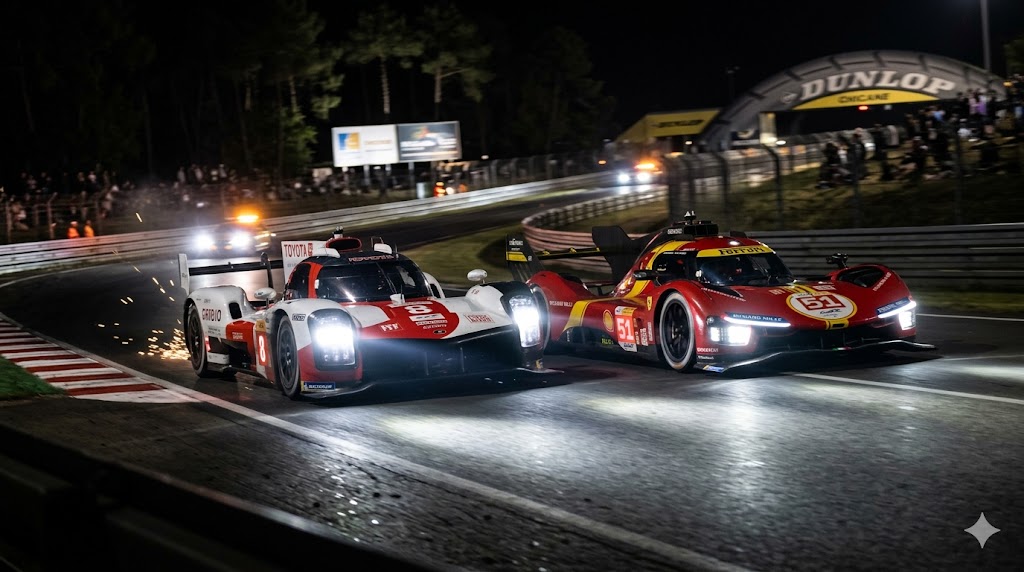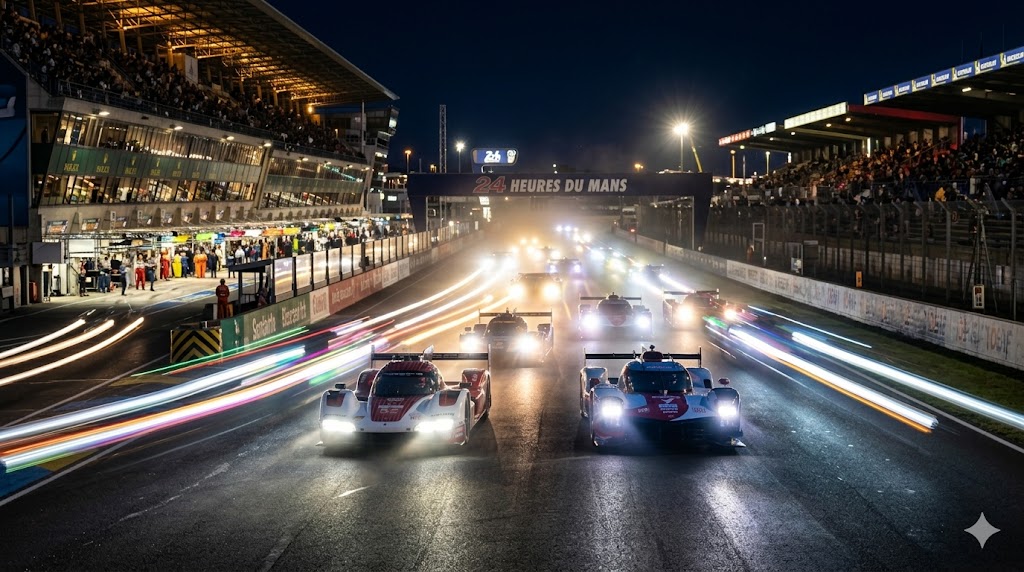

The Circuit de la Sarthe comes alive in mid-June for 24 hours of racing that has, since 1923, served as the sport's most demanding test of engineering and endurance. The Le Mans 24 Hours isn't the fastest race in motorsport - Formula 1 cars would lap the La Sarthe circuit significantly quicker than any LMH prototype. It isn't the most prestigious in the conventional sense - Monaco carries that crown in the public imagination. What Le Mans is, and has always been, is the race that tests everything simultaneously: outright performance, reliability over duration, driver management across day and night, team strategy across 24 hours of decisions, and the ability of engineering to withstand what racing cannot anticipate.
The race's founding principle was commercial rather than purely sporting. ACO organizers in the 1920s wanted to test whether automobiles could maintain racing pace over endurance distances - a relevant question when automotive reliability over long distances was not guaranteed. The manufacturers who competed at early Le Mans were demonstrating to the public that their vehicles were robust enough for real-world use. The commercial logic has evolved but never disappeared: Toyota, Ferrari, Porsche, BMW, and Cadillac race at Le Mans today because the race communicates something about their engineering capability that no other venue provides.
The Mulsanne Straight, now divided by two chicanes introduced in 1990 for safety reasons, remains the most evocative piece of racing tarmac in the world. In the era before the chicanes, prototype cars reached speeds approaching 250 mph on this section. The straight's length - over three miles from the Ford Chicanes to the Mulsanne corner - created the engineering challenge that defined Le Mans for decades: how to make an engine survive at maximum rpm for this distance, repeated hundreds of times over 24 hours.
The technical regulations have evolved across Le Mans' century of competition from near-production vehicles to the current Hypercar era, where LMH (Le Mans Hypercar) regulations define the top class. The current framework is built around 500 kW power limits, hybrid systems, and a cost cap philosophy that allows manufacturers to participate without unlimited development spending. The result has been the strongest manufacturer field in decades.
The driver lineup structure - three drivers per car sharing 24 hours of racing - creates human endurance requirements that parallel the mechanical ones. Sleep deprivation, temperature extremes, the cognitive challenge of maintaining precise performance at 3 AM after multiple driving stints - these are demands that have no parallel in sprint racing. Professional endurance drivers develop specific capabilities around managing these conditions that are distinct from pure pace.
Summary
What it is: A history and context piece on the 24 Hours of Le Mans - why it matters, what makes it distinctive, and how it has shaped motorsport and automotive engineering.
Best for: Motorsport enthusiasts who want deeper context for endurance racing's most important event and the engineering philosophy it represents.
Key tradeoff: Le Mans rewards consistency and reliability as heavily as outright pace - a philosophy that produces different champions than sprint series.
Bottom line: Le Mans has defined automotive endurance engineering for over a century - understanding its history is prerequisite context for understanding modern motorsport.
AutosAdvisor is not affiliated with the ACO or Circuit de la Sarthe. This content is editorial.