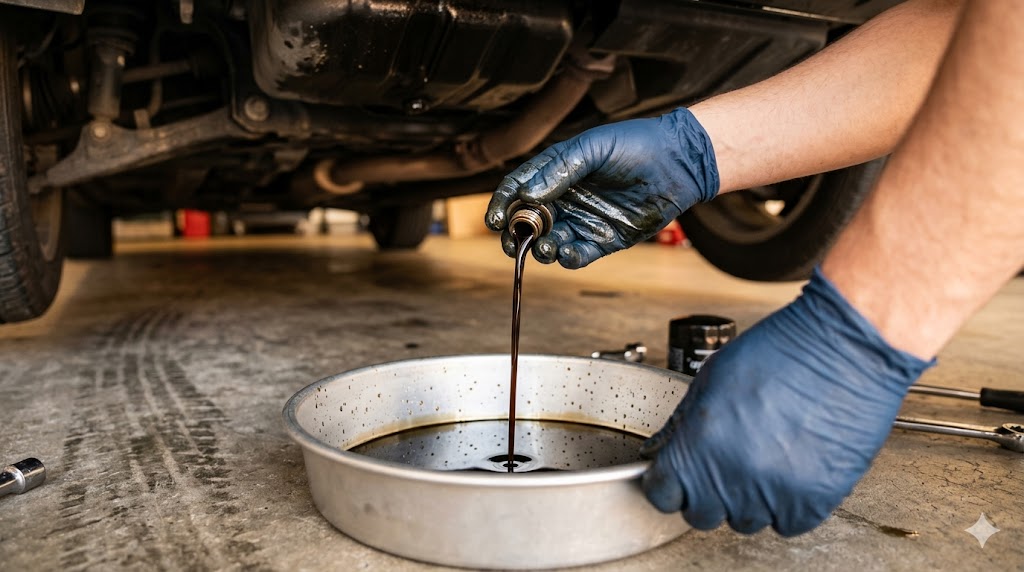

The engine oil change is the gateway DIY automotive task - accessible enough for anyone willing to follow a clear process, consequential enough to matter for long-term engine health, and economical enough to justify the time against dealership service pricing. A conventional oil change at a dealership or quick-lube chain runs $80-$120 for most vehicles using synthetic oil. The same job done at home costs $35-$60 in parts, with the tools needed amortizing across subsequent changes.
The gap between those numbers has widened as oil change service pricing has increased faster than parts costs, making the economic case for DIY more compelling than it was a decade ago. What hasn't changed is the process itself, which is straightforward enough for a first-time DIYer with a clear guide and the right tools.
Before beginning, confirm your vehicle's oil specification and capacity. This information lives in the owner's manual under Maintenance or Fluids. Modern vehicles use specific oil grades - 0W-20, 5W-30, 5W-40, and others - and using the wrong specification affects fuel economy, engine protection, and in some cases warranty compliance. The owner's manual is authoritative; the recommendation from a parts store employee is not.
Oil capacity varies by engine. Most four-cylinder engines require 4-5 quarts; most V6 engines require 5-6 quarts; most V8 engines require 6-8 quarts. Buy slightly more than the specified capacity to allow for spillage and for the initial fill level check.
Filter selection matters. The oil filter removes combustion byproducts and particulates from circulating oil, and filter quality affects how effectively it does this between changes. OEM filters or name-brand alternatives from Bosch, Mobil 1, Purolator, or equivalent manufacturers are appropriate choices. Discount filters with lower filtering efficiency or weaker bypass valves aren't worth the marginal cost savings.
The process requires a floor jack and jack stands if your vehicle doesn't have sufficient clearance to work underneath. Ramps are an alternative for lower-clearance vehicles. Never work under a vehicle supported only by a floor jack. The drain plug location and filter location are vehicle-specific - a vehicle-specific tutorial available through the manufacturer or community resources is a useful reference for your first change.
Drain the old oil when the engine is warm but not hot - warm oil drains more completely than cold, but hot oil creates burn risk. Remove the drain plug, allow complete drainage (allow 5-10 minutes), replace the drain plug with a fresh crush washer if your vehicle uses one, remove and replace the oil filter, add new oil through the fill cap, start the engine briefly to circulate oil and verify no leaks, check the dipstick level, and confirm the drain plug and filter area are dry.
Dispose of used oil responsibly. Auto parts retailers accept used oil for free at most locations.
Summary
What it is: A complete guide to DIY engine oil changes - the most accessible automotive maintenance task for vehicle owners who want to manage routine service themselves.
Best for: Vehicle owners who want to reduce maintenance costs, understand their vehicle's service requirements, and build basic automotive competence.
Biggest cost/risk factor: Using the wrong oil specification or reinstalling a drain plug incorrectly; both have consequences that exceed the savings from DIY.
When to act: At your next scheduled oil change interval - verify the interval in your owner's manual rather than relying on the sticker from the last oil change service.
AutosAdvisor is not a licensed mechanic. This guide is educational and general. Consult vehicle-specific resources and your owner's manual.