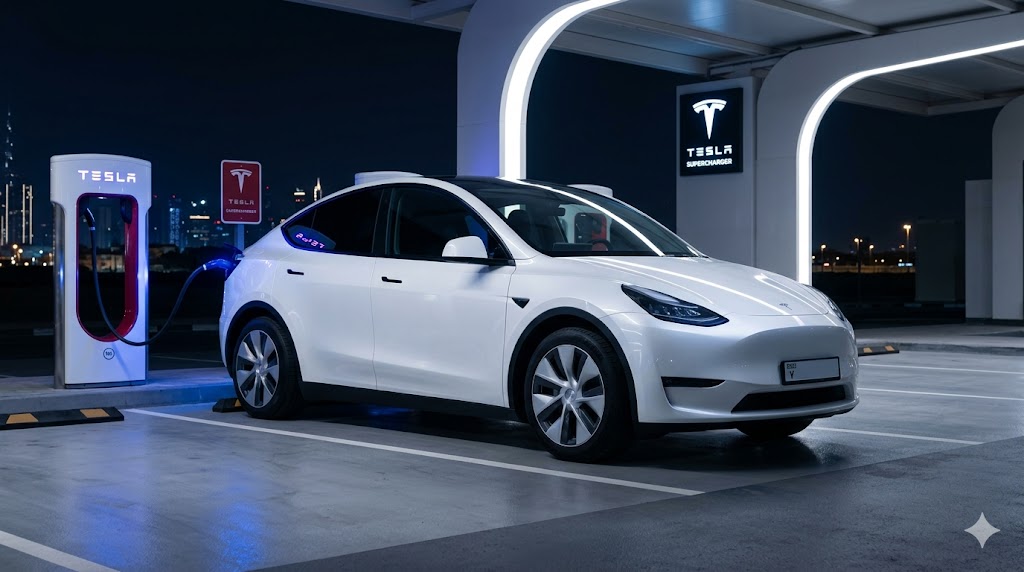
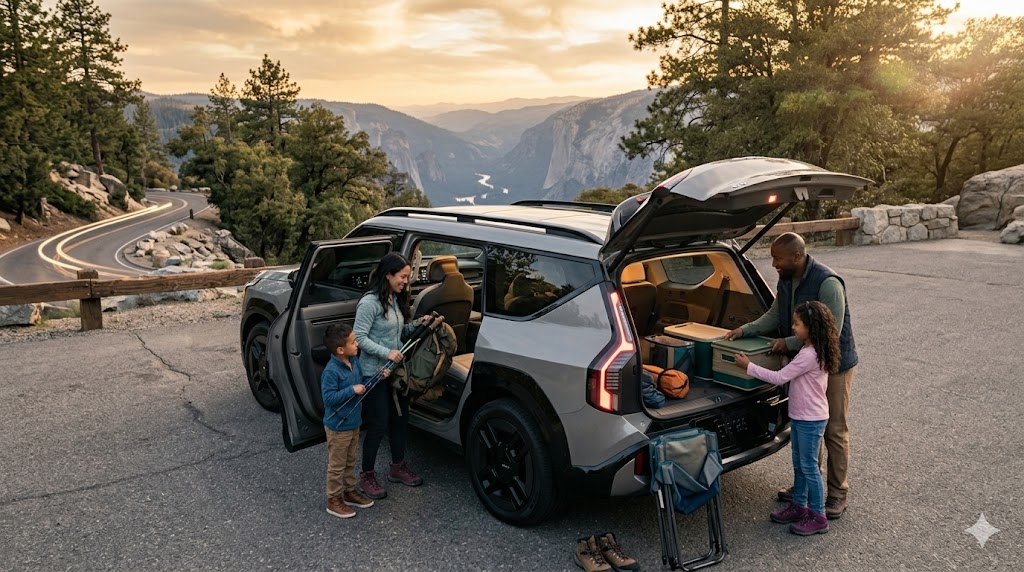
Automakers love to advertise a single, tidy charge-time number, something like "10 to 80 percent in under 30 minutes," and that number is usually true under exactly one set of conditions that rarely matches your driveway or your road trip. Charge time is not a fixed property of a car the way trunk volume is; it is the result of battery chemistry, state of charge, temperature, the charger you happen to plug into, and even how many other cars are drawing power from the same cabinet at that moment. We spent time charging ten popular EVs on both home Level 2 equipment and public DC fast chargers to see how the advertised numbers held up against a stopwatch.
The single clearest pattern across all ten vehicles was that charge time is never linear. Every one of these cars charged dramatically faster from 10 to 50 percent than from 50 to 80 percent, and the last stretch from 80 to 100 percent routinely took as long as the entire first half of the session. That curve is why nearly every fast-charging guide, and every road-tripping EV owner, tells you to stop around 80 percent rather than chase a full battery at a public charger—the marginal minutes stop paying off.
Level 2 home charging: the numbers that actually matter day to day
For the vast majority of EV owners, Level 2 home charging is the number that matters most, since it determines whether your car is reliably full for a normal commute. Across our test group, overnight charging on a properly sized 240-volt circuit consistently took a car from a typical daily depletion back to full within a normal sleep cycle, generally landing somewhere in the range of several hours depending on battery size and how depleted the pack was at the start. Smaller-battery vehicles predictably charged faster on Level 2 than larger-battery trucks and SUVs, simply because they need fewer total kilowatt-hours to fill.
What surprised us was how much variance existed even among cars with similarly sized batteries, tied to each vehicle's onboard charger capacity. Some of our test vehicles accepted the full output of a 48-amp home charger, while others were limited by an onboard charger that capped AC intake well below what the home unit could provide, meaning a more expensive, higher-amperage home charger delivered no benefit at all for those specific cars. This is worth checking against your specific vehicle's specifications before spending extra on a higher-powered home charger under the assumption that more amps always means faster charging.
DC fast charging: where the advertised numbers get slippery
DC fast charging is where the gap between marketing claims and stopwatch reality widened the most. Every vehicle in our test hit its fastest charging rates when the battery was cold-started from a low state of charge, typically somewhere under 20 percent, and pre-conditioned to an ideal temperature beforehand. Vehicles that actively pre-condition their battery when navigating to a fast charger through the built-in navigation system consistently charged faster in the first ten minutes than vehicles that arrived with a battery still at ambient temperature, sometimes by a wide enough margin to change a 20-minute stop into a 35-minute one.
Once the battery passed the halfway mark, the charge rate on every single vehicle we tested began tapering, and by 80 percent, most cars had dropped to a fraction of their peak rate. The practical consequence, which held true across nearly every model regardless of price point or battery chemistry, is that charging from 10 to 80 percent might take somewhere in the neighborhood of 20 to 40 minutes on a suitably powerful DC fast charger, while pushing from 80 to 100 percent on that same charger could take nearly as long again. Road-tripping efficiently on any of these ten vehicles means treating 80 percent as your practical ceiling and finishing the last stretch overnight at home instead.
Battery chemistry changes the shape of the curve, not just the speed
The vehicles in our test group split between nickel-based chemistries and lithium iron phosphate, or LFP, battery packs, and the difference in charging behavior between the two was noticeable beyond just top-line speed. LFP-equipped vehicles in our group tended to tolerate charging closer to 100 percent without as dramatic a slowdown as some nickel-based packs showed in the final stretch, which is part of why some automakers recommend regularly charging LFP vehicles to 100 percent rather than capping at 80 or 90 percent as is typically advised for nickel-based chemistries. If you are choosing between two vehicles partly on charging behavior, it is worth checking which chemistry each one uses, since that has a bigger effect on real-world charging habits than most buyers realize.
Temperature was the biggest variable we could not control for
We ran sessions across different weather conditions, and cold weather was, without exception, the single largest factor separating a car's best charging session from its worst. Every vehicle in our test group charged meaningfully slower on DC fast chargers when the battery started cold, and the vehicles without robust active pre-conditioning suffered the most, sometimes taking noticeably longer to reach 80 percent in cold weather than the same car achieved on a mild day. This matters enormously for anyone road-tripping in winter, since the charge time you experience on a 40-degree day in October may bear little resemblance to what the same car does on a 20-degree day in January, even at the exact same charging station.
What this means for choosing and living with an EV
If charge time is a major factor in your buying decision, the manufacturer's headline number is a reasonable starting point for comparing vehicles against each other, but it should not be treated as a promise about your actual experience. Look instead for independent, third-party charging curve data for the specific model you are considering, which shows how the charge rate behaves across the full range from empty to full rather than just the single fastest moment. And for day-to-day ownership, remember that home Level 2 charging, not public DC fast charging, is what will define your experience most of the time—optimize your home setup first, and treat fast-charging speed as primarily a road-trip consideration.
Key Takeaways
- No EV charges at a constant rate; every vehicle we tested slowed dramatically after roughly 50 to 60 percent state of charge.
- Home Level 2 charging speed depends as much on your vehicle's onboard charger limit as on your home charger's amperage rating.
- DC fast-charging claims assume a pre-conditioned, nearly empty battery—conditions that often do not match real road-trip stops.
- Battery chemistry affects the shape of the charging curve, with LFP packs generally tolerating higher charge levels without as much slowdown.
- Cold weather was the single biggest factor separating our best and worst charging sessions across every vehicle tested.
- Bottom line: treat automaker charge-time claims as best-case benchmarks, and plan road trips around the 10-to-80-percent window rather than charging to full.