Open the charging port door on one side of this CR-V and you'll find a household-style plug. Walk around to the other side and there's a fueling nozzle receptacle that looks like nothing else on a typical dealer lot. That's the entire pitch of the 2025 Honda CR-V e:FCEV in one glance: a hydrogen fuel-cell vehicle that also plugs in, wearing the body of one of America's best-selling crossovers. Nobody had to squint at a weird pod-shaped silhouette to understand what they were looking at, the way they did with the Honda Clarity or the Toyota Mirai. It looks like a CR-V because, mechanically and visually, it mostly is one, and that's precisely the point.
A Hybrid of Hybrids, Not a Science Project
Most hydrogen fuel-cell vehicles built to date have been pure-play statements: the fuel cell stack makes electricity from hydrogen, that electricity drives the motor, and a small buffer battery smooths out the power delivery. There's no plug, no meaningful electric-only driving, and no fallback if you're nowhere near a hydrogen station. The CR-V e:FCEV changes the formula by adding a plug-in rechargeable battery pack alongside the fuel cell system, essentially grafting plug-in hybrid logic onto a hydrogen powertrain. You can charge the battery overnight like you would a plug-in hybrid, and for a meaningful stretch of everyday driving, the vehicle can operate on that stored electricity alone before the fuel cell needs to contribute anything.
That layering matters more than it might first seem. A pure fuel-cell car is entirely dependent on hydrogen infrastructure for every mile; if the nearest station is down for maintenance, you're stuck. By contrast, the e:FCEV's plug-in buffer means a driver who mostly does short local trips might go through normal routines charging at home and rarely dip into the hydrogen side at all, reserving the fuel cell for longer trips, road trips, or days when the battery runs low. It's Honda hedging against the single biggest weakness of hydrogen passenger cars in the US: an infrastructure network that remains thin, regionally clustered, and prone to outages. The plug doesn't fix that problem, but it meaningfully softens it for daily use.
Why the CR-V Body, Not a Bespoke Shape
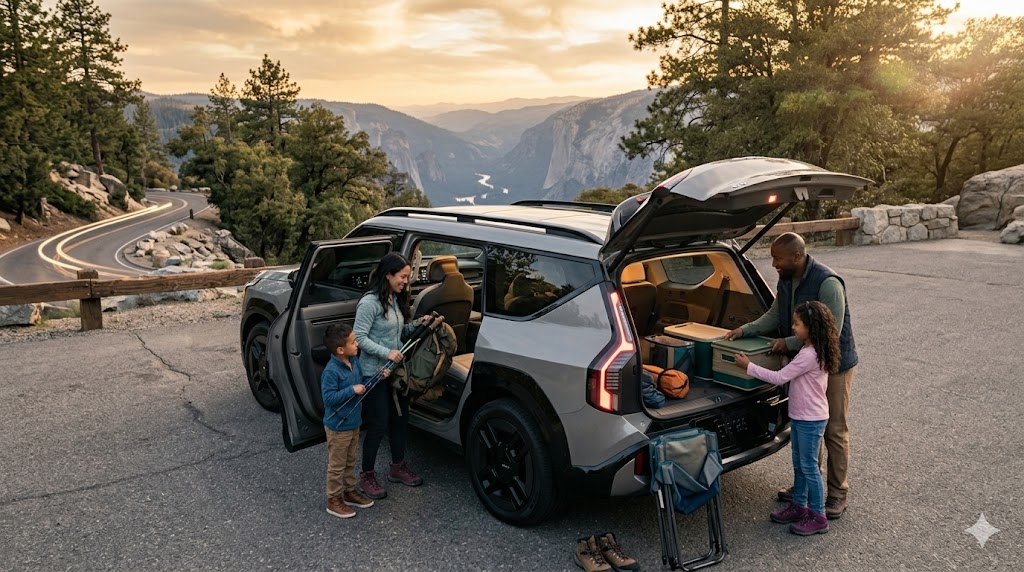
Honda's earlier hydrogen efforts, along with Toyota's and Hyundai's, tended to arrive in distinctive, aerodynamically sculpted bodies that visually announced "this is an experiment." The CR-V e:FCEV instead borrows the sheet metal, cabin, and general driving position of the standard gas and hybrid CR-V lineup. That's a deliberate signal. Honda already builds this SUV at scale for a mainstream family audience, and putting the fuel-cell stack and battery pack into a familiar shell tells prospective lessees they're not sacrificing cargo space, rear-seat room, or the everyday usability that makes a CR-V a CR-V in the first place. There's no strange trunk intrusion or cramped second row to apologize for; the packaging compromises are handled well enough that this reads as a CR-V variant, not a lab prototype wearing a production badge.
There's also a practical manufacturing logic here. Building a fuel-cell vehicle on a shared platform with conventional CR-V variants lets Honda leverage existing assembly investment rather than justifying a whole separate production line for a vehicle that will only ever sell in tiny numbers. It's a more sustainable way to keep a toe in hydrogen development while the broader market and infrastructure catch up, or don't.
Driving It Feels Almost Anticlimactic, in a Good Way
Slide behind the wheel and the e:FCEV drives like an electrified CR-V, which is exactly the compliment Honda was after. Power delivery is smooth and quiet in the way electric motors generally are, with the fuel cell humming along unobtrusively rather than demanding attention. There's no dramatic hydrogen-powered rocket-ship sensation, no unusual driving position, no learning curve for the controls. The steering, ride quality, and general road manners track closely with the rest of the CR-V hybrid family, and that ordinariness is a feature rather than a letdown. Honda isn't trying to make this feel like a futuristic technology demonstrator behind the wheel; it's trying to make hydrogen power feel unremarkable, which is a genuinely different strategy than earlier fuel-cell vehicles that leaned into their novelty.
The plug-in battery range covers a solid slice of typical commuting and errand-running before the fuel cell needs to kick in, meaning many owners could plausibly run on electricity alone for a large share of their weekly mileage, similar to how a plug-in hybrid owner might rarely visit a gas station if they charge consistently. When the battery is depleted or a longer trip is on the agenda, the fuel cell takes over and extends range well beyond what the battery alone could offer, with hydrogen refueling itself taking only a few minutes rather than the wait associated with public EV fast charging. Exact electric-only range, total combined range, and refueling time figures vary by testing conditions and should be confirmed against Honda's current published specifications rather than assumed.
The Hydrogen Station Problem Hasn't Gone Away
Here's the honest caveat that no amount of clever packaging solves: hydrogen refueling infrastructure in the United States remains extremely limited, concentrated almost entirely in specific parts of California, and even within that state, station density and reliability vary significantly by region. Some retail hydrogen stations have closed in recent years due to supply issues or economics, which has made the experience of owning any hydrogen vehicle somewhat unpredictable even for people who live near what looks like a well-served area on paper. Anyone even considering this vehicle needs to check a current hydrogen station locator tool for their specific commute and errands, not just their home ZIP code, before assuming fueling will be convenient. The plug-in battery buffer helps you ride out a bad week if a station is offline, but it doesn't eliminate the underlying fragility of the fueling network the way a home EV charger eliminates dependence on public charging.
There are other trade-offs worth sitting with honestly. Long-term hydrogen fuel pricing has been volatile and, in some cases, higher than expected relative to gasoline or electricity on a cost-per-mile basis, and nobody can say with confidence where that trend goes over the next several years. Resale and residual value for any fuel-cell vehicle is a genuine unknown, since so few have changed hands and the pool of buyers willing to take one on is small by definition. This is why the e:FCEV isn't sold the way a normal CR-V is; it's offered in a tightly limited lease-only or fleet-style arrangement, confined geographically to areas with at least some hydrogen access, which keeps Honda's exposure to those infrastructure and residual-value risks manageable.
Who This Actually Makes Sense For
Strip away the novelty and the realistic buyer profile is narrow: someone who lives and commutes within a genuinely reliable pocket of California's hydrogen network, wants the environmental profile and quick refueling of hydrogen without giving up plug-in convenience for daily errands, and is comfortable leasing rather than owning long-term given the resale uncertainty. It's not a vehicle for someone drawn purely by the idea of hydrogen technology without first verifying that a station sits reliably along their actual routes. For that narrow audience, though, the CR-V e:FCEV is arguably the most livable hydrogen vehicle yet built, precisely because it refuses to feel like one most of the time. Check current lease terms, incentive programs, and hydrogen station uptime in your specific area before signing anything, since all three shift more often than the marketing materials suggest.
Key Takeaways
The CR-V e:FCEV pairs a hydrogen fuel cell with a plug-in rechargeable battery, letting many owners run on electricity alone for a meaningful share of daily driving before the fuel cell is needed. Honda deliberately used the standard CR-V body rather than a bespoke shape, preserving normal cargo and passenger space and making hydrogen power feel unremarkable to drive. Hydrogen refueling is fast compared to public EV charging, but station availability remains extremely limited and concentrated in specific parts of California, with some stations prone to closures or outages. Long-term hydrogen fuel costs and resale value remain genuinely uncertain, and the vehicle is offered only through limited lease or fleet arrangements rather than standard retail sale. This SUV makes the most sense for a narrow group of California-based drivers with verified, reliable hydrogen access along their actual routes, not for buyers drawn to the technology in the abstract. Bottom line: the CR-V e:FCEV is a genuinely clever hedge against hydrogen's infrastructure weaknesses, but confirm current station locations, lease terms, and range figures for your specific area before considering one.