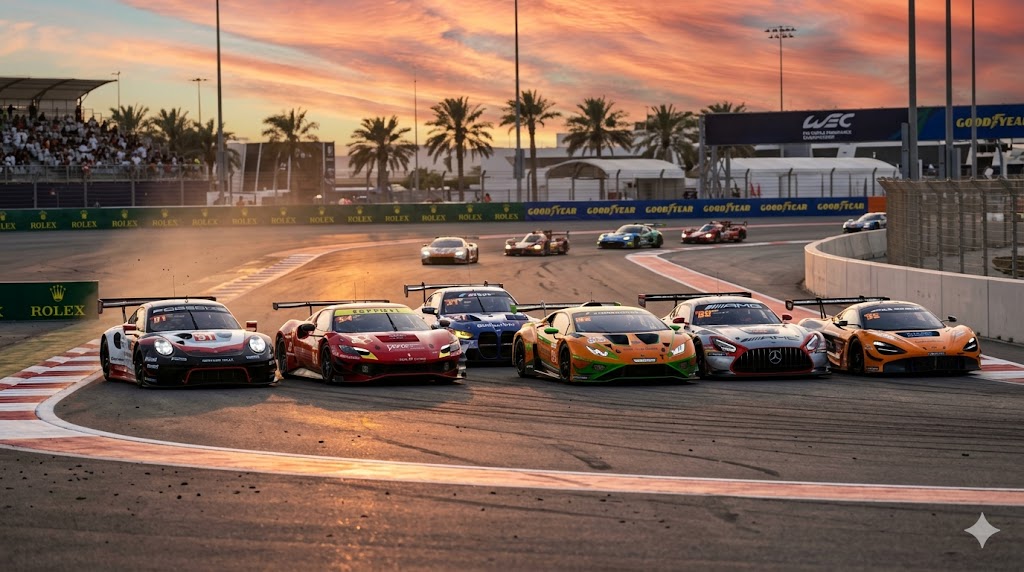

GT3 is not a single racing series. It is a technical specification - a set of regulations governing performance, cost, and setup restrictions - that has become the common language of GT racing across four continents and more than a dozen major championships. The fact that a GT3 car racing in the GT World Challenge America is mechanically similar to one racing in the Nurburgring 24 Hours or the Gulf 12 Hours is not a coincidence. It is the deliberate result of a regulatory framework designed to create competitive parity at a cost that allows manufacturers to participate without the unlimited budgets that define prototype racing.
The success of the GT3 class - measured by manufacturer participation, spectator attendance, television viewership, and the commercial health of the series that use it - is the most significant development in GT racing since the original IMSA GT class defined American endurance racing in the 1990s. Understanding why it works reveals something about what makes motorsport durable.
The core GT3 philosophy is Balance of Performance - a system where each homologated car's performance is adjusted by the series' technical staff through weight, restrictor size, and boost limits to create competitive equality across different manufacturers. A Porsche 992 GT3 R, a BMW M4 GT3, a Ferrari 296 GT3, a Mercedes-AMG GT3, and a Lamborghini Huracan GT3 EVO2 can all win on their day. No single car dominates to the point where competitors give up.
This isn't theoretical. The class record at major events shows manufacturer diversity in winners that no other racing class can match at the same level of competitive intensity. The 24 Hours of Spa-Francorchamps, the premier GT3 event on the calendar, has produced manufacturer winners across the field with regularity that would be impossible if one car or team had a technical advantage that performance adjustments couldn't fully offset.
Manufacturer motivation comes from the commercial logic. A GT3 program costs a fraction of prototype or Formula 1 development, places manufacturer-branded vehicles in high-visibility international competition, and produces performance data and aerodynamic knowledge that influences road car development. The link between a Porsche 911 GT3 RS road car and the Porsche 992 GT3 R is more than marketing - there is genuine engineering overlap in aerodynamic philosophy and suspension kinematics.
For spectators, GT3 racing provides something prototype racing struggles to deliver: cars that look like something you can buy. The visual connection between a Ferrari 296 GT3 and the road car builds audience identification that abstract prototype shapes don't create. Race attendance at GT3 events is consistent in a way that reflects engaged fan bases who follow specific manufacturer brands as much as abstract competition.
Summary
What it is: A global GT racing technical specification that creates competitive parity across manufacturer-produced race cars through Balance of Performance regulations.
Best for: Motorsport fans seeking context for why GT3 racing has become the world's most commercially successful GT category.
Key tradeoff: Balance of Performance creates competitive parity at the cost of allowing pure engineering merit to determine hierarchy - a philosophical tension some purists find unsatisfying.
Bottom line: GT3 is the most accessible, most globally consistent, and most manufacturer-diverse racing class in current motorsport - understanding it unlocks appreciation for endurance racing broadly.
AutosAdvisor is not affiliated with any racing series or manufacturer motorsport program. This content is editorial.