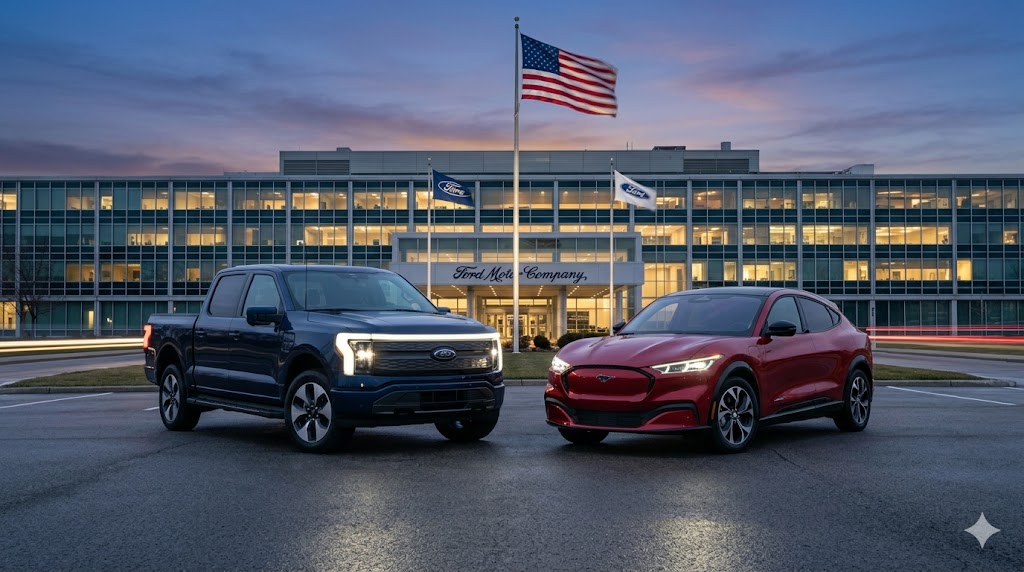

Ford entered the EV transition with a level of public commitment that exceeded most traditional automakers. The F-150 Lightning launch generated extraordinary consumer interest. The Mustang Mach-E established that an EV wearing a performance nameplate could attract buyers. The ambition was genuine and the initial execution was strong enough to establish market position.
What followed was a more complicated story. EV demand grew more slowly than the most aggressive adoption projections suggested. Battery costs didn't fall as fast as Ford's business models assumed. The EV division, operating separately as Model e, reported significant losses per vehicle sold. Production plans were revised downward as inventory accumulated.
The question for 2025 and beyond is whether these difficulties represent a fundamental problem with Ford's EV strategy or a calibration challenge in a transition that is happening, just more slowly and unevenly than predicted.
What Actually Went Wrong
The Lightning's production ramp was beset by quality issues that generated significant warranty claims in early production vehicles. Ford addressed these through software updates and hardware revisions, but the reliability concerns affected consumer confidence during a critical market establishment period.
Pricing evolved in ways that created market confusion. Early Lightning pricing was revised upward as costs became clearer, then revised downward as demand softened. The price volatility created a buyer hesitancy pattern that affected sales beyond the individual model.
Margin pressure was the structural problem. Ford's EV vehicles were being sold at prices that didn't cover their costs at the production volumes being achieved. The path to profitability required either higher volumes, lower costs, or higher prices - all of which involved trade-offs that competing priorities within the organization made difficult to execute cleanly.
Ford's Response
Ford has adjusted its EV investment timeline, paused some planned EV facilities, and refocused on the specific vehicles and price points where EV demand is most proven. The company has simultaneously leveraged its hybrid transition, where vehicles like the Maverick Hybrid demonstrated strong demand at a positive margin contribution.
Summary
What it is: An analysis of Ford's EV strategy challenges in 2025 and the company's response to market conditions that diverged from its original projections.
Best for: Industry observers and prospective Ford EV buyers who want context for understanding the company's current product and pricing decisions.
Biggest cost/risk factor: For buyers: understanding that EV pricing volatility at Ford reflects genuine cost and demand uncertainty, not arbitrary policy.
When to act: Monitor Ford EV pricing and incentive changes quarterly - the market is evolving and significant incentives have become part of the sales calculus.
AutosAdvisor is not a financial analyst or licensed investment advisor. This content is analytical and educational.