Somewhere between the sticker price of an electric vehicle and the sticker price of a comparable hybrid, there's a mileage number where the math flips. Below it, the hybrid wins your wallet every time. Above it, the EV's fuel savings eventually erase its higher purchase price and start putting money back in your pocket. That number isn't fixed. It moves depending on how much you drive, what you pay for electricity, whether gas prices spike or settle, and whether you can plug in at home for pennies or you're stuck paying premium rates at a public fast charger. Most shoppers treat this as a lifestyle choice. It's also, unavoidably, a spreadsheet problem, and the spreadsheet looks different for almost everyone who runs it.
What the Crossover Point Actually Measures
The crossover point is the mileage threshold at which cumulative fuel savings from an EV equal the extra amount you paid for it over a comparable hybrid. Say an EV costs several thousand dollars more than the hybrid trim of the same model or a similar vehicle in its class. Every mile you drive the EV instead of the hybrid saves you the difference between what that mile would have cost in gasoline and what it costs in electricity. Add those savings up, and at some point they equal the upfront price gap. Past that point, the EV is the cheaper vehicle in total cost of ownership. Before it, you'd have come out ahead with the hybrid.
The variables that shift this threshold fall into a few buckets: the purchase price gap itself, which varies by model, trim, and incentives at sale time; annual mileage, since the crossover is measured in miles, not years, and a driver covering 25,000 miles a year gets there far faster than one covering 6,000; your cost per mile of fuel versus electricity, which depends on local gas prices, your utility's rate, and whether you charge at home or rely on public infrastructure that often costs two to three times as much per kilowatt-hour; financing structure and any tax credits, which can shrink or eliminate the price gap on day one; and resale value, which nobody can predict precisely but which affects true ownership cost if you sell early. Each variable can independently move the crossover point by tens of thousands of miles, which is why there's no universal answer — only an answer for your situation.
How Your Driving Pattern Changes the Math
Annual mileage is the single most mechanical lever here, because it's the denominator that determines how fast savings accumulate. A high-mileage commuter, a rideshare driver, or someone who regularly drives long distances for work racks up fuel-cost differential quickly, and the crossover point often arrives well within a typical ownership period. If you're putting on serious miles every year, the EV's lower per-mile energy cost compounds fast enough that the higher purchase price stops looking like a penalty and starts looking like a prepayment.
The picture inverts for low-mileage drivers. Someone who drives a modest commute a few days a week, or who works from home and mostly uses their car for errands, may simply never reach the crossover point within the years they plan to own the vehicle. In that scenario, a hybrid's lower purchase price is arguably the more rational choice, since the fuel savings an EV offers never accumulate fast enough to close the initial gap. Plenty of buyers underestimate how few miles they actually drive a year, and overestimate how quickly an EV will "pay for itself." Pulling actual mileage from a recent odometer reading, rather than guessing, is the single most useful input you can bring to this decision.
Charging Access Is the Variable That Overrides Everything Else
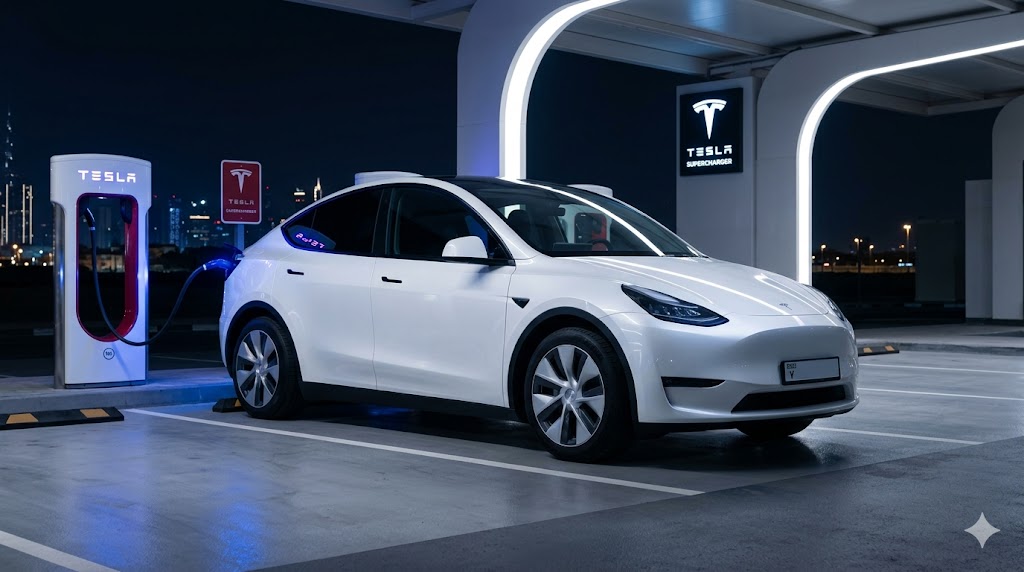
If mileage sets the pace, charging access determines the direction entirely. A driver who can install a home charger and plug in overnight at residential rates is looking at a cost per mile that's typically a fraction of what the equivalent hybrid spends on gasoline. That's the scenario in which EV ownership pencils out fastest, because the electricity cost advantage stacks on top of the fuel-cost advantage inherent to electric drivetrains.
Take away home charging, though, and the math gets murkier. A driver who lives in an apartment without dedicated parking, depending on public DC fast chargers, often pays a rate per kilowatt-hour that erodes much of the EV's cost advantage over gasoline — in some scenarios the cost per mile can approach, or even exceed, what a hybrid costs to run, especially when gas prices are relatively low. This is the variable that gets the least attention in EV marketing and the most attention from people who've actually lived with an EV without a home charger. Be honest about where you'll actually charge, because it can move the crossover point from a few years out to something you'll never reach.
The Incentive Wildcard
Tax credits and other purchase incentives can compress the price gap substantially, sometimes enough to make an EV cost the same or less than the hybrid on day one. A federal tax credit for qualifying electric vehicles has existed in some form for years, and state and utility incentives layer on top in many places. The trouble is that eligibility rules, credit amounts, income caps, and manufacturer qualifications change with legislation and differ by when and where you buy, along with the vehicle's price, battery sourcing, and assembly location. Don't treat any specific credit figure you've seen quoted, including older figures that may no longer apply, as fact — verify current eligibility and the actual amount with a dealer, tax professional, or official government source when you're ready to buy. The incentive landscape can shift your crossover point overnight, so it deserves a fresh check rather than a remembered number.
The Parts of the Equation You Can't Fully Predict
Even a careful crossover calculation rests on assumptions that can move after you've signed the paperwork. Gas prices fluctuate with geopolitics and seasonal demand in ways that are hard to forecast over a five- or eight-year window, and a sustained spike or drop can meaningfully shift the crossover point after the fact. Electricity rates aren't static either, particularly where utilities use time-of-use pricing that rewards off-peak charging.
Battery degradation and resale value add another layer of uncertainty. EV batteries generally hold up better than early skeptics assumed, but degradation varies by climate, charging habits, and how often the battery is run down low or charged to 100 percent. That degradation, real or perceived, feeds into resale value, and used-EV pricing has been more volatile than used-hybrid pricing, partly due to fast-moving technology and fluctuating new-EV prices. A hybrid's resale market is comparatively mature and predictable. None of this means you should skip the calculation, only that you should treat your final number as an estimate with some cushion built in. For example, if you drove roughly 15,000 miles a year and financed the price difference over a typical loan term, you could sketch a rough year-by-year savings estimate using your own local prices, then stress-test it by assuming gas prices drop or electricity rates rise, just to see how far the answer moves. That kind of illustrative exercise tells you more than any generic chart — and this is general information, not financial advice, so it's worth confirming your own figures or talking to a professional before deciding based on projected savings.
Running Your Own Numbers
This comparison resists a one-size-fits-all verdict, and anyone offering a universal answer is skipping steps. A rural high-mileage driver with a home charger and off-peak rates is often looking at a genuinely favorable EV case. A low-mileage urban driver without dedicated parking, dependent on public charging, is often better served by a hybrid. Most buyers fall somewhere between those extremes, which is why doing the arithmetic with your own mileage, local energy prices, and charging access matters more than any general rule of thumb.
Key Takeaways
The financial crossover point is the mileage at which an EV's fuel savings offset its higher purchase price compared with a hybrid. Annual mileage is the biggest lever: high-mileage drivers reach the crossover fast, while low-mileage drivers may never get there. Charging access can override every other factor, since home charging is typically far cheaper per mile than relying on public fast chargers. Tax credits and incentives can shrink or erase the price gap, but eligibility and amounts change often, so verify current terms before assuming any figure applies to you. Gas prices, electricity rates, battery degradation, and resale value all carry real uncertainty that can shift your personal calculation after purchase. Bottom line: run the math with your own mileage, local energy costs, and charging situation rather than a generic comparison, since hybrids remain the smarter financial pick for many drivers while EVs win decisively for others.