A sprint racer who's never sat through a six-hour stint will tell you the hardest part of racing is the overtake. An endurance racer will tell you the hardest part is lap 380, somewhere past midnight, when the car feels fine, the gap behind is comfortable, and every instinct built from years of sprint racing is screaming at you to attack anyway — because attacking is what you've always done when you see a faster lap available. Resisting that instinct, and knowing precisely when to stop resisting it, is the entire discipline separating endurance strategy from sprint strategy.
The Core Difference Isn't Distance, It's What You're Optimizing For
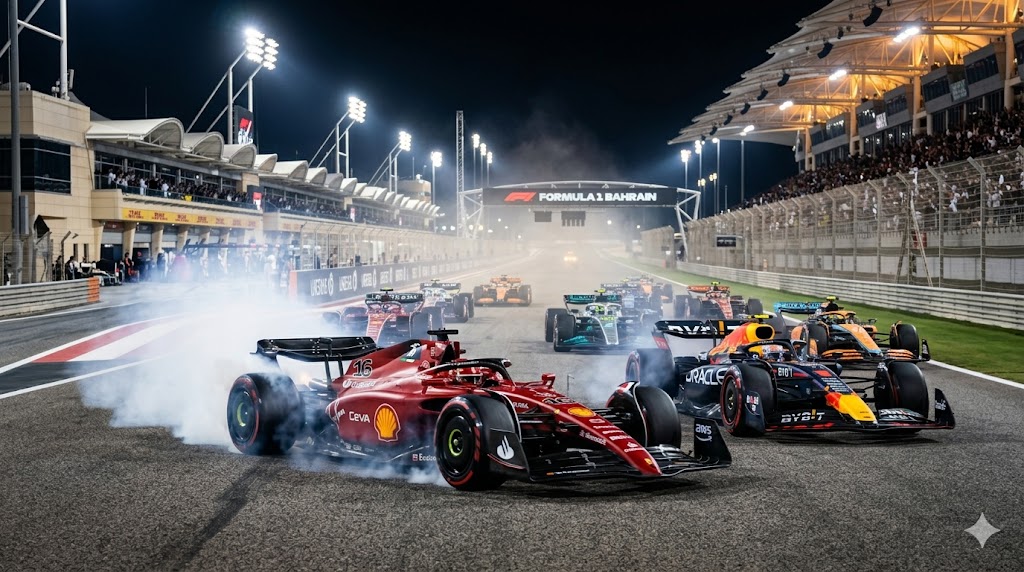
Sprint racing rewards optimizing for a single variable: raw pace over a short, known number of laps. You qualify well, you get a clean start, you push near the car's limit for the whole race because the car and tires only need to survive twenty or forty minutes. Every decision compresses into a short window, which means mistakes are costly but recoverable options are few — there's rarely time to claw back a bad call.
Endurance racing flips the optimization problem entirely. You're not maximizing single-lap pace; you're maximizing the integral of usable pace over hours, across multiple drivers, tire sets, fuel loads, and changing track conditions, while also holding enough mechanical and physical margin in reserve to deal with the unexpected. A driver who posts the fastest lap of an endurance race in hour two has often made a strategic error, not achieved a triumph, because that pace likely came from pushing tires or brakes harder than the stint plan called for. The skill isn't going fast. It's calibrating exactly how fast the car and the moment call for, lap after lap, for far longer than instinct wants to allow.
Tire and Fuel Management Become the Real Competition
In sprint racing, tire management is usually a one-stint problem: manage the degradation curve enough to hold position to the checkered flag. In endurance racing, tire and fuel strategy become the race itself, layered across every stint and every driver change. You're constantly running mental arithmetic on stint length against fuel window, weighing whether pushing now to build a gap is worth the tire wear that will cost more time three stints later than the gap is worth today.
This is where endurance drivers develop a different relationship with their own inputs. Smoothness stops being a nice style trait and becomes the whole job — a driver who can hit 95 percent of the car's pace with inputs gentle enough to preserve tires and brakes for a full stint is often more valuable to an endurance program than a driver who can hit 100 percent for five laps and then falls off a cliff. Sprint racing rarely punishes aggression this severely because the race ends before the bill comes due. Endurance racing always presents the bill, usually at the worst possible moment, like the final stint when the tires you saved are the only thing standing between you and the car behind.
Managing Traffic, Time of Day, and Fatigue Nobody Sees on TV
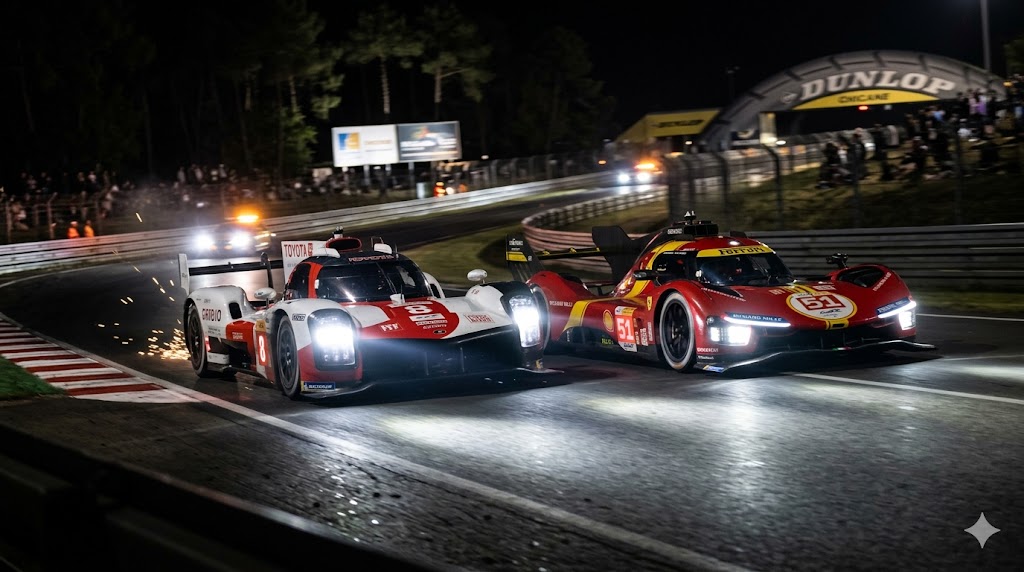
Sprint races happen in a single light condition with a field that's roughly at parity in terms of pace band. Endurance races routinely run through dusk, full darkness, and dawn, across a field containing multiple classes running at meaningfully different speeds on the same piece of track. Navigating a multi-class field at night, with faster prototypes closing at speeds your mirrors barely register in time, is a strategic and physical skill sprint racing simply doesn't ask for. You learn to read closing speed differently, to give predictable racing lines to cars you're about to be passed by, and to trust radio calls from your team about traffic patterns you can't yet see.
Fatigue management is its own strategic layer. A sprint driver's physical preparation centers on peak output for a short, known burst. An endurance driver has to plan for peak decision-making quality at unpredictable moments hours into a race, possibly after a short and interrupted rest break in the paddock, possibly after a double stint taken because a co-driver felt unwell or because a late safety car changed the pit strategy. Teams build driver rotation plans around this reality, often keeping a driver's most demanding stints — the ones through darkness or in the closing hours — matched to whichever driver in the lineup handles fatigue and traffic reading best, rather than simply whoever is fastest on a qualifying lap.
The Pit Wall Thinks in Windows, Not Laps
Sprint strategy is largely reactive and short-horizon: react to the safety car, react to the undercut, react to what the car ahead just did. Endurance strategy operates on a rolling horizon of pit windows, weather forecasts, and competitor fuel strategies that stretch far beyond what's happening on track right now. A good endurance strategist is constantly running multiple future scenarios — what happens if it rains in two hours, what happens if the safety car comes out during our planned window versus ten minutes before it, which competitors are on a different fuel cycle and when that gap will matter.
This changes what a driver is asked to do in the car. In sprint racing, a driver's radio traffic is dense and immediate — gap to the car ahead, tire temperatures, brace for contact. In endurance racing, long stretches of radio silence are normal, punctuated by strategic check-ins about pace targets, fuel numbers, or a heads-up about a competitor's pit strategy that won't matter for another ninety minutes. Drivers have to hold that longer time horizon in their heads without losing the moment-to-moment focus required to avoid a mistake at 3 a.m. on a track they can barely see.
Why the Best Endurance Drivers Aren't Always the Best Sprint Drivers
None of this makes endurance racing strategically superior to sprint racing, and it's worth resisting the temptation to frame it that way — sprint racing demands a different, equally difficult skill: extracting maximum performance under total pressure with zero margin for a settling-in period. Some of the finest sprint drivers in the world have struggled to adapt to endurance racing precisely because their instincts are calibrated for immediacy, and unlearning the impulse to attack every opportunity takes real time.
What endurance racing rewards is a driver's relationship with patience, consistency, and information. The strategic advantage rarely goes to whoever is fastest for five laps. It goes to whoever protects the car, reads the changing race correctly, and is still making clean, calculated decisions in the final hour when tired minds start making sprint-racing mistakes in an endurance-racing race.
Key Takeaways
- Sprint strategy optimizes for raw pace over a short, known window; endurance strategy optimizes for sustainable pace across hours, multiple drivers, and changing conditions.
- Tire and fuel management in endurance racing shape the entire race outcome, not just a single stint, making smoothness and restraint more valuable than five-lap speed.
- Endurance racing adds strategic layers sprint racing doesn't have: multi-class traffic, changing light conditions, and driver fatigue across long, unpredictable stints.
- Endurance pit walls plan on rolling time horizons covering weather, fuel cycles, and competitor strategy, rather than reacting lap by lap.
- Being an elite sprint driver doesn't guarantee endurance success, since the two disciplines reward different instincts around patience and risk.
- Bottom line: endurance strategy is fundamentally about managing a resource budget over time, while sprint strategy is about maximizing output in a fixed, short window.