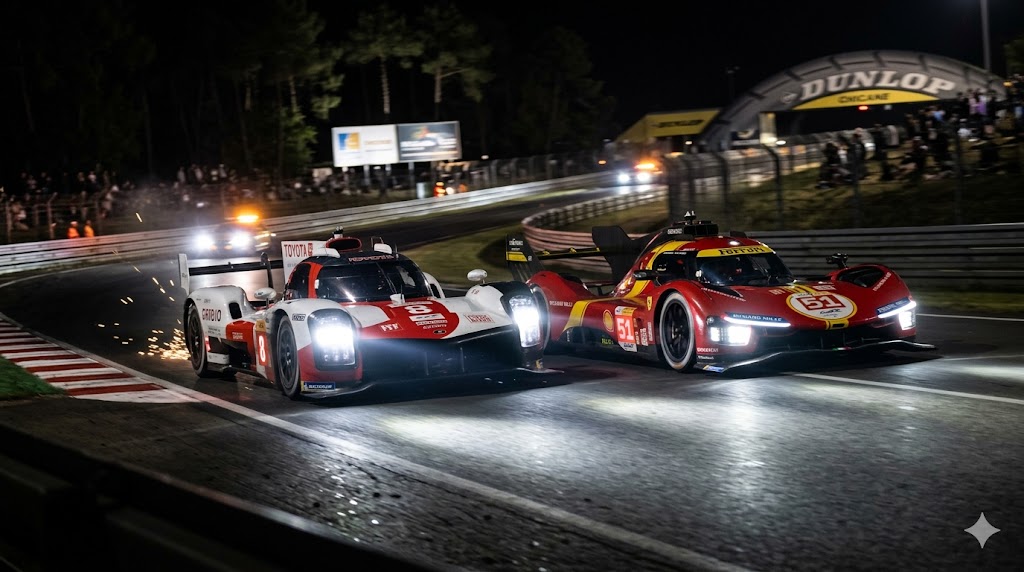
Three drivers, one car, twenty-four hours, and a championship that can hinge as much on how well those three people get along as on how fast any one of them is. That's the underappreciated core of endurance racing: unlike almost every other top level of motorsport, the fastest individual driver in the field doesn't win anything on their own. Success depends on a shared machine being handed off cleanly, stint after stint, between people who have to trust each other's judgment, adapt to each other's driving style, and stay aligned on strategy even when they're not the one physically in the car.
Why Compatibility Matters as Much as Raw Speed
Team principals building an endurance lineup are solving a different problem than a Formula 1 team picking a single fastest driver. A trio needs to be fast individually, but just as importantly, their driving styles need to be compatible enough that the car's setup doesn't have to be a compromise that leaves everyone slightly unhappy. If one driver prefers an aggressive, front-loaded brake bias and another needs a more stable, forgiving rear end to feel confident, engineers are stuck trying to split the difference, and a compromised setup costs lap time for all three drivers rather than optimizing for any of them.
Beyond setup preferences, there's a psychological dimension that becomes obvious the moment something goes wrong in a race, which in a 24-hour event is a matter of when, not if. A driver who just handed the car over after a difficult stint, maybe losing time in traffic or nursing a developing mechanical issue, needs a teammate who receives that update constructively rather than defensively. Lineups where drivers second-guess or resent each other's mistakes tend to unravel exactly when the race gets hardest, while lineups with genuine mutual trust tend to problem-solve together instead of assigning blame, which matters enormously when a car needs to be nursed home over the final hours.
The Logistics of the Handoff Itself
The physical process of swapping drivers is a skill in its own right, and teams practice it relentlessly. A driver climbing out has to communicate everything meaningful about the car's current state, brake feel, any strange noises, how the tires are behaving, traffic patterns to expect, all in the short window of a pit stop, while a driver climbing in has to absorb that information, adjust mirrors and pedals, and immediately go back out into competitive traffic at racing speed. Any hesitation or miscommunication in that handoff costs time, and worse, it can mean the incoming driver misses a crucial piece of information about the car that only becomes apparent a few laps later when it's much harder to diagnose.
Strong co-driver pairings develop shorthand for this handoff process, a compressed vocabulary built over shared testing and racing that lets them convey a lot of information very quickly. That shorthand isn't something teams can simply assign; it develops over repeated races together, which is part of why manufacturer programs and top teams often try to keep successful lineups together across multiple seasons rather than shuffling drivers around purely based on single-race results.
Managing Ego in a Sport Built on Individual Talent
Every driver in a top-level endurance program got there by being exceptionally fast and, in most cases, by having the competitive drive and self-belief that comes with a career built on beating other talented drivers. Asking three such people to share credit, share a car, and sometimes accept a less glamorous stint assignment, like the unglamorous middle-of-the-night hours instead of the final, victory-lap stint, requires a level of ego management that doesn't come naturally to everyone who's good enough to be in that seat.
The best endurance lineups tend to include drivers who've made peace with the reality that a shared championship is still a real championship, and that a well-executed supporting stint is just as valuable to the result as a heroic charge to the finish. Teams and drivers who chase individual glory within a shared-car format, pushing too hard in a stint that calls for consistency, or resenting a strategy call that favors the car's overall position over one driver's personal lap times, tend to create the kind of friction that shows up as inconsistent results over a season, even when the raw talent in the car is exceptional.
How Teams Actually Build These Lineups
Team principals and sporting directors weigh a mix of factors when assembling a three-driver lineup: outright pace, of course, but also a driver's reputation for consistency under pressure, how they've performed in previous multi-driver formats, and increasingly, direct conversations and even personality assessments aimed at gauging compatibility before a season starts. Some programs deliberately pair a highly experienced professional with a younger driver who can learn from them, betting that the mentorship dynamic will produce better long-term results than three similarly experienced peers who might clash over decision-making authority.
Gentleman drivers, common in classes like GT3 and LMP2 where regulations require a mix of professional and amateur-rated drivers, add another layer to this chemistry question. A professional driver paired with a less experienced amateur has to adjust their own driving and communication style, offering guidance without condescension, and often accepting a smaller share of the glamorous stints in exchange for a lineup that meets the required driver categorization while still being genuinely competitive. The best professional drivers in these formats are often the ones who've built a reputation not just for their own speed but for making their amateur teammates measurably faster and more confident.
Why This Chemistry Shows Up in the Standings
Over a full season, the value of strong co-driver chemistry compounds in ways that are easy to underestimate from the outside. A lineup with poor communication might lose a few seconds here and there across a season through slightly slower handoffs, minor miscommunications about fuel or tire strategy, or a driver pushing too hard to compensate for a teammate's earlier mistake. None of those moments look dramatic in isolation, but stacked across a full championship, they're often the difference between a team that contends for a title and one that finishes a strong but forgettable fourth. The teams and manufacturers that have had sustained success in endurance racing over multiple seasons almost always point to driver lineup stability and genuine trust between teammates as a bigger factor than any single technical upgrade.
Key Takeaways
- Endurance racing success depends on three drivers sharing a car effectively, not just on any one driver's individual pace.
- Compatible driving styles matter because incompatible preferences force engineers into setup compromises that cost lap time for everyone in the car.
- The physical driver handoff during a pit stop is a practiced skill, and strong pairings develop compressed communication shorthand built over repeated races together.
- Managing ego and accepting less glamorous stint assignments is essential, since chasing individual glory within a shared format tends to create costly inconsistency.
- Teams increasingly assess personality compatibility alongside pace when building lineups, sometimes deliberately pairing experienced professionals with less experienced or amateur-rated teammates.
- Bottom line: the chemistry between co-drivers compounds quietly over a season, and it's frequently the real differentiator between teams that win championships and teams that simply have fast cars.