
The interest rate environment for auto loans in 2026 is significantly different from the near-zero rate period that made financing comparisons less critical between 2010 and 2022. Current rates mean the financing decision is worth more money over a typical loan term than it was during the low-rate period - and the choice between dealer financing and external financing sources has real, measurable consequences.
The dealer finance office is skilled at obscuring the true cost of financing. The presentation of monthly payments rather than total cost, the flexibility to adjust rate and term in ways that serve the dealer's interest rather than the buyer's, and the legitimate availability of captive lender specials that genuinely are competitive - all create a complex environment where buyers who don't arrive prepared consistently pay more than buyers who do.
How Dealer Financing Actually Works
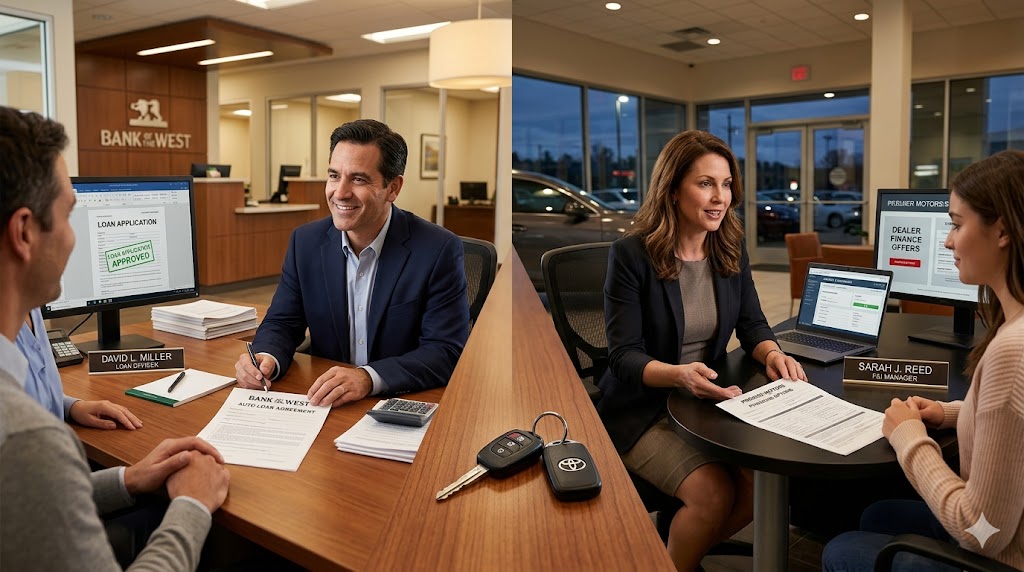
When you finance through a dealership, the dealer submits your credit application to multiple lenders through their dealer management system. Lenders respond with approval rates that represent the minimum interest they will accept for your credit profile. The dealer then has the option to mark up that rate - called dealer reserve or finance reserve - and present you with a higher rate, keeping the spread between the approved rate and your rate as profit.
This practice is legal and disclosed in loan documents that most buyers don't read carefully at signing. The markup can range from zero to multiple percentage points depending on the dealer's practices, your negotiating position, and the lender's allowed markup. On a $35,000 loan over 60 months, a 1% rate difference costs approximately $900 in additional interest.
When Credit Union Rates Win
Credit unions typically offer auto loan rates that are lower than bank and dealer-captive rates for comparable credit profiles, reflecting their not-for-profit structure and member-focused mission. Pre-approval from a credit union before visiting a dealer gives the buyer a known competitive rate to evaluate against the dealer's offer.
Manufacturer captive financing specials - 0% or low-rate offers from Ford Motor Credit, Toyota Financial Services, and similar captive lenders - are the exception where dealer financing is genuinely competitive or better. These programs are available on specific models at specific times and represent real value when they exist.
Summary
What it is: A comparison of auto financing sources - dealer captive financing, manufacturer specials, credit union loans, and bank loans - and when each represents the better value.
Best for: Anyone financing a vehicle purchase in the current rate environment who wants to minimize total financing cost.
Biggest cost/risk factor: Accepting dealer financing without a competing pre-approval is the most common and most expensive financing mistake.
When to act: Get a credit union pre-approval before any dealer visit - it takes less time than most buyers assume and creates the negotiating position that the finance office doesn't want you to have.
AutosAdvisor is not a licensed financial institution or advisor. Interest rates and financing terms vary by lender, market conditions, and individual credit profile. This content is educational.