Ask any IMSA team principal what the season's most important weekend is, and almost none of them will say the finale. They'll point to the last weekend of January, when the paddock rolls into Daytona International Speedway for a race that runs longer than most people's work week and decides far more than a single trophy. The Rolex 24 at Daytona isn't just the opening round of the WeatherTech SportsCar Championship calendar — it's the event that establishes who's fast, who's fragile, and who's already a step behind before the series even reaches its second stop. That's the premise worth unpacking: not who won in any given year, but why this specific race carries outsized weight in shaping the narrative for everything that follows.
Why the Season Opener Punches Above Its Weight
Most racing championships treat their opening round as a data point among many. IMSA's calendar doesn't work that way, because nothing else on the schedule resembles Daytona. Twenty-four hours of continuous racing, run through night, dawn, and the following afternoon, exposes weaknesses that a two-hour sprint never will. A car that looks competitive in qualifying can unravel by hour six if its cooling package is marginal or its brake-by-wire calibration drifts under sustained load. A driver lineup that seems balanced on paper can crumble if the night-shift stints expose a weak link. Teams arrive at Daytona having spent the off-season testing in relatively controlled conditions, and the race immediately subjects every assumption to real stress. What emerges by Sunday afternoon isn't just a result — it's a public audit of preparation, and that audit follows teams into the next race at Sebring and beyond.
The structure of the event amplifies this. Because it runs continuously, Daytona forces teams to solve problems they can defer at shorter races: driver rotation strategy across four-driver lineups, tire conservation through changing track temperatures, fuel strategy windows that stretch across a full day-night cycle, and the ever-present variable of traffic when GTP, LMP2, and GT classes share the track simultaneously. A team that manages those variables well doesn't just win a trophy; it demonstrates organizational depth that translates into confidence for the rest of the year. A team that mismanages them, even while running competitively fast, walks away with a result that undersells its actual pace and a locker room full of lessons to fix before Sebring.
The Multi-Class Puzzle That Rewards Discipline
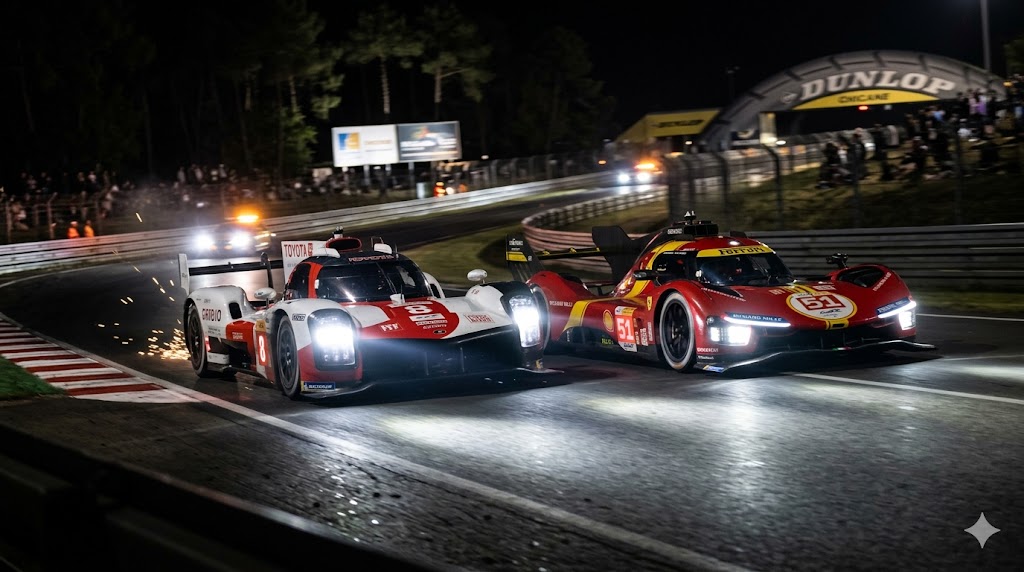
IMSA's endurance races are defined by their multi-class format, and Daytona is where that format is most punishing. With GTP prototypes, LMP2 cars, and GT-class entries all sharing the same 3.56-mile road course layered onto the oval, closing speed differentials between classes routinely exceed 40 mph on parts of the circuit. Navigating that traffic safely and quickly over 24 hours is as much a test of driver judgment and team communication as it is of outright car speed. A GTP driver who mistimes a pass through the infield chicane while lapping a GT car can lose several seconds — or end a car's race entirely. This is precisely why Daytona results are read so closely as season indicators: they reveal which teams have drivers capable of the patience and precision that multi-class racing demands, and which teams are still working out those dynamics.
The tone-setting effect isn't limited to the prototype ranks, either. GTD and GTD Pro entries use Daytona to establish pecking order among manufacturer-backed programs, and a strong showing there tends to carry momentum — both competitive and psychological — into the shorter sprint-format races that follow. Teams that struggle at Daytona often spend the next several rounds trying to claw back not just championship points but also the internal confidence that comes from a clean, competitive endurance result.
Reliability Becomes the Real Storyline
Speed gets the headlines, but Daytona has a long history of being decided by which cars are still running properly at hour twenty rather than which car was fastest at hour two. The race's duration means that mechanical durability, pit crew efficiency, and strategic conservatism during the overnight hours often matter more than a single blistering stint. A team that pushes too hard early risks alternator issues, brake wear, or transmission problems that surface precisely when fatigue is highest among the crew trying to diagnose them at 3 a.m. This is a large part of why Daytona results don't always mirror preseason testing form — the race rewards a different skill set than raw pace, and that discrepancy becomes the season's first real story.
It also means Daytona often produces the year's first genuine underdog narrative. A well-prepared team with a slightly less potent car can beat faster rivals simply by staying out of trouble, avoiding costly incidents in traffic, and executing clean pit stops across dozens of cycles. That kind of result reshapes how the paddock — and the fans following along — perceive the competitive order heading into the rest of the year, even when the raw lap-time data might suggest otherwise.
How Daytona's Result Echoes Through the Rest of the Calendar
Because IMSA's championship rewards consistency across a mixed calendar of sprints and endurance classics, the points earned at Daytona carry real mathematical weight, but the psychological weight matters just as much. Teams that leave Daytona with a strong finish tend to arrive at Sebring with sharper execution and more aggressive strategy calls, because confidence compounds. Teams that leave with a disappointing result — whether from mechanical failure, an ill-timed caution, or simply being outpaced — often spend the following weeks in a visibly different mode: cautious, reactive, and focused on damage control rather than outright wins. Watching how a team responds to a rough Daytona is frequently as revealing as watching how they perform when things go right.
For manufacturers evaluating GTP programs in particular, Daytona also functions as an early referendum on a car's raceable ceiling. A strong showing reinforces development direction for the rest of the season; a rough one triggers the kind of urgent post-race analysis that shapes technical updates arriving by the time the series reaches mid-season races. In that sense, Daytona isn't just an opening chapter — it's closer to a preview screening that tells everyone involved, teams and fans alike, roughly what kind of story this season is going to tell.
What to Watch For Beyond the Trophy
If you're following along casually, it's tempting to focus only on who crosses the line first. But the more useful read on Daytona is in the details: which manufacturers' cars ran clean stints deep into the night, which teams lost time to unscheduled repairs, and which drivers looked composed in traffic under fatigue. Those details, more than the final classification alone, tend to predict who's a genuine championship threat and who simply had one good day. Track those patterns and you'll have a far better sense of how the season is actually shaping up than the finishing order alone can tell you.
Key Takeaways
- The Rolex 24 at Daytona sets IMSA's season tone because its 24-hour format exposes reliability and strategy weaknesses no sprint race can reveal.
- Multi-class traffic management is a core skill tested at Daytona, and results there often predict which teams handle that challenge well all year.
- Mechanical durability and disciplined pit strategy frequently matter more than outright pace, producing early-season underdog storylines.
- Team confidence built or lost at Daytona tends to carry forward into execution at Sebring and beyond.
- Manufacturers use Daytona as an early technical referendum, often triggering development changes visible later in the season.
- Bottom line: watch how teams handle adversity and traffic at Daytona, not just who wins, for the clearest early read on the championship picture.