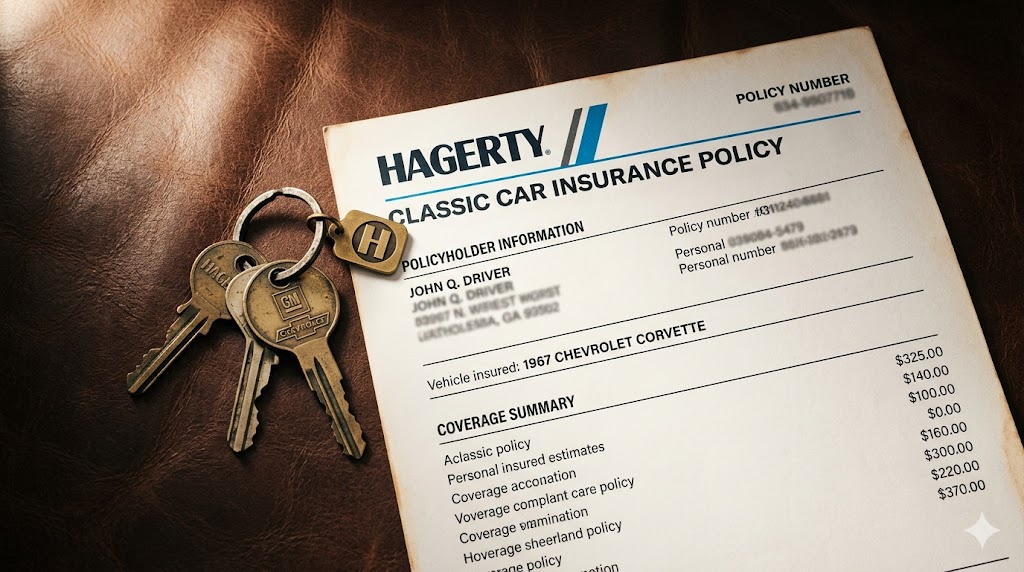

Insuring a classic car with a standard auto insurance policy is one of the more consequential mistakes first-time collector car owners make, and it typically doesn't surface until a claim is filed. Standard auto insurance calculates claims based on Actual Cash Value - what the vehicle is worth in the current market at the time of the claim. For a classic car that has appreciated above replacement cost, this creates an obvious problem: a standard policy may pay substantially less than the car is worth.
The alternative - agreed value coverage from a specialty insurer - establishes the vehicle's value at the time the policy is written, and pays that amount in the event of a total loss without depreciation or market argument. The difference between these two approaches can be tens or hundreds of thousands of dollars on significant collector vehicles.
How Agreed Value Coverage Works
Agreed value policies require a valuation process at the time of policy establishment. The insurer and the vehicle owner agree on a stated value that the policy will pay in the event of a total loss. This agreed value is based on documentation - recent appraisals, purchase documentation, comparable sales records - and established before any claim occurs.
This structure eliminates the post-loss dispute that standard policies create. When a standard policy pays Actual Cash Value on a classic car, the insurer's assessment of market value may differ substantially from the owner's - a dispute that plays out after the loss event, when the owner is in the least favorable negotiating position.
The premium for agreed value coverage is typically low relative to the coverage provided. Classic car insurers price their policies on the statistical reality that collector vehicles are driven far fewer miles, stored more carefully, and involved in accidents far less frequently than daily-use vehicles.
Specialty insurers - Hagerty, American Collectors, Grundy, and Heacock are among the established names in this space - offer policies designed specifically for collector vehicles with coverage terms that standard insurers don't provide.
Summary
What it is: Specialty insurance coverage for classic and collector vehicles that pays an agreed, pre-established value in the event of total loss, rather than market value at time of claim.
Best for: Any owner of a classic, collector, or restored vehicle whose value exceeds what a standard auto policy would pay as Actual Cash Value.
Biggest cost/risk factor: Insuring a collector vehicle with a standard policy is the primary risk - the difference in claim payment can be substantial on any meaningful vehicle.
When to act: Before the vehicle is driven - verify coverage before registration and use, not after.
AutosAdvisor does not sell insurance and is not a licensed insurance agent. This content is educational. Specific coverage terms vary by insurer and policy. Consult a licensed insurance professional for coverage appropriate to your situation.