Walk through Gasoline Alley on race morning at Indianapolis and you will hear the name before you see the cars. Chip Ganassi Racing has spent decades building the kind of reputation that makes rival owners check the timing screens a little more nervously. Few organizations in IndyCar have matched its blend of longevity, championship pedigree, and Indianapolis 500 success, and fewer still have done it while also dabbling successfully in NASCAR and sports car racing along the way. This is a team that did not just participate in open-wheel racing's modern era. It helped define it.
The name itself has shifted over the years, a byproduct of sponsorship deals and ownership mergers common to top-tier racing outfits. Yet through every rebrand, the constant has been Chip Ganassi himself, a former driver turned owner whose eye for talent and appetite for building a professional, well-funded operation turned his team into a fixture at the front of the field. That continuity matters. IndyCar has churned through ownership groups, chassis manufacturers, and even entire sanctioning bodies during the CART-IRL split, and most teams that existed in the 1990s either folded, merged, or faded into midfield anonymity. Ganassi's organization did neither. It kept winning, kept attracting sponsors, and kept building a roster that other owners envied.
A Reputation Built on Indianapolis
No single race carries more weight in American motorsport than the Indianapolis 500, and Chip Ganassi Racing has claimed the Borg-Warner Trophy multiple times across different eras and with different drivers. That kind of recurring success at the Brickyard is not luck. Winning the 500 demands a car that is fast in traffic, a strategy team that reads fuel windows and late-race cautions correctly, and a driver who can keep composure over five hundred miles of ovals, drafts, and split-second decisions. Teams can nail one of those variables in a given year. Ganassi's organization has repeatedly nailed all three, which is why longtime IndyCar observers mention the team in the same breath as the sport's other Indy 500 powerhouses when the conversation turns to who owns the month of May.
That Indianapolis pedigree feeds directly into the team's broader championship résumé. Across its history, Chip Ganassi Racing counts numerous series championships, spanning different points in the sport's evolution from the CART era through the unified IndyCar Series. Consistency across regime changes is the real tell here. A team can catch lightning in a bottle for one season under one set of rules. Doing it again and again, under different aerodynamic packages, different tire suppliers, and different engine manufacturers, requires an organizational depth that most single-car or two-car teams simply cannot replicate.
Why the Name Carries Weight Among Insiders
Ask a paddock veteran to name the handful of organizations that define modern IndyCar history, and Ganassi's name comes up almost automatically, usually alongside a small group of similarly decorated rivals. That status was not inherited. It was earned race weekend after race weekend, through a period when open-wheel racing in America was fractured, underfunded in places, and fighting for television relevance. Ganassi's team not only survived that turbulence, it often thrived during it, which speaks to shrewd business management as much as raw speed on track.
Part of that standing comes from the team's willingness to invest in infrastructure long before it was fashionable. Wind tunnel time, data engineers, simulator work, and a deep bench of strategists became part of the operation's identity well before smaller teams could afford similar tools. That investment created a snowball effect: strong results attracted stronger sponsorship, which funded further investment, which in turn attracted the sport's most sought-after driving talent. It is the same flywheel that top teams in Formula 1 and NASCAR rely on, and Ganassi built an American open-wheel version of it years ahead of many competitors.
Beyond Open-Wheel: A Multi-Series Footprint
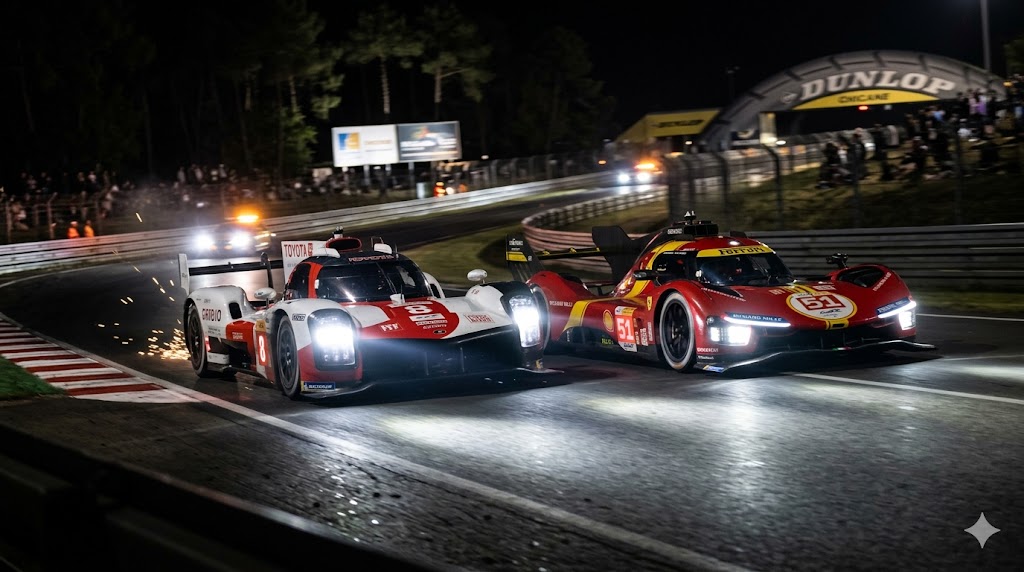
What separates Chip Ganassi Racing from many single-focus IndyCar outfits is its willingness to compete well outside the open-wheel paddock. The organization has fielded competitive programs in NASCAR's top ranks at various points, putting stock cars in victory lane and proving that its engineering and management approach could translate across radically different vehicle disciplines. It has also built a strong presence in sports car racing, including entries at endurance classics like the Rolex 24 at Daytona, where enduring for twenty-four hours under an IMSA rulebook demands an entirely different kind of preparation than a single-day IndyCar sprint.
That multi-series breadth is not just a curiosity for trivia nights. It reflects an organizational philosophy: build systems, personnel, and a winning culture that can be applied to almost any race car, then let the specifics of each series get handled by specialists within that framework. Few team owners in American racing history have stretched their organization across so many disciplines while remaining genuinely competitive, rather than merely present, in each one. It is a rare kind of institutional confidence, and it is part of why the Ganassi name resonates even with fans who follow stock cars or sports cars far more closely than open-wheel racing.
The Talent Pipeline and Team Culture
Championship-caliber cars still need championship-caliber drivers, and Chip Ganassi Racing has built a long-standing reputation as a place where top talent wants to land. Drivers across multiple generations, including several who arrived from open-wheel ranks abroad and some who came up through American short-track and development ladders, have used seats at the team to establish or cement their standing among the sport's elite. That pull works both ways. Being associated with the organization has helped launch or elevate careers, and the presence of proven winners in the driver lineup has, in turn, reinforced the team's own standing as a destination for ambitious talent.
Culture is harder to quantify than lap times, but paddock insiders consistently point to a demanding, detail-obsessed environment inside the team as a genuine differentiator. Engineers are expected to bring data-backed answers, not hunches. Drivers are expected to give precise, actionable feedback rather than vague impressions. That discipline, repeated across race weekends and seasons, is part of what allows an organization to keep winning even as the sport's technical rulebook gets rewritten every few years.
The Trade-Offs of Being a Powerhouse
None of this comes without friction. IndyCar, like most racing series, wrestles with a persistent tension between big-budget organizations and smaller independent teams trying to make a mark on a fraction of the resources. When a team with Ganassi's infrastructure and sponsorship base shows up at every race weekend as a legitimate championship threat, it can make the sport feel top-heavy to fans rooting for underdog outfits. Critics of the current competitive landscape sometimes argue that a handful of powerhouse teams, Ganassi's among them, soak up the majority of top driving talent and technical partnerships, leaving less room for smaller teams to break through organically.
It is also worth being honest that even an organization with this level of pedigree has faced real stretches of underperformance. Seasons have happened where the cars simply were not fast enough, where strategy calls did not pan out, or where a promising driver pairing failed to gel on track. Resources buy opportunity, not guarantees, and Ganassi's team has had to rebuild and retool more than once after disappointing campaigns. That capacity to regroup, rather than any illusion of permanent dominance, may be the more accurate story of how the organization has stayed at the top for so long.
What Keeps the Edge Sharp Across Decades
Sustaining relevance across multiple decades of chassis changes, aerodynamic rule packages, engine manufacturer shifts, and even sanctioning body mergers is its own kind of achievement, separate from any single trophy. Teams that rely purely on one brilliant designer or one dominant driver tend to fade when that person leaves. Organizations built on process, recruitment pipelines, and institutional memory tend to persist. Chip Ganassi Racing has leaned firmly into the latter model, treating each rules reset not as a threat but as another cycle to out-prepare the competition.
That adaptability, paired with the willingness to diversify into NASCAR and sports car racing rather than staying narrowly focused on one discipline, has given the organization multiple avenues for sponsorship, talent development, and technical cross-pollination. Engineers who cut their teeth on stock car aerodynamics have brought lessons back to the open-wheel side, and vice versa. It is a feedback loop few rival owners have managed to replicate at the same scale, and it remains the clearest explanation for why the team's name still commands respect every time the green flag waves.
Key Takeaways
- Chip Ganassi Racing has built one of the most decorated organizational records in IndyCar history, with multiple Indianapolis 500 wins and numerous series championships across different eras.
- The team's continuity under owner Chip Ganassi, through CART-IRL turbulence and multiple chassis and rules changes, sets it apart from many competitors that faded over the same period.
- Its willingness to field programs in NASCAR and sports car racing, including endurance events like the Rolex 24, demonstrates organizational breadth beyond open-wheel racing alone.
- A long-standing reputation for disciplined team culture and rigorous engineering has made the organization a magnet for top driving talent across generations.
- The team's resource advantages have drawn fair criticism about competitive balance in IndyCar, and even Ganassi's operation has endured real slumps despite its pedigree.
- Bottom line: Chip Ganassi Racing's staying power comes less from any single season and more from decades of institutional discipline, adaptability, and talent recruitment that few rivals have matched.