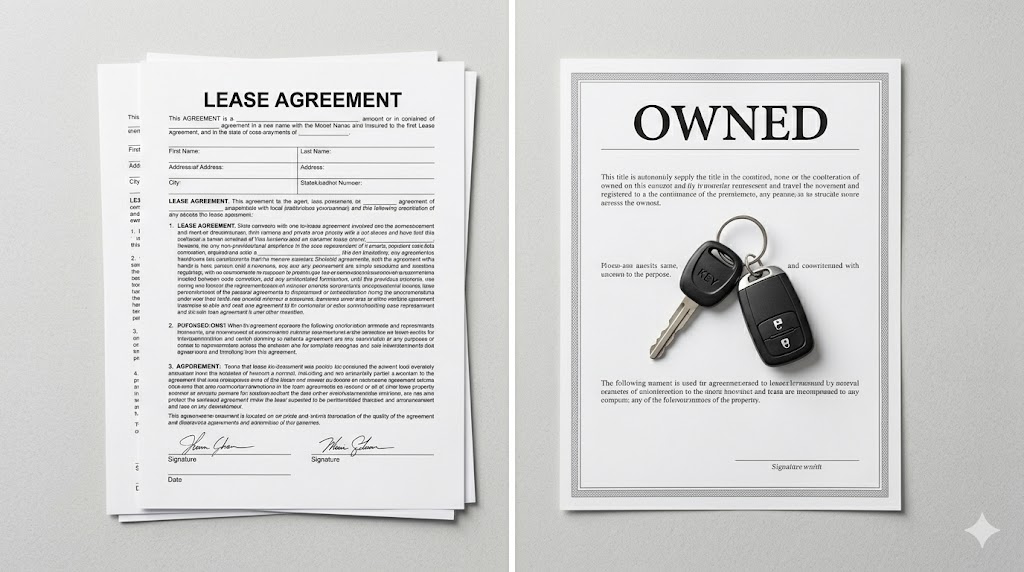

The leasing-versus-buying debate produces strongly held opinions on both sides, frequently without the math to support them. Proponents of buying focus on the equity argument: at the end of a loan, you own the car. Proponents of leasing focus on the monthly payment argument: you drive a newer, better-equipped car for less money per month. Both arguments capture something real, and both miss the complete picture when presented in isolation.
The correct framework isn't which approach is universally better - it's which approach is better for a specific buyer's specific situation, with the analysis performed honestly rather than motivated by the option that produces the lower-looking monthly payment.
The True Cost of Leasing
Leasing costs money in excess of the monthly payment. The money factor (lease interest rate), the capitalized cost (negotiated sale price), the residual value (what the car is worth at lease end), and the acquisition fee combine to determine the real cost. A monthly payment on a lease is not directly comparable to a monthly payment on a loan without also accounting for the fact that the loan builds equity and the lease does not.
The break-even analysis between leasing and buying starts with total cash outflow over the comparison period. A 36-month lease with $3,000 at signing and $500 monthly payments costs $21,000 over the term. A purchase with the same down payment financed over 60 months at current interest rates, accounting for resale value at 36 months, produces a different total cost that depends on the car's depreciation and the interest rate. Neither answer is predetermined.
When Leasing Makes Financial Sense
Leasing typically favors buyers whose vehicles qualify for strong residual values, who drive within the mileage limits, and who intend to change vehicles frequently regardless. Brands and models with strong resale values produce better residuals, which reduces the effective lease cost. Models with poor resale values produce poor residuals, making their leases uncompetitive relative to financing.
Leasing also favors buyers who use their vehicle for business and can deduct lease payments - a tax situation where the after-tax cost changes the equation meaningfully.
Leasing disadvantages buyers who drive high mileage (typically over 15,000 miles annually), who want the flexibility to change their vehicle before lease end without penalty, and who plan to own a vehicle longer than three to four years.
Summary
What it is: A framework for analyzing the lease-versus-buy decision for a specific vehicle and buyer situation, including the cost factors that most discussions omit.
Best for: Any buyer facing the lease-or-buy decision who wants to make it based on actual cost analysis rather than assumptions.
Biggest cost/risk factor: Choosing based on monthly payment alone without accounting for total cash outflow, mileage risk, and equity loss is the most common analytical error.
When to act: Before committing to either financing structure - run the comparison with your specific numbers before the dealership finance office makes the choice seem obvious.
AutosAdvisor is not a licensed financial advisor. This content is educational. Individual financial circumstances vary and independent financial guidance may be appropriate for major purchase decisions.