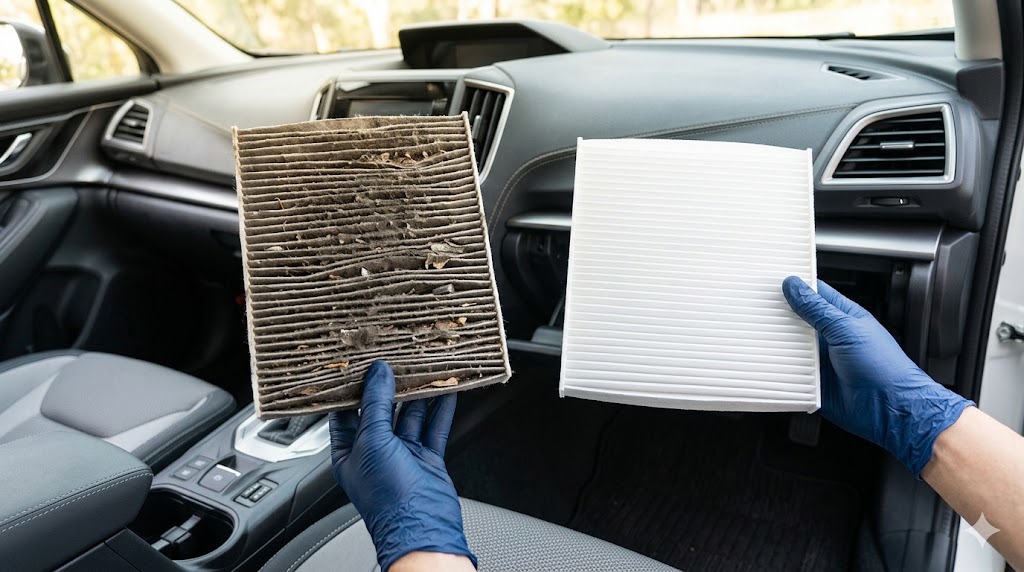

The cabin air filter is the automotive maintenance item with the greatest gap between what it costs to replace yourself and what most dealerships charge to do it. Dealer service departments regularly price cabin air filter replacement at $60-$100, including a filter that cost them $10-20 and a labor charge for a job that takes a competent technician under five minutes. The markup exists because most car owners don't know the job can be done without a lift, without tools, and without automotive training.
This guide covers how to replace the cabin air filter on most common vehicles, what to do if you have a harder-to-access design, and what a dirty cabin filter actually does to air quality and HVAC system performance.
What the Cabin Air Filter Does
The cabin air filter sits in the HVAC system's incoming air path and captures particulate matter - dust, pollen, mold spores, and some combustion particles - before they enter the vehicle's interior. A clean filter allows good airflow and effective filtration. A clogged filter restricts airflow, which reduces HVAC system effectiveness (you'll notice reduced airflow from the vents before the filter causes other problems) and, depending on the filter's condition, may be actively circulating what it's captured back into the cabin air.
Replacement intervals vary by manufacturer, driving conditions, and filter type. Most manufacturers recommend replacement every 15,000-25,000 miles or annually. Drivers in high-pollution urban environments, areas with heavy pollen seasons, or unpaved road conditions should replace more frequently. The filter should be inspected at oil changes and replaced when it shows significant gray or black loading.
The Replacement Process
Most cabin air filters are accessed from inside the vehicle, typically from under the glove box or behind a panel in the HVAC housing. The specific location is covered in your owner's manual under HVAC maintenance, and vehicle-specific tutorials are available for virtually every common vehicle through manufacturer resources and community sites.
The typical process: remove one to four clips or screws from the access cover, slide out the old filter, note the airflow direction arrow on the old filter, insert the new filter in the same orientation with the arrow pointing the correct direction, and reinstall the cover. No specialty tools required.
The exception is vehicles where the filter is located under the hood or in a less accessible dashboard location - a smaller number of designs where the job takes longer, though still rarely more than 20-30 minutes with vehicle-specific guidance.
Filter selection matters modestly. A standard particulate filter at $15-20 performs the core function. Carbon-activated filters at $25-40 add odor capture that some drivers find worthwhile. HEPA-rated filters are available for some vehicles but require verification that the HVAC system can accommodate the increased resistance.
Summary
What it is: A common vehicle maintenance task - replacing the cabin air filter that cleans incoming HVAC air - that most owners can complete without tools or mechanical experience.
Best for: Any vehicle owner who pays dealer prices for this service or has never replaced the filter and doesn't know when it was last done.
Biggest cost/risk factor: Installing the filter in the wrong orientation (reversing the airflow direction arrow) reduces its effectiveness without preventing installation.
When to act: Check your filter at your next oil change - if it's gray or black, replace it now. If you don't know when it was last replaced, replace it now.
AutosAdvisor is not a licensed mechanic. This guide provides general educational information. Consult your owner's manual and vehicle-specific resources for your specific vehicle.