The number on an EV's window sticker tells you almost nothing about whether that car can actually get you from Denver to Salt Lake City without a miserable afternoon spent hunting for a working charger. Shoppers fixate on EPA range because it's the single figure dealers print in bold, but range on its own is a poor predictor of road-trip competence. A vehicle rated at 300 miles that charges slowly past 20 percent state of charge, or that only plays nicely with a thin slice of the fast-charging map in the region you're driving through, will make for a worse trip than a car rated at 260 miles that charges quickly and taps into a dense, reliable network. Road-trip readiness is a combination of three things: how far the car really goes under highway conditions, how fast it can put charge back in during a stop, and whether the plug on the car and the plugs along your route actually match up. Get any one of those wrong and the other two don't matter.
Start with range, because it's the factor most drivers misunderstand. EPA ratings are built from a blended test cycle that includes a lot of city-style driving, moderate speeds, and mild climate conditions—none of which resembles four hours at 75 mph with the climate control fighting a hot afternoon or a mountain pass. Aerodynamic drag rises sharply with speed, so the difference between cruising at 65 and 80 mph can shave a meaningful chunk off your effective range, often more than drivers expect. Cold weather compounds the problem: battery chemistry is less efficient when cold, the car burns energy to heat the battery itself, and cabin heating draws directly from the same pack that's supposed to be moving you down the highway. Add elevation gain, a roof box, a loaded trunk, or a small trailer, and the gap between the sticker number and what you'll see on a real trip can widen further. None of this means EPA range is useless—it's a legitimate baseline for comparing cars—but treating it as a literal trip-planning figure is how people end up limping into a charging stop at 3 percent.
Charging speed is the second piece, and it's the one most commonly oversimplified into a single kilowatt number pulled from a spec sheet. A car advertised as capable of very fast peak charging can still make for a slow, frustrating road trip if that peak only lasts for a few minutes before the charging curve tapers hard. What actually determines how much time you spend standing around at a charger is the shape of that curve across the whole session—how quickly the car ramps up when you plug in, how long it can sustain a high charge rate, and how aggressively it slows down as the battery fills, particularly above roughly 60 to 70 percent state of charge. Two vehicles with identical peak charging numbers can behave completely differently in the real world if one holds its peak rate for a wide window and the other spikes briefly and then drops off. Battery temperature matters too: arriving at a fast charger with a cold pack, common in winter or after a long highway cruise in cool weather, can suppress the charge rate the car is able to accept regardless of what the charger itself is capable of delivering. The smart road-trip habit isn't chasing the highest peak-kW figure you can find in a spec comparison; it's understanding, or looking up, how a given model's curve actually behaves and planning charging stops around the range where that car charges fastest rather than topping off to 100 percent every time.
Realistic Range Planning for the Road
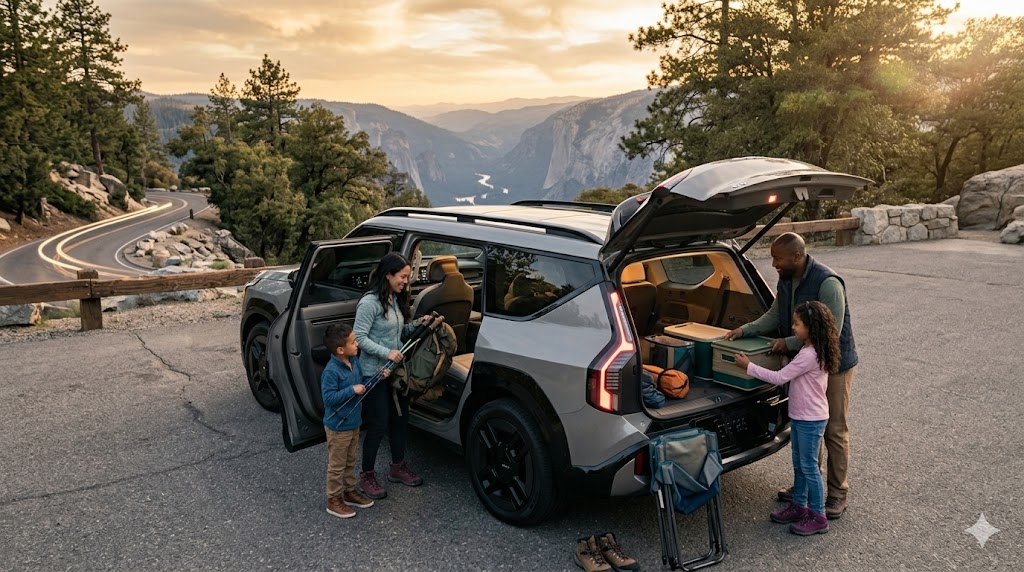
Planning a long EV trip well starts with treating the EPA number as a ceiling, not a target, and building in a buffer under it before you ever look at a map. A reasonable approach is to plan around arriving at each charging stop with a meaningful cushion left in the battery rather than assuming you'll stretch every leg to the edge of the rated range—unexpected detours, traffic, or a closed charger down the line can eat that margin fast. Cold-weather trips deserve extra conservatism, since both reduced efficiency and charging-curve suppression stack on top of each other in winter conditions; a route that works comfortably in June can feel tight in January in the same car. If you're towing a small trailer, carrying a full load of passengers and gear, or running the climate control hard, adjust your expectations downward again, since these effects are additive rather than trivial rounding errors. None of this is unique to any one brand or model—it's physics that applies across the EV market—so the discipline of padding your range assumptions matters more than which specific car you're driving.
Charging Curves in Practical Terms
On the road, the charging-curve concept translates into a simple habit: shorter, more frequent stops in the sweet spot of the curve usually beat fewer, longer stops that chase a full battery. Because charge rates taper as the pack fills, the last 20 or 30 percent of a charging session is disproportionately slow compared with the middle stretch, so drivers who charge from a low state of charge up to somewhere in the 70-to-80-percent range and then get back on the highway typically make better time than those who wait for a full charge at every stop. This also means the "time to charge" figure you see in marketing materials, usually expressed as a jump between two specific percentages, may not reflect the leg of your actual trip, especially if you're starting from a higher state of charge than the marketing scenario assumes. Charger hardware matters here too: plugging into a lower-power charger than the car is capable of using will cap your rate regardless of the vehicle's own curve, so matching your stop to a charger that can actually feed the car at a useful rate is as important as the car's own capability. Because these figures vary by model, by software version, and by real-world conditions, the responsible move before any long trip is to check current, model-specific charging specs rather than rely on numbers that may already be outdated by the time you're reading them.
Network Access and Route Planning
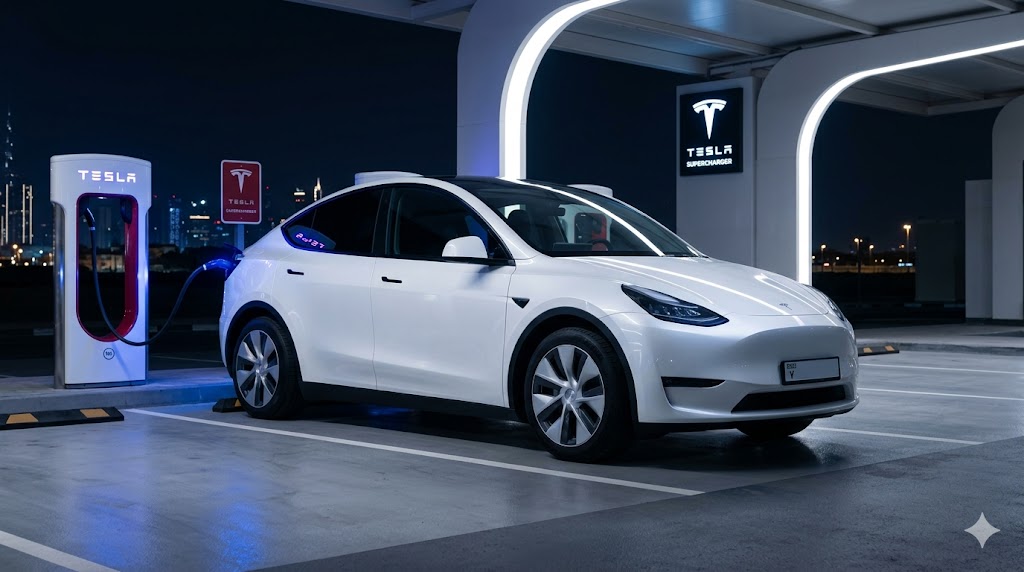
The third factor, and the one that has shifted the most in recent years, is whether your car's plug and preferred network actually line up with what's installed along your route. The industry has been moving toward broader standardization of fast-charging connectors across manufacturers, which is gradually reducing the plug-compatibility headaches that used to strand certain EVs away from entire networks. That shift is a genuine improvement for road-tripping, but it's a trend in progress, not a finished state, and coverage still varies meaningfully by automaker, by adapter availability, and by region. Before committing to a route, use a current trip-planning tool, whether built into the vehicle's own navigation or a third-party app, that accounts for your specific car's charging capability, current traffic, and real-time charger status rather than a static list of station addresses. Real-time reliability data matters enormously here: a charging stall that appears on a map can be offline, occupied, or throttled by demand at the exact moment you arrive, and charger uptime still varies by network and by location in ways that a printed station count can't capture. Treat any single charger as a maybe, not a guarantee, and build routes with a fallback option in mind, especially in rural stretches or regions with thinner charging infrastructure. This is also where the "looks great on paper" trap catches people: a vehicle with excellent range and a strong charging curve can still be a poor road-trip companion if it's tied to a network with sparse coverage on the corridors you actually drive.
Road-tripping in an EV has become dramatically more practical than it was even a few years ago, and for a lot of routes and a lot of drivers, it's now a genuinely low-drama experience. But it still asks more of you upfront than a gas car does—checking real-world range expectations, understanding how your specific car's charging curve behaves, and verifying charger status along your actual route rather than assuming infrastructure will simply be there and working. The best road-trip EV isn't necessarily the one with the biggest range number; it's the one whose real-world range, charging behavior, and network access all hold up together on the corridor you're actually going to drive, which is exactly why the specs worth trusting are the current ones you check right before you leave, not the ones you remember from a spec sheet months earlier.
Key Takeaways
A big EPA range number doesn't guarantee a good road trip if charging speed or network access falls short. Real-world highway range typically trails the EPA rating due to speed, HVAC use, cold weather, elevation, and added cargo or towing weight. Charging speed is really about the charging curve—how the rate holds up and then tapers as the battery fills—not just the peak kW figure on a spec sheet. Shorter charging stops that top off to roughly 70-80 percent are usually more time-efficient than waiting for a full charge every time. The industry's move toward more standardized fast-charging connectors is easing compatibility issues, but coverage and reliability still vary by network and region. Bottom line: before any long trip, check current range and charging specs for your specific car and use a live trip-planning tool that accounts for real-time charger status along your actual route.