Buying a gas-powered family SUV is mostly a space-and-features exercise. Buying an electric one adds a third, unforgiving variable that quietly fights the other two: range. Push for a third row and more cargo capacity, and you typically add mass and frontal area that the battery has to work harder to move, which trims real-world range. Chase maximum range with a more aerodynamic, lighter two-row build, and you may give up the cargo flexibility a growing family needs for strollers, sports gear, and grandparent visits. Add safety into the mix — not just crash-test ratings but the driver-assist suite that actually gets used on a daily carpool loop — and you have three variables that rarely max out simultaneously in the same vehicle at the same price point.
This is the actual shopping problem, and it's why "best electric SUV" lists that just rank horsepower or headline range numbers miss what family buyers need. You're not optimizing one column in a spreadsheet. You're deciding which two of three priorities matter most for your specific driving pattern, then finding the SUV that clears your bar on the third without an unacceptable compromise. The rest of this piece walks through how to evaluate each factor on its own terms, then how to weigh them against each other so you land on the right vehicle instead of the vehicle with the best marketing copy.
Range: Match the Number to Your Actual Week, Not the Sticker
The EPA range figure on the window sticker is a starting point, not a promise. For family use, the number that matters is whether the vehicle comfortably covers your heaviest realistic week — school runs, activity shuttling, a grocery run, maybe an unplanned errand — without forcing a mid-week charging stop you didn't plan for. Build in a buffer above your typical weekly mileage, because real-world range rarely matches the window sticker once you factor in highway speeds, climate control, and a fully loaded cabin.
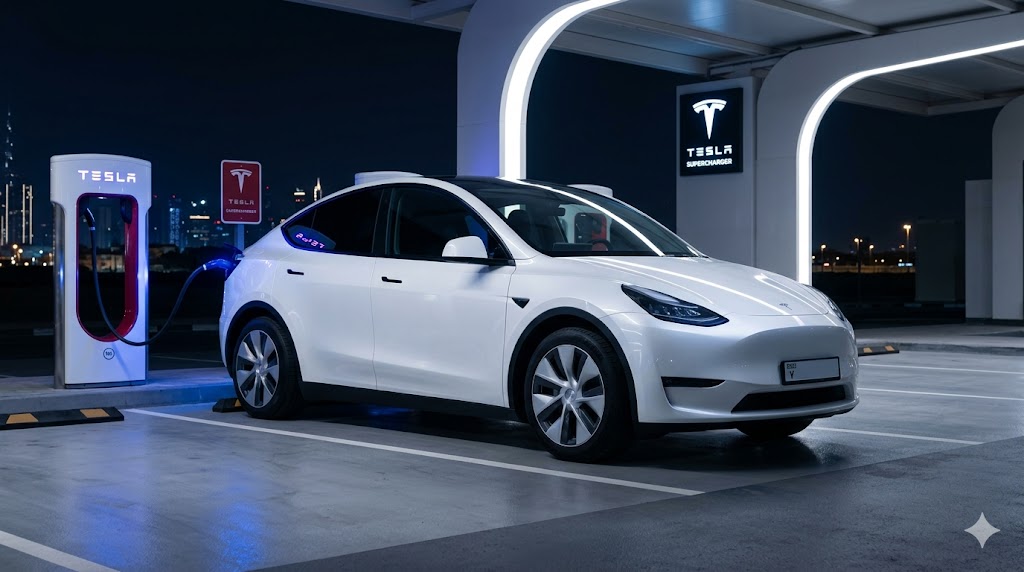
Cold weather is the variable that catches new EV owners off guard, and it matters disproportionately for families who can't simply wait out a storm before the school pickup line. Battery chemistry is less efficient in low temperatures, cabin heating draws directly from the same pack that moves the vehicle, and short trips in cold weather rarely let the battery reach an efficient operating temperature. Families in colder climates should treat the advertised range as a mild-weather ceiling and plan around a meaningfully lower number for winter months. If you road-trip regularly, also look past range alone to charging speed and, just as important, the density and reliability of fast chargers along the routes you actually drive — a bigger battery is only useful if you can refill it without derailing a family trip.
Highway driving is another place where SUVs in particular give back some of their advertised efficiency. The upright, boxy shape that makes these vehicles roomy inside also increases aerodynamic drag at speed, so a family SUV will typically see a bigger gap between city and highway range than a sedan will. If most of your driving is highway-heavy commuting or interstate travel to visit family, weight that scenario more heavily than the combined EPA figure when comparing models.
Space: Where the Battery Fights the Third Row
Battery packs generally live in the floor, which is part of why EVs tend to have flat load floors and low centers of gravity — genuine advantages for family driving dynamics and interior packaging. But that same floor-mounted pack raises the seating position and interacts with how much room engineers have to carve out a comfortable, usable third row without pushing overall vehicle height, weight, and price up significantly. This is why three-row electric SUVs are still a smaller, newer segment than two-row models, and why the third-row seats that do exist often suit kids more comfortably than adults for longer stretches.
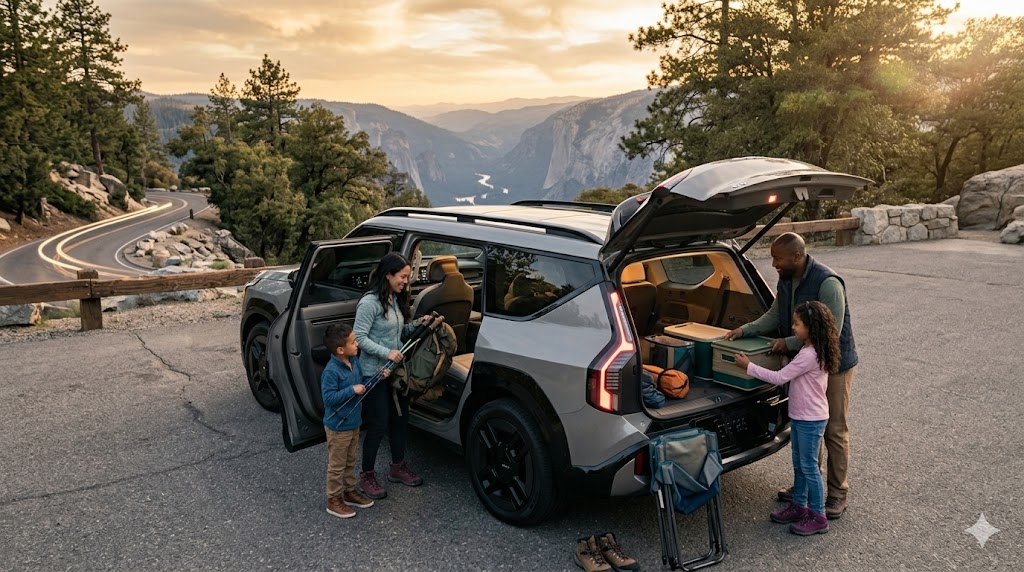
The trade-off compounds: a true three-row electric SUV usually means more mass, which means either a bigger (heavier, pricier) battery to maintain range, or an accepted hit to range and efficiency versus the automaker's two-row version. Families cross-shopping a two-row with a roomy cargo area against a three-row with tighter cargo behind the last row should treat this as a real fork in the road rather than assuming the three-row model does everything the two-row does plus more seats. Check cargo volume figures behind each row, not just the maximum with seats folded, since that's the number that reflects what you'll actually have available on a normal day with all seats in use.
Frunk space — the front trunk made possible by not needing an engine bay — is a genuine bonus unique to many EVs, useful for charging cables, muddy gear, or valuables you'd rather not leave in the main cabin. It won't replace a missing third row, but it's a real, often-overlooked space advantage worth factoring in when you're comparing total usable volume across competing models.
Safety: Ratings Are Necessary, But Read the Fine Print on Trim
Crash-test ratings from IIHS and NHTSA remain the foundation of any family safety evaluation, and the good news is that many electric SUVs perform well, partly because battery placement lowers the center of gravity and can improve rollover resistance, and partly because these are newer platforms designed against current test protocols. The catch is that both agencies update their tests and ratings by model year, and a strong rating on an outgoing model year doesn't automatically carry over. Always check the specific model year you're buying against current ratings rather than relying on a rating you remember from a review of an earlier version.
Driver-assist technology is where things get more variable than buyers expect, because automakers frequently gate meaningful safety and convenience features behind trim levels or optional packages. Automatic emergency braking is close to standard across the industry at this point, but blind-spot monitoring, rear cross-traffic alert, rear-seat reminder systems (which matter enormously for families given how often hot-car tragedies involve otherwise attentive parents), and more advanced driver-monitoring features can vary meaningfully between a base trim and a mid-level or top trim of the exact same model. Don't assume the safety suite you read about in a review applies to the trim and price point you're actually planning to buy — verify the equipment list for that specific configuration.
Also worth evaluating for family use specifically: visibility and blind-spot size, given that three-row SUVs and larger battery-pack designs sometimes come with higher beltlines or thicker pillars that affect sightlines; the ease and intuitiveness of installing child seats across the second and third row; and whether rear-seat reminder or occupant-detection technology is standard or optional, since this is a category where the whole point is protecting the passengers least able to advocate for themselves.
Weighing the Three Against Each Other
No electric SUV currently maximizes range, space, and safety simultaneously at every price point, so the practical exercise is ranking your own priorities before you rank the vehicles. A family doing mostly local driving with occasional longer trips can often prioritize space and safety equipment over chasing the highest range figure on the lot, since a moderate range with a comfortable buffer will cover nearly every real week even after accounting for winter derating. A family that regularly drives long distances between cities, especially through colder regions, should weight range and charging network reliability more heavily, even if it means accepting a tighter third row or a two-row layout instead.
Families who need the third row non-negotiably should go in expecting to trade some range and efficiency for that space, and should compensate by being more conservative about their range buffer and more diligent about checking safety equipment trim-by-trim, since the newer three-row EV segment includes a wider mix of feature availability across trims than the more mature two-row segment. Whatever your priority order, resist comparing vehicles on a single headline spec. The right family electric SUV is the one where your lowest-priority factor still clears your minimum bar, not the one that wins the spec sheet on your favorite metric alone.
Key Takeaways
Range needs should be sized to your heaviest realistic week plus a buffer, since cold weather and highway speeds both meaningfully cut real-world range below the EPA sticker number. Three-row electric SUVs generally trade some range and efficiency for cargo and passenger space because of how battery placement interacts with vehicle size and weight. Always check current-model-year IIHS and NHTSA ratings rather than assuming a strong score from a previous year still applies. Driver-assist and rear-seat safety features often vary by trim level, so confirm the exact equipment list on the configuration you intend to buy, not just the range-topping trim reviewed online. Frunk storage and flat load floors are real space advantages unique to many EVs, but they don't substitute for a genuinely usable third row if you need one. Bottom line: rank your own priorities among range, space, and safety before you rank vehicles, and choose the SUV where your lowest priority still clears your personal minimum rather than the one that wins a single spec-sheet category.