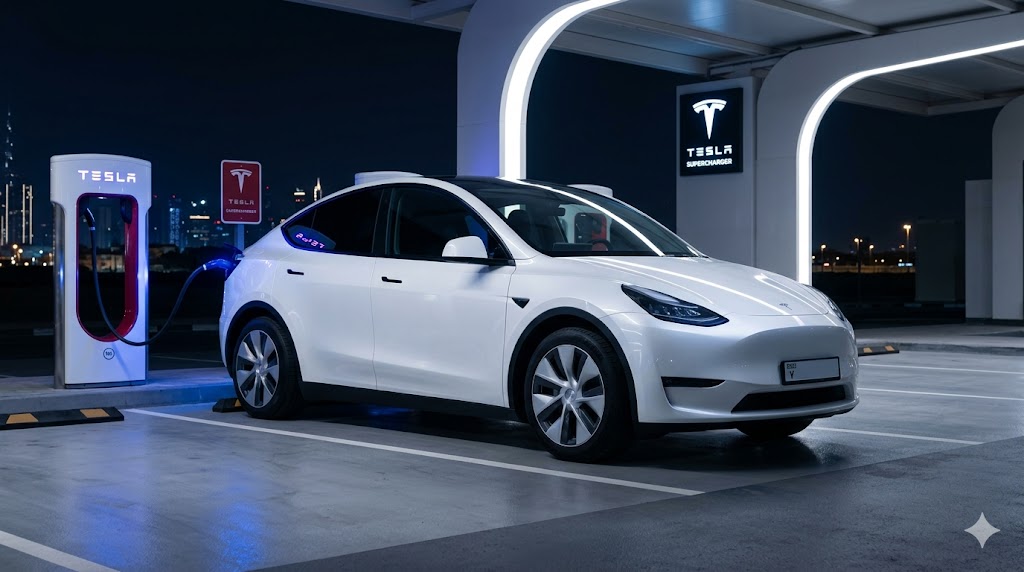
Most EV advertising sells a fantasy that doesn't apply to you: plug in every night in your own garage, wake up to a full battery, never think about fuel again. If you live in an apartment without a dedicated charging spot, that fantasy is irrelevant, and pretending otherwise is how people end up frustrated with a car that was never wrong for them, just wrong for their situation. The right electric car for someone charging exclusively away from home isn't necessarily the one with the longest range on the window sticker. It's the one that fits into a charging routine built around public stations, workplace plugs, and the rhythm of errands you already run. Get that fit wrong and you'll spend more time managing your car's energy than you ever did stopping for gas. Get it right, and the lack of a home charger becomes a manageable inconvenience rather than a daily source of stress.
What Actually Changes Without a Home Charger
Owning a gas car and owning an EV without home charging are closer to each other than either is to owning an EV with a garage. You still need to plan refueling stops, still need to think about how much is in the tank before a long drive, and still can't just assume the car will be ready whenever you need it. The overnight top-off that makes home-charged EV ownership so effortless simply isn't available to you, so every mile you drive has to be weighed against when and where you'll next add energy back.
That reality shifts what matters in a vehicle. Maximum range sounds like the obvious fix — buy the biggest battery and worry less — but range alone doesn't solve the core problem, which is how often and how long you have to stop to refill it. A car that's highly efficient will stretch every charging session further, meaning fewer visits to a charger overall, even if its total range figure isn't class-leading. A car that charges quickly on public fast-charging equipment will get you back on the road sooner, which matters enormously when you're charging at a station rather than while you sleep. And a car that works smoothly across multiple charging networks, rather than being functionally tied to one, keeps your options open if your regular charger is occupied, out of service, or simply not near wherever you happen to be.
Before you commit to any EV, map out your actual life: where you park, where you work, where you grocery shop, where you'd realistically stop for twenty or thirty minutes on a normal week. Then check current public charging maps for that specific footprint rather than assuming coverage exists because you've heard charging infrastructure is expanding nationally. It is expanding, broadly and steadily, but availability is intensely local, and a station a mile from your apartment does you no good if it's frequently full, poorly maintained, or incompatible with your vehicle's plug and network setup. The right EV, in this context, is the one whose charging needs overlap cleanly with chargers you can actually reach on a normal week — not the one that looks best on a spec sheet.
The Traits That Matter Most When You Charge Away From Home
Once you accept that your charging pattern will be public and intermittent rather than private and nightly, three vehicle traits rise above everything else. Efficiency comes first, and it's the trait most shoppers underweight because it doesn't show up as a headline number the way range or horsepower does. A more efficient EV turns each kilowatt-hour into more miles, which means a given public charging session — however long you're willing to stand around for it — gets you further before you need to think about charging again. Two vehicles can post similar range ratings with very different efficiency profiles depending on battery size, and the more efficient one will generally serve an apartment dweller better because it demands less frequent charging overall.
Fast-charging capability is the second pillar, and it deserves more scrutiny than a single kW figure on a spec sheet. What matters practically is how quickly the car adds meaningful range during a realistic charging stop — the kind of twenty-to-forty-minute window you might have while running errands — and whether that charging curve holds up or tapers off quickly. Some vehicles charge fast for a narrow window and then slow dramatically; others sustain faster charging across more of the battery's range. Look for real-world charging reviews and owner reports rather than relying solely on manufacturer-quoted peak figures, since peak numbers are often achieved only briefly and under ideal conditions.
The third pillar is compatibility and network breadth. A vehicle that can access multiple charging networks, either natively or through adapters, gives you more usable options within any given radius of your home or office than a car locked into a single network's footprint. This matters more for apartment dwellers than for homeowners, because you don't have a fallback plug in your own garage if your preferred network has an outage or a queue. Broad compatibility is really a form of redundancy, and redundancy is what you're buying when you don't have a guaranteed charger of your own.
Building a Charging Routine That Actually Works
Without a home charger, your charging routine has to be assembled deliberately from whatever pieces are available to you, and the best routines usually combine several of them rather than leaning on one. Workplace charging is the single biggest advantage if your employer offers it, because it converts otherwise-dead parking time into charging time and can functionally replace most of what a home charger would do for you. If your workplace has even a modest number of Level 2 chargers, that alone may cover the majority of your weekly driving without a single dedicated charging errand.
Absent workplace charging, the next best pattern is folding charging into stops you're already making. Charging while you grocery shop, run errands, or visit a gym with nearby charging stations means the car is topping up during time you'd have spent anyway, rather than time you're carving out specifically for the car. This is a meaningfully different mindset from gas-station thinking, where the stop exists only to refuel. With public charging, the goal is to stop treating charging as its own errand and start treating it as something that happens in the background of errands you already run.
Curbside or on-street charging, where cities or utilities have installed it, is worth investigating specifically for your block and your building, since availability varies enormously even within the same city. Where it exists and is reliably accessible, it can approximate home charging fairly well. Where it doesn't, you're left leaning more heavily on public fast chargers, and it's worth understanding the difference between a quick top-off — adding a partial charge during a short stop to keep your buffer comfortable — and a full fast-charging session, which takes longer and is something you'll want to do less frequently by design. Relying on frequent full fast-charging sessions as your primary routine is workable but adds more planning overhead and more time spent waiting than most people want long-term; it works better as an occasional necessity than as your everyday pattern.
The Practical Logistics You Can't Skip
Before any vehicle decision, look hard at your actual parking situation. Assigned parking, especially if it's in a location where your building or property manager might eventually allow a charger installation, is a meaningfully better starting point than unassigned parking, where you can't guarantee you'll park in the same spot two nights running, let alone install anything. If your parking is unassigned, a portable Level 1 charger that trickles power from a standard outlet is only useful if you have consistent, safe, permitted access to an outlet near wherever you actually end up parking — a scenario that's more the exception than the rule in most apartment complexes.
It's worth asking your property manager directly whether the building has any charging infrastructure or plans for it, and separately checking whether your city or utility offers any curbside or public charging investment nearby. Some buildings and municipalities are adding capacity steadily; others have none and no near-term plans. That answer should weigh heavily on your decision, because it determines whether you're building a charging routine around genuinely convenient options or around a thinner set of public chargers that may involve more driving, waiting, or schedule juggling than you'd like. A portable Level 1 setup can serve as a helpful supplement — enough to maintain a buffer overnight if you have any outlet access at all — but it shouldn't be the backbone of your plan, since Level 1 charging is slow enough that it rarely replaces the need for faster public charging on any week with substantial driving.
When a Hybrid Makes More Sense
None of this is an argument that every apartment dweller should force their way into an EV. If your schedule is unpredictable, if you can't identify reliable public fast charging within a reasonable radius of your home and work, or if your job doesn't offer charging and your errands rarely take you near a station, a traditional hybrid or plug-in hybrid may genuinely serve you better right now. A plug-in hybrid in particular lets you capture some electric-only driving on a portable charger between errands while never leaving you stranded on longer trips, and a standard hybrid removes the charging question from the equation entirely while still cutting fuel costs. Choosing that path isn't settling or admitting defeat — it's an honest read of your circumstances, and those circumstances can change. Buildings add charging infrastructure, cities expand public networks, and jobs sometimes come with workplace charging that didn't exist a year earlier. Revisit the decision when your situation shifts rather than forcing an EV into a life that isn't ready to support one.
Key Takeaways
Without home charging, your EV routine depends on public, workplace, and destination chargers, so pick a vehicle that fits your actual daily footprint rather than one with the longest range on paper. Efficiency and real-world fast-charging performance matter more than headline range figures, since they determine how far each charging session actually takes you. Broad compatibility across charging networks acts as redundancy you'll need precisely because you don't have a guaranteed charger of your own. The strongest routines blend workplace charging, errand-based top-offs, and occasional fast-charging sessions rather than relying on frequent full fast charges as a daily habit. Check your specific parking situation, building policies, and local charging maps before assuming coverage exists near your home or commute. Bottom line: an EV can work well without home charging if your schedule and nearby infrastructure genuinely support it, but if they don't, a hybrid or plug-in hybrid is a legitimate, honest choice until your circumstances change.