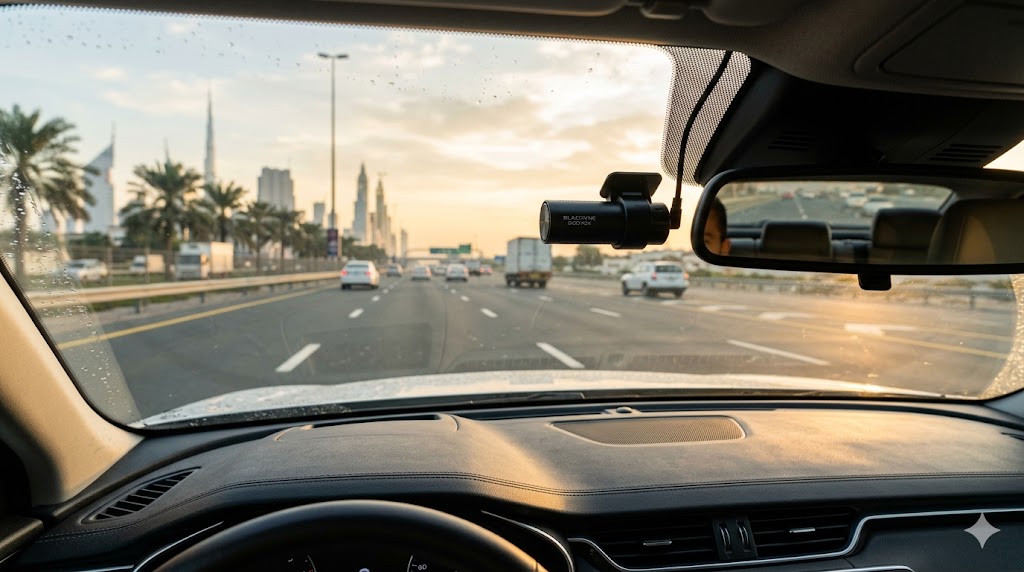

A dash cam records what happens in and around your vehicle. In the best case, that footage is never needed. In the event of an accident, a disputed claim, or a road incident, it can be the difference between a resolved claim and a protracted dispute where your account stands alone against someone else's. The case for carrying a dash cam is straightforward. The selection process is less so.
The dash cam market in 2026 includes hundreds of options across a price range from under $50 to over $400. Most buying guides focus on resolution specifications that have marginal real-world impact. The factors that actually differentiate good systems from poor ones are less visible in spec sheets.
What Actually Matters in a Dash Cam
Video quality at night and in adverse weather is more operationally important than peak daytime resolution. Many incidents - accidents, vandalism, parking lot events - happen in low-light conditions. A camera that records sharply at noon but degrades significantly at dusk is of limited value. The Sony IMX335 and similar large-format image sensors provide meaningfully better low-light performance than smaller sensors with nominally higher resolution specifications.
Heat tolerance is the most underappreciated specification. A dashboard camera in a parked vehicle in direct sunlight faces temperatures that exceed 160-170 degrees Fahrenheit in summer in many US climates. Cameras not rated for these temperatures fail - either by shutting down during recording, by permanent component damage, or by shortened operational lifespan. Any camera being considered for regular use should have documented heat tolerance, and capacitor-based power storage is more heat-resistant than lithium battery power storage.
Loop recording - where the camera automatically overwrites oldest footage to maintain continuous recording - is standard on all meaningful current options. The relevant specification is how the camera handles protected footage (clips saved automatically on impact detection) versus the loop. Systems that protect too much footage fill their storage and stop recording; systems with poor impact sensitivity fail to protect relevant clips.
The Systems Worth Considering
At the entry level for legitimate quality, the Garmin Dash Cam Mini 2 provides reliable recording in a discreet form factor without the features buyers who want advanced capability need. The Vantrue N4 Pro addresses three-channel recording (front, interior, rear) for buyers who want comprehensive coverage. The Thinkware U1000 provides high-resolution 4K front recording with strong low-light performance and remote access features. The Nextbase 622GW provides the best balanced package for buyers who want a single front camera with Emergency SOS and integrated GPS.
Summary
What it is: An evaluation of the 2026 dash cam market with specific recommendations across price points and use cases.
Best for: Any driver who wants documentation capability for accidents, insurance claims, or parking incidents.
Biggest cost/risk factor: Prioritizing resolution over heat tolerance and low-light capability is the most common buying mistake.
When to act: Now - there's no reason to delay a category where the technology is mature and the value case is clear.
AutosAdvisor is not a licensed electronic goods retailer. Recommendations reflect editorial testing and assessment at time of publication.