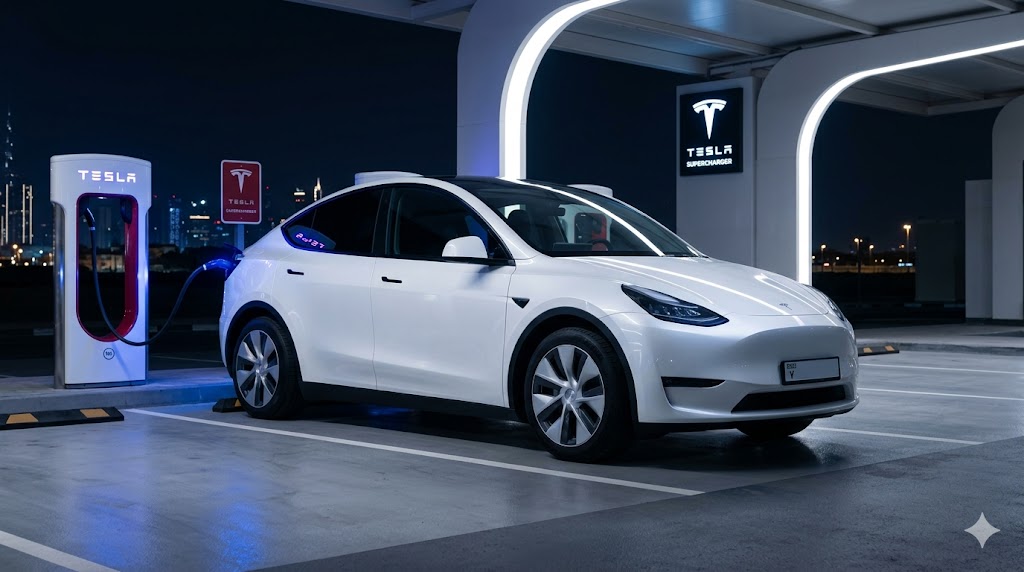
Two neighbors plug in their EVs every night in the same garage-less driveway, in the same subzero snap. One wakes up, unplugs, and drives to work watching the range estimate drop at a rate that barely troubles her. The other watches his range readout plummet within the first few miles, then sits at a fast charger far longer than the app promised, tapping his steering wheel while the percentage crawls upward. Same climate, same commute, similar battery capacity on paper. The difference isn't luck, and it isn't really about "cold weather hurting EVs" as some universal law. It's about what each car does, mechanically and electronically, to keep its battery pack in a temperature range where chemistry works efficiently. That system — thermal management — is the single biggest reason cold-weather EV experiences vary so much from one model to the next.
The Real Split: Active Systems vs. Passive Ones
Every lithium-ion battery pack generates and needs to shed heat, and every pack also needs help warming up when it's cold, because the chemical reactions that move ions through the electrolyte slow down dramatically at low temperatures. The question is how each automaker chooses to manage that. Some vehicles use an active liquid thermal management system: a network of coolant loops, pumps, and valves that can pull waste heat from the motors and electronics and redirect it into the battery pack, or actively heat the coolant with a dedicated heater when there's no waste heat to spare. Increasingly, the more sophisticated versions of this pair a heat pump with the loop, which moves ambient heat into the cabin and battery far more efficiently than simply burning electricity in a resistive element. Other vehicles, particularly older or lower-cost models, rely on simpler, more passive setups — sometimes just air cooling, or a liquid loop with no active heating capability at all, meaning the pack only warms up from its own internal resistance as you drive or charge it hard.
This is the mechanical root of the gap your two hypothetical neighbors experience. The car with active thermal management is constantly, invisibly working to keep its cells near their ideal operating window, even while parked. The car without it is essentially at the mercy of ambient temperature, and its battery management software has to compensate by limiting power and charging speed far more conservatively, because it has no other tool to protect the cells.
Why a Cold Battery Can't Just "Push Through"
Lithium-ion cells rely on ions physically migrating through a liquid electrolyte and intercalating into electrode materials. Cold electrolyte is more viscous and that migration slows down, which raises the cell's internal resistance. Higher internal resistance means the battery can't deliver or accept current as readily, which shows up to you as reduced available power, a lower usable range on the display, and — most noticeably — a much slower fast-charging curve. A pack that would happily accept a strong charge rate at a moderate temperature may only accept a fraction of that when it's cold, because pushing high current into cold, high-resistance cells creates uneven lithium plating risk and accelerated degradation. Charging controllers know this and throttle rates automatically to protect the pack, which is exactly why the same charger, same stall, same percentage target can take noticeably longer on a cold day than a mild one.
This is also where cabin heating enters the picture, and it's a second, separate drain layered on top of the battery-chemistry issue. Warming the interior takes real energy, and a resistive heater — essentially an electric space heater — converts electricity to heat in a straightforward but inefficient one-to-one way relative to the comfort it delivers. A heat pump, by contrast, extracts ambient thermal energy from outside air (or from waste heat in the drivetrain) and moves it into the cabin, typically producing more usable heat per unit of electricity consumed, especially in moderately cold conditions. A car that pairs an efficient heat pump with a well-managed battery loop is fighting the cold on two fronts at once — protecting range from cabin heating load and protecting charging speed from a cold pack — while a car with only a resistive heater and passive battery cooling is losing ground on both.
What Preconditioning Actually Does
If there's one habit that separates confident cold-climate EV owners from frustrated ones, it's preconditioning, and understanding why it works reinforces the whole thermal management story. When you tell your car to precondition the battery before a planned fast-charging stop, you're using grid or onboard power, while still plugged in or while driving with the motor's waste heat, to bring the pack up to a temperature where it can accept high current safely. Arrive at a fast charger with a pack that's already warm, and the charging curve looks the way the marketing materials promised. Arrive cold, and the car has to spend the first significant chunk of the session using some of the incoming charging energy just to warm the pack before it can ramp up current — time and energy that shows up as a frustratingly slow start.
The same logic applies before a cold-morning drive. Preconditioning the cabin and battery while the car is still plugged in means that energy comes from the wall rather than from the pack itself, so you start your trip with a battery that's already efficient and a cabin that's already warm, instead of asking the battery to do both jobs from a cold start. Vehicles with more capable thermal systems tend to make this easy — scheduled departure times, phone-app preconditioning, charging-stop-aware preconditioning that kicks in automatically as you navigate toward a fast charger. Vehicles with simpler systems may offer a basic cabin preheat but little or no ability to actively warm the battery pack itself, which limits how much preconditioning can actually help.
Insulation and Pack Design Matter Too
Thermal management isn't only about active heating and cooling hardware; it's also about how well the pack retains the temperature it's brought to. Better-insulated battery enclosures and coolant jackets lose heat more slowly to the cold ambient air, so a pack that was warmed before an overnight cold snap stays closer to its ideal range by morning than a poorly insulated one, which cools rapidly toward the outside air temperature. Cell chemistry and pack architecture play a role as well — some chemistries and cell formats simply tolerate cold better than others, and packs with more even temperature distribution across cells avoid the situation where a few colder cells become the bottleneck that limits the whole pack's charge rate.
Reading the Spec Sheet Like It Matters
When you're shopping in a cold climate, thermal management is rarely advertised with the fanfare of horsepower or headline range figures, but it's worth digging for. Look for language distinguishing active liquid thermal management from passive or air-cooled systems, note whether a heat pump is standard or an option, and check whether the automaker's app or owner's manual describes charge-stop preconditioning as a feature you can actually schedule or trigger, not just a general cabin preheat. Owner forums and long-term cold-climate reviews tend to reveal, in practice, which vehicles keep their charging curves relatively stable through winter and which ones fall off sharply — information that's more useful than any single spec-sheet line.
It's worth being honest about the limits here too. Even the best active thermal management, paired with disciplined preconditioning, doesn't make cold weather disappear as a factor — cabin heating still draws real energy, and physics still slows cold chemistry to some degree no matter how well the pack is insulated. What a strong system does is narrow the gap and make performance more predictable, not eliminate the gap entirely. And that capability isn't free: liquid loops, heat pumps, extra sensors, and the software to orchestrate all of it add cost, weight, and mechanical complexity compared with a simpler passive system, which is part of why cheaper EVs are more likely to skip or simplify these features.
- The biggest driver of cold-weather performance differences between EVs is whether they use active liquid thermal management, often paired with a heat pump, rather than passive or resistive-only systems.
- Cold electrolyte raises a battery's internal resistance, which reduces available power and usable range and forces charging controllers to slow down fast-charging rates to protect the cells.
- Resistive cabin heaters draw more energy for the comfort delivered than heat pumps do, adding a second, separate drain on range beyond the battery-chemistry effect.
- Preconditioning the battery before fast charging, and preconditioning the cabin and pack before a cold drive while still plugged in, shifts that warming energy cost off the battery and onto the grid.
- Better pack insulation and more even cell-to-cell temperature distribution help a warmed battery stay efficient longer and prevent a few cold cells from bottlenecking the whole pack's charge rate.
- No thermal system eliminates cold-weather range loss entirely, so cold-climate shoppers should prioritize vehicles with active liquid thermal management and scheduling-capable preconditioning, and existing owners should make preconditioning a routine habit rather than an occasional afterthought.