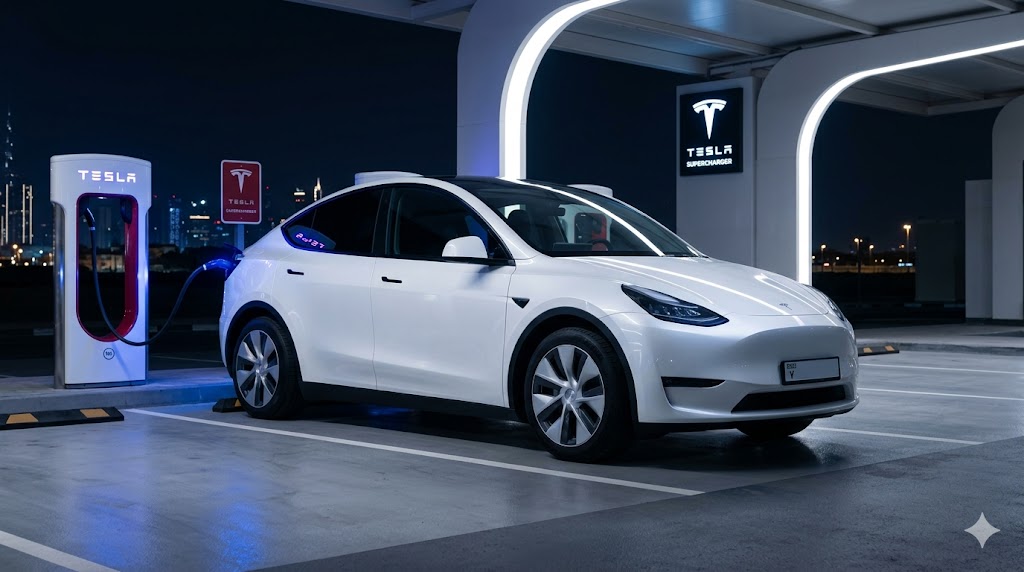
You watched the range estimate drop all trip, did the mental math against the next charging stop, and decided you could squeeze it down to single digits before plugging in. Then the charger you were counting on had a line of three cars, or a fault light, or the cold snap that morning quietly ate more range than the dashboard predicted. Suddenly that clever 10% arrival plan looks a lot less clever. The habit of treating a fast charger stop like a target to shave as close as possible is one of the most common mistakes new EV drivers make, and it's worth unlearning early.
The better rule of thumb, and one that experienced EV drivers converge on almost universally, is to plan your arrival around 20% state of charge rather than 10%. It sounds like a small difference on paper, but that extra buffer changes the entire risk profile of a road trip and, over time, treats your battery better too.
The Margin You're Actually Buying
Arriving at 10% instead of 20% doesn't save you meaningful time. You're not skipping a charging stop by running it down further; you still need to charge to continue your trip either way. What you're doing is spending your safety margin for essentially no benefit. That margin covers a surprising number of everyday variables: a wrong turn or unplanned detour, traffic that forces a slower average speed and higher consumption, a headwind, running the climate control harder than expected, or simply a range estimate that was optimistic to begin with. Any one of these can turn a comfortable 10% arrival into a car limping in on fumes, and in the worst case, into a car that doesn't quite make it.
Then there's the charger itself. Fast chargers fail, get occupied, or have a stall out of service more often than most drivers expect, especially at the busier highway locations where EV road-trippers cluster. If you arrive at 10% and the charger you were relying on is broken or has a queue, your options are limited and stressful: wait, or find another station that might be even further away, all while your buffer keeps shrinking. Arrive at 20% instead, and that same problem is an inconvenience rather than an emergency. You have enough charge to backtrack, try a different plug, or drive to a second location without the sinking feeling of watching the range number approach zero on an unfamiliar road.
Charging Speed Isn't Flat, and That Cuts Both Ways
Part of why the 20% habit makes sense ties directly into how fast charging actually behaves. Charging speed on a fast charger isn't constant from empty to full. It typically ramps up quickly once you plug in, holds a strong rate through a wide middle stretch of the battery's capacity, and then tapers off noticeably as the battery approaches full. In broad terms, the fastest charging tends to happen in the low-to-mid state of charge range, which is exactly the zone you're aiming to arrive in in the first place.
This matters for your 20% habit in a subtle way. If you arrive too depleted, you're not gaining charging speed by starting lower, because you were already going to pass through that fast-charging window regardless of whether you started at 20% or 10%. What you lose by arriving at 10% is margin, not charging efficiency. And because the curve tapers as the battery fills, most experienced drivers also learn not to charge all the way to 100% at a fast charger unless they truly need the range; topping off from, say, 20% to 80% is usually far more time-efficient than chasing the last 20%, which trickles in slowly. Understanding that the curve is fast in the middle and slow at both ends reframes the whole habit: arrive with a buffer, charge through the efficient middle section, and leave before you're paying the tapering-speed tax at the top.
Cold Weather Makes the Buffer Non-Negotiable
If there's one condition that turns a marginal 10% plan into a genuine problem, it's cold weather. Battery chemistry is temperature-sensitive, and range estimates that look accurate in mild conditions can become unreliable once temperatures drop. Cabin heating draws additional energy that a gas car's engine heat never had to compete for, tire pressure changes with temperature and affects rolling resistance, and the battery itself becomes less efficient at delivering power when it's cold. None of this is exotic knowledge to experienced EV owners, but it catches newer drivers off guard almost every winter.
The practical effect is that your remaining range at any given percentage becomes less trustworthy in cold weather, right at the moment when you most need it to be trustworthy. A 20% arrival buffer that felt generous in September might feel uncomfortably tight in January, even though the percentage on the display reads the same. Building the habit of a healthy buffer year-round means you're not scrambling to relearn your margins every time the seasons change.
What Deep Discharges Do to the Battery Itself
Beyond the trip-planning logic, there's a battery health argument for avoiding routine near-empty arrivals. Lithium-ion batteries generally prefer to avoid spending extended time at very low or very high states of charge, and repeatedly draining toward empty before charging adds stress that more moderate charging patterns avoid. This isn't a reason to panic over any single low-battery drive; batteries are engineered to handle a wide range of use. But as a habitual pattern, consistently running down to the last few percent before charging, especially followed by fast charging (which itself generates more heat and stress than slower home charging), is a combination worth minimizing rather than embracing as your default road-trip style.
Fast charging itself also tends to be less efficient at very low states of charge in cold conditions, since the battery management system may limit charging rates until the pack warms up, meaning that ultra-low arrivals in winter can actually charge slower at first, not faster. The 20% habit sidesteps this awkward zone almost entirely.
Building the Habit Into Your Trip Planning
None of this requires obsessive planning. It just means treating charging stops as flexible waypoints with a target arrival window rather than a hard number you're racing toward. When you plan a route, build in the expectation that you'll start looking for the next charger once you dip toward the 20-25% range, not when you hit 10%. Use trip-planning tools or your vehicle's built-in routing to identify a backup charging option along the way, so that if your first choice is occupied or down, you're not starting from a position of desperation. Over time, this becomes second nature, the same way experienced gas-car drivers develop a personal rule about not letting the tank get below a quarter before looking for a station.
The math is simple once you see it clearly: the few extra minutes you might save by draining to 10% are dwarfed by the risk, stress, and potential battery wear of cutting it that close, especially once weather, detours, or a broken charger enter the picture.
Key Takeaways
- Arriving at 20% instead of 10% buys you a real safety margin against detours, traffic, and range-estimate errors, not extra charging speed.
- Fast charging is quickest through the low-to-mid battery range and tapers as the pack fills, so a 20% arrival still lands you right in the efficient charging window.
- A broken, occupied, or out-of-service charger is far less stressful to deal with when you still have a meaningful buffer left.
- Cold weather reduces the reliability of range estimates and can slow fast charging at very low states of charge, making the buffer even more important in winter.
- Habitually draining toward empty before fast charging adds unnecessary stress to the battery compared to charging with a healthier margin.
- Bottom line: treat 20% as your trigger point for charging, not 10%, and you'll travel with less stress and more resilience built into every stop.