You come home from work, park on the street or in an unassigned lot, and there is no outlet within a hundred feet of your car. That single fact is the reason so many renters write off electric vehicles before they even test drive one. It is a legitimate concern, not a minor inconvenience to wave away, and it deserves a straight answer rather than the usual glossy assurance that "charging is everywhere now." It is not everywhere, and if you live in an apartment, condo, or rented house without dedicated parking, your ownership experience will look meaningfully different from your neighbor's who charges in a garage every night. The good news is that different does not mean impossible. It means you need a plan built around your actual living situation instead of the default assumption baked into most EV marketing.
Why the Garage Assumption Breaks Down for Renters
Most EV charging advice is written for people who own a single-family home with a driveway or garage, because that is the easiest use case to sell: install a Level 2 charger, plug in overnight, wake up to a full battery. Renters and apartment dwellers do not get that clean loop. Parking may be unassigned, shared, or blocks away. Even when there is a designated spot, running an electrical circuit to it requires permission from a landlord, a homeowners association, or a building management company that has no particular incentive to spend money on your behalf. This is the real starting point for anyone in this situation: your charging plan is going to be assembled from several partial solutions rather than one complete one, and accepting that early saves a lot of frustration later.
Workplace Charging as a Daily Backbone
If your employer offers charging, even at a modest speed, this is often the single best fix for apartment dwellers, because it converts your parked-all-day work hours into charging hours instead of wasted time. A Level 2 charger in a parking garage or lot can add a meaningful chunk of range during a typical workday, enough for many commuters to avoid public charging altogether during the week. The catch is availability and fairness: workplace chargers are often limited in number, and if your office has more EVs than plugs, you may be competing with coworkers for a spot. It is worth asking HR or facilities management directly whether charging exists, whether it is free or metered, and whether there are plans to add capacity, since workplace charging programs are expanding steadily but are still far from universal.
Public Level 2 Charging and the Reality of Waiting
Public Level 2 stations at grocery stores, libraries, municipal lots, and shopping centers are the next layer, and they work reasonably well as a supplement rather than a primary strategy. The tradeoff is time: a Level 2 charger typically takes several hours to substantially refill a battery, which is fine if you are going to be shopping or working nearby anyway, but it turns "charging" into an errand you have to plan around rather than something that happens invisibly while you sleep. Apps that show real-time station availability help, but availability in dense urban areas can be inconsistent, and you may find yourself circling back to check a spot rather than treating it as a sure thing. Building a mental map of two or three reliable public Level 2 locations near your apartment, ideally ones tied to places you visit regularly anyway, tends to work better than relying on whatever station shows up highest in an app search.
DC Fast Charging as a Routine Habit, Not an Emergency Backup
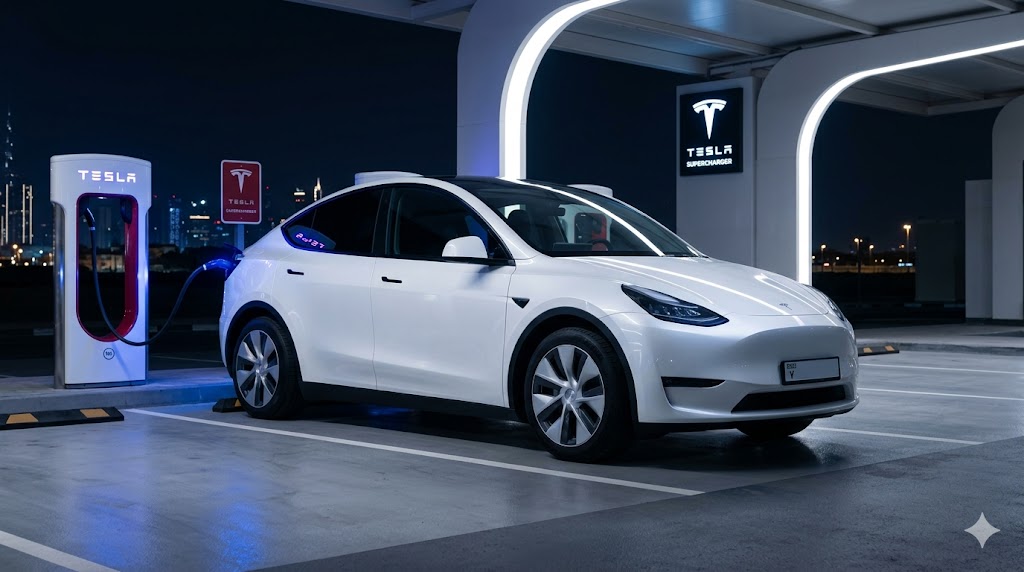
For a lot of apartment dwellers, DC fast charging stops being an occasional road-trip tool and becomes a weekly or even twice-weekly errand, the electric equivalent of a gas station stop. That shift comes with real tradeoffs you should weigh honestly rather than dismiss. Fast charging costs more per mile than charging at home on a residential electricity rate, sometimes substantially more, so your fuel savings compared to a gasoline car shrink when fast charging is your default rather than your exception. There is also the question of battery health: repeated fast charging generates more heat and stress on a battery than slower Level 2 or Level 1 charging, and while modern battery management systems are designed to handle this, most manufacturers and battery researchers still describe frequent fast charging as something that can contribute to faster long-term capacity fade compared to predominantly slow charging. That does not mean occasional or even routine fast charging will ruin a battery, but it is a genuine factor, not a myth, and it is one more reason the math on EV ownership looks different when you cannot charge at home.
Negotiating with Landlords and HOAs
If you plan to stay in your unit for a while, it is worth having a direct conversation with your landlord or HOA board about installing a dedicated charger at your parking spot, even a basic Level 2 unit. Some landlords are receptive, especially if you offer to cover installation costs yourself or split them, and some jurisdictions have passed laws giving tenants a right to request EV charging installations at their own expense under certain conditions, though the specifics vary widely by state and city and you should check your local rules rather than assume a blanket right exists. Framing the request around property value, since EV-ready parking is increasingly attractive to future tenants, tends to land better than framing it purely as a personal favor. Get any agreement in writing, including who owns the equipment if you move out, since this is the kind of detail that causes disputes later if it is left verbal.
Curbside Charging Pilots and the Portable Outlet Option
A number of cities have experimented with curbside or on-street charging, converting streetlights or installing dedicated curbside units in dense neighborhoods where driveways are rare. These programs are genuinely useful where they exist, but they remain pilot-scale in most places rather than a citywide guarantee, so treat any specific city's program as something to research locally rather than assume it covers your block. On the low-tech end, if you have any legal access to a standard outdoor or garage outlet, even intermittently, a portable Level 1 charging cable can trickle in a meaningful amount of range overnight, which sounds unglamorous but genuinely works for people with shorter daily commutes. It will not replace a real charging routine for high-mileage drivers, but it can meaningfully extend the gap between public charging trips.
Letting Charging Access Shape Where You Live
For renters actively shopping for their next apartment, charging access is worth treating as a real factor in the search, the same way you'd weigh commute distance or parking cost. Buildings advertising EV-ready parking, or simply located near a cluster of reliable public chargers, meaningfully reduce the friction described above. This is not the deciding factor for everyone, but for someone seriously considering an EV, it is a legitimate line item in an apartment search, not an afterthought to sort out after signing a lease.
Key Takeaways
- Apartment dwellers without dedicated parking face a genuinely different, more effortful EV ownership experience than homeowners with a garage.
- Workplace charging, where available, is often the most reliable daily solution because it fills otherwise idle parking hours.
- Public Level 2 charging works as a supplement but requires planning around wait times and station availability.
- Routine DC fast charging is a viable habit but costs more per mile and may contribute to faster long-term battery wear than slower charging.
- Landlord and HOA negotiations, plus emerging curbside charging pilots, are worth pursuing but vary heavily by location and are not guaranteed.
- Bottom line: an EV can work well without a garage, but only if you build a realistic, multi-layered charging plan first rather than assuming it will sort itself out.