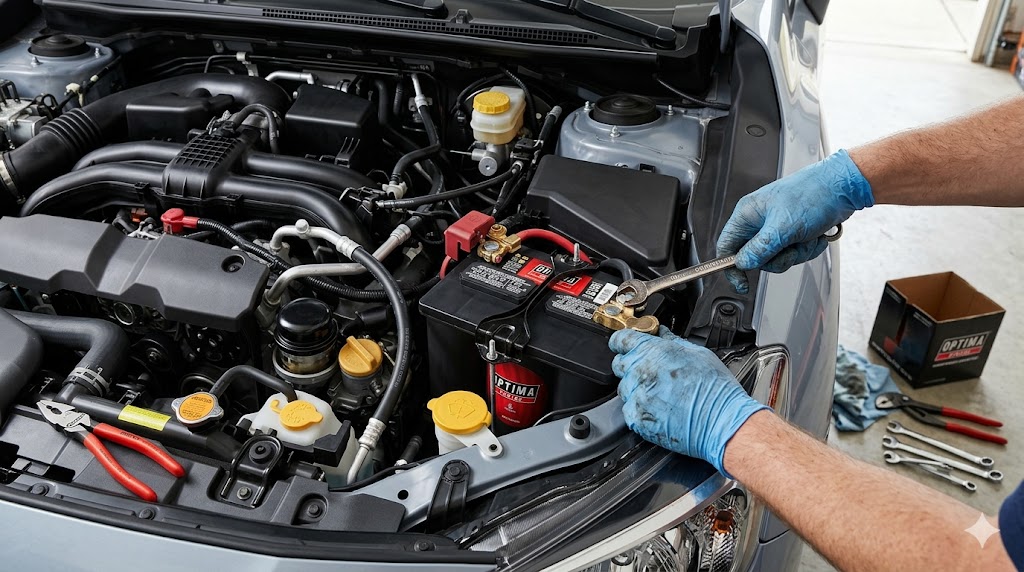
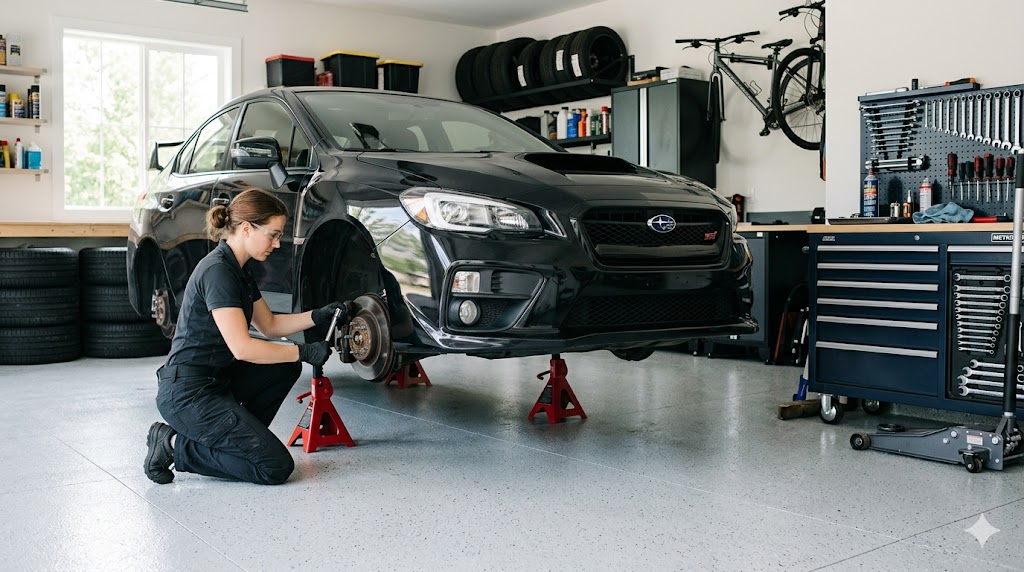
Your service advisor hands you a printout listing fourteen line items and a total that makes you wince. Somewhere in that list are two or three things your car genuinely needs and several more that exist mainly to pad the invoice. The 60,000-mile mark has become shorthand in the industry for a "major service," and that reputation is exactly why it's ripe for upselling. Dealerships and quick-lube chains alike know this mileage triggers a psychological trigger in owners — a sense that something big must be done — and they've built package deals around that instinct. Some of what's on those packages is legitimately important. Some of it is recycled advice from cars built decades ago. Knowing which is which will save you money without gambling on your car's longevity.
The real starting point isn't a generic checklist circulating on an auto parts website — it's your owner's manual. Every manufacturer publishes a maintenance schedule with specific mileage or time intervals for your exact engine, transmission, and drivetrain combination, and those numbers can vary substantially even between trim levels of the same model. A turbocharged engine, for instance, often has tighter oil change intervals than the naturally aspirated version of the same car. So treat "60,000 miles" as a useful checkpoint for this discussion, not a universal rule that applies identically to every vehicle in every driveway.
The Items That Are Usually Worth Doing
Spark plugs are the classic 60K item, and for good reason on many vehicles, though the real interval depends heavily on plug material. Iridium and platinum plugs, standard on most modern engines, are often rated for 60,000 to 100,000 miles, while older copper-style plugs wear out much sooner. If your manual specifies plug replacement in this range, don't defer it — worn plugs cause misfires, rough idle, and measurably worse fuel economy, and the labor to access them only gets more annoying to schedule around as other components age alongside them.
Transmission fluid is the item most likely to get quietly skipped and most likely to cause expensive regret later. Many manufacturers list a transmission fluid service somewhere between 30,000 and 60,000 miles for conventional automatic transmissions, though a growing number of vehicles ship with fluid rated as "lifetime" — a term that deserves skepticism, since "lifetime" in these specs sometimes means the expected life of the transmission under ideal conditions, not literally forever. Fluid that's breaking down loses its ability to lubricate and cool internal components, and transmission rebuilds cost dramatically more than a fluid service. Check your manual's specific guidance rather than assuming either extreme.
Brake fluid is easy to ignore because nothing about a dashboard warning light usually points to it, yet brake fluid is hygroscopic — it absorbs moisture from the air over time regardless of how many miles you've driven. That absorbed water lowers the fluid's boiling point, which matters enormously during hard braking on a mountain descent or in stop-and-go traffic on a hot day, and it also promotes corrosion inside brake lines and the ABS module. Many manufacturers recommend a brake fluid flush every two to three years independent of mileage, so a car that's covered 60,000 miles in three years of highway commuting may need this service even if the fluid "looks fine" in the reservoir.
Drive belts, particularly the serpentine belt that runs your alternator, power steering, and air conditioning compressor, are worth a genuine visual inspection at this mileage even if outright replacement isn't yet due. Modern EPDM rubber belts don't crack visibly the way older belts did — they wear from the inside via a process called "rib chunking" that's harder to spot without knowing what to look for. A technician who checks belt tension and rib wear, rather than just glancing at the surface, is doing something useful here.
Cabin and engine air filters round out the legitimately useful list, and they're also the items shops sometimes have the most latitude to justify as "needed" without much scrutiny. A cabin air filter that's genuinely clogged will restrict airflow and can produce musty odors; an engine air filter that's dirty enough to matter is usually visibly gray and coated with debris. Ask to see the old filter before agreeing to replace either — it's a completely reasonable request, and any legitimate shop will show you without hesitation.
Where the Upselling Really Happens
Fuel injector cleaning is the single most common unnecessary add-on at this mileage. Modern gasoline already contains detergent additives mandated by the EPA specifically to keep injectors clean under normal driving conditions, and unless you're experiencing actual symptoms — hesitation, rough idle, a check engine light tied to a fuel trim code — there's little evidence a preventive injector service does anything beneficial. It's not fraudulent, exactly; it's a real service that solves a problem most cars at 60,000 miles don't have.
"Fuel system flush" and "throttle body cleaning" services occupy similar territory. These aren't scams in the sense that nothing happens — a technician does run cleaner through the system — but they're frequently marketed as urgent preventive maintenance when the actual benefit for a car showing no symptoms is marginal at best. The same goes for power steering fluid flushes and differential fluid services pushed as a bundle on vehicles where the manufacturer schedule doesn't call for them until much higher mileage, if at all.
Coolant flushes deserve a more careful look than a blanket dismissal, because coolant type matters enormously here. Traditional green IAT coolant does break down faster and often needs attention within a few years, while modern OAT and HOAT formulations are engineered to last far longer — sometimes five years or 100,000-plus miles depending on the manufacturer's specification. A shop that pushes a coolant flush at 60,000 miles without checking what coolant type is actually in your system, or without checking your specific interval, is guessing rather than diagnosing. This is exactly the kind of service where checking your manual before you sit in the waiting room saves you from an unnecessary charge — or confirms it's genuinely due.
Wiper blades, cabin fresheners, "fuel additive treatments," and various fluid "conditioners" round out the padding. None of these are harmful to your car, but none of them are specific to the 60,000-mile threshold either — they're filler items that make a service package look more comprehensive than it needs to be.
How to Tell the Difference in the Moment
The practical test is simple: ask whether the recommendation is tied to a specific symptom, a manufacturer-specified interval, or a visual inspection finding you can see for yourself. "Your manual calls for this at 60,000 miles" and "here's the worn belt, look at this cracking" are answers you can verify. "It's generally a good idea at this mileage" is not — it's marketing language dressed as advice. A reputable independent shop or dealer service department should have no problem pulling up your specific manufacturer's schedule and pointing to the line item, and should be comfortable if you decline something that isn't actually due.
It's also worth remembering that bundled "60K packages" aren't inherently predatory — they exist because doing several inspections in one visit saves on labor overhead, and a fair package price can genuinely beat paying for each item separately. The problem isn't bundling itself; it's bundling without transparency about which items are manufacturer-required and which are optional add-ons priced to look like part of the same deal.
Key Takeaways
- Your owner's manual, not a shop's generic package, is the real source of truth for what your specific vehicle needs at this mileage.
- Spark plugs, transmission fluid, and brake fluid are commonly due around this range on many vehicles and are worth taking seriously rather than deferring.
- Belt inspection and air filter checks are cheap, quick, and worth doing even if replacement isn't yet necessary.
- Fuel injector cleaning and throttle body services are the most commonly oversold items at 60,000 miles absent actual symptoms.
- Coolant flush timing depends heavily on coolant type and manufacturer spec, not a fixed universal mileage — verify before paying.
- Bottom line: ask for the manufacturer's schedule by name, verify claims you can see (like a worn belt), and don't let a bundled package price talk you out of scrutinizing each line item.