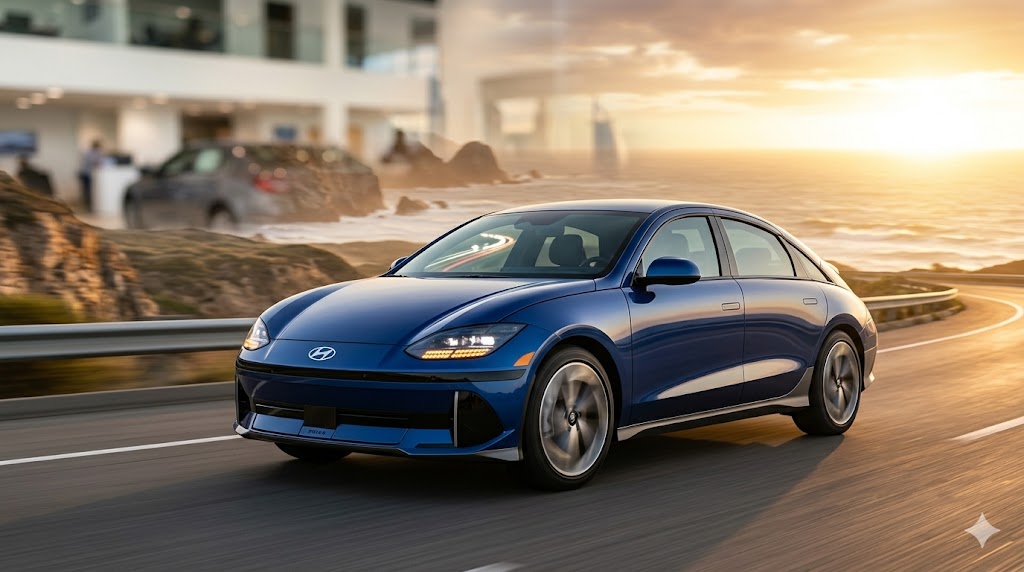

The 2026 Hyundai Ioniq 6 SE's 0.21 drag coefficient is not a marketing number. It represents genuine aerodynamic engineering that affects real-world range in ways that other EVs' specifications don't capture. The EPA's city-highway cycle understates the Ioniq 6's advantage over competitors in highway-dominated driving conditions precisely because the test cycle wasn't designed to differentiate aerodynamic efficiency at the speeds where it matters most.
The SE rear-wheel-drive single-motor configuration produces 225 horsepower and achieves a EPA range rating of 361 miles. At 70 mph steady-state, the Ioniq 6's advantage over competitors with conventional aerodynamics grows noticeably. Real-world highway driving range frequently exceeds EPA estimates in a way that is unusual for EVs, which typically fall short of rated range in real-world conditions.
The Aerodynamic Engineering in Practice
The Ioniq 6's streamliner shape - influenced by vintage aerodynamic sedans of the 1930s - achieves its coefficient through integrated wheel covers, flush door handles, an active air flap system, and careful management of underbody airflow. These aren't styling decisions with aerodynamic side effects; they're aerodynamic decisions that happen to produce distinctive styling.
The practical benefit emerges most clearly on road trips. The Ioniq 6 SE requires fewer charging stops per distance covered than competing EVs at similar price points. For buyers whose primary range anxiety is highway travel rather than daily commuting - where range rarely matters at all - the Ioniq 6's aerodynamic advantage directly addresses the actual concern.
The SE trim's 77.4 kWh battery supports 350 kW DC fast charging, allowing 10-80% charging in approximately 18 minutes at a compatible high-speed charger. That number depends on charger availability and battery temperature, but the underlying hardware capability is among the fastest in the class.
Interior packaging is efficient. Hyundai used the flat floor enabled by EV architecture to create rear seat space and cargo access that the exterior proportions don't predict. The driving position is slightly elevated compared to a traditional sedan but not SUV-high.
Summary
What it is: A rear-wheel-drive electric sedan with 361 miles of EPA range, 0.21 drag coefficient, and standard 350 kW charging capability at a sub-$40,000 starting price.
Best for: EV buyers who prioritize real-world highway range and fast charging capability and want the efficiency argument settled definitively.
Biggest cost/risk factor: Rear-wheel drive only in SE trim limits winter capability; charging network compatibility requires verification for your regular routes.
When to act: The Ioniq 6 SE qualifies for federal EV tax credits that may reduce the effective purchase price - verify current eligibility before finalizing the purchase.
AutosAdvisor is not a licensed dealer or financial advisor. Review reflects editorial testing.