
Genesis launched in 2016 with a clear mission and a difficult path. Building a credible luxury brand from scratch in a market dominated by German automakers with century-long reputations requires something beyond competitive products - it requires convincing buyers that the name on the hood means something. A decade into that project, the evidence is favorable. The G80 Sport is the strongest argument yet that Genesis has made it.
The G80 Sport pairs a 3.5-liter twin-turbocharged V6 producing 375 horsepower with a permanently engaged all-wheel drive system and an eight-speed automatic transmission. The powertrain positions it clearly against the BMW 5 Series, Mercedes-Benz E-Class, and Audi A6 - each of which costs meaningfully more for comparable power output.
Where the G80 Sport Earns Its Position
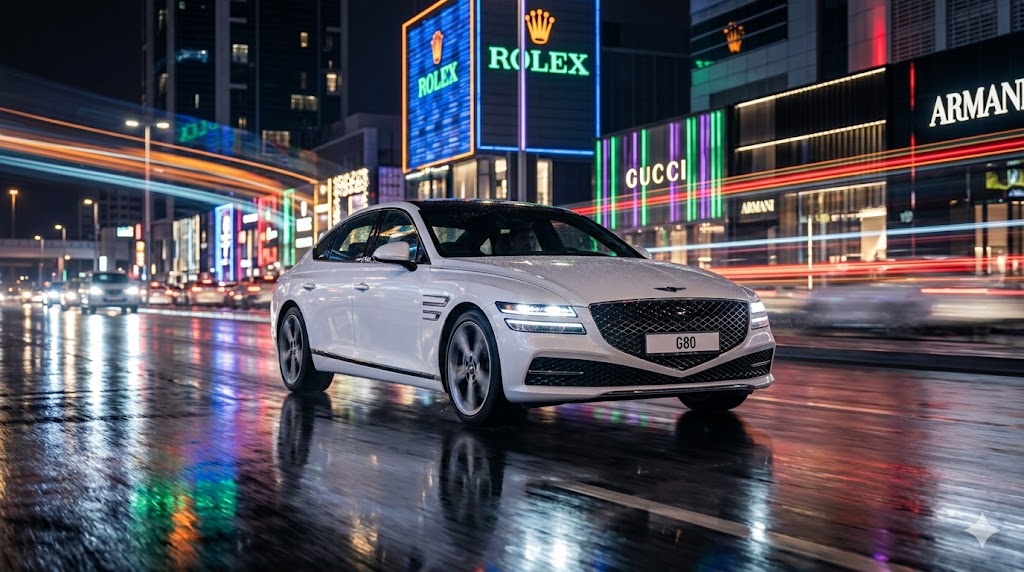
Exterior styling is the conversation starter. The G80's two-line grille, quad headlamps, and proportions represent a genuinely distinctive visual direction that doesn't borrow from German conventions. In the right color - we tested in Uyuni White with the dark sport trim - the G80 Sport draws attention that buyers of German alternatives rarely receive.
Interior quality is where Genesis closes the gap most effectively. The materials throughout the cabin - the leather, the wood trim, the stitching quality, the weighting of every switch and control - rival BMW and Mercedes at their respective price points. The rear seat space is generous, the seat comfort is excellent on long journeys, and the attention to acoustic insulation makes the G80 noticeably quiet at highway speeds.
The 3.5T's power delivery is linear and strong across the rev range. The eight-speed automatic's calibration matches the car's character well - unhurried and smooth in normal driving, responsive when the Sport driving mode is engaged. There's no paddleshifter need-to-have quality here; the gearbox makes good decisions on its own in most driving situations.
The Genesis Digital Key 2 system and the 14.5-inch navigation screen represent modern technology integration that doesn't require a crash course to operate. The interface design is cleaner than BMW's iDrive or Mercedes-Benz's MBUX in terms of everyday usability.
What Genesis Still Needs to Earn
Resale value remains the G80's most significant weakness relative to German competitors. Depreciation runs steeper than BMW and Mercedes counterparts, which affects total cost of ownership calculations over a typical three to four year ownership period. Buyers who lease often find the G80 Sport's transaction price advantage partially offset by higher money factors reflecting this residual weakness.
Dealer network depth is still catching up. Genesis Experience Centers exist in major markets, but coverage in secondary markets is less consistent than what BMW, Mercedes, and Audi provide. Service availability and loaner car access are worth investigating specifically for your area before purchase.
Summary
What it is: A 375-horsepower twin-turbocharged luxury sport sedan positioned as a value-forward alternative to established German competitors.
Best for: Luxury sedan buyers who want BMW-level performance and interior quality at a meaningful price advantage, and who prioritize ownership experience over brand prestige.
Biggest cost/risk factor: Steeper depreciation than German competitors and dealer network coverage that varies significantly by region.
When to act: The Genesis value proposition is strongest in the first two years of ownership - buyers who plan to own long-term should run total cost calculations including projected depreciation.
AutosAdvisor is not a licensed dealer or financial advisor. Review reflects editorial testing.