Most three-row electric SUVs ask you to pick a lane: some chase family-friendly space, others chase eco-conscious credentials, and few manage to make both feel like the point rather than an afterthought. The 2025 Volvo EX90 is built around the idea that a family hauler shouldn't have to choose. It's a seven-seat EV engineered around Volvo's decades-old obsession with keeping occupants alive in a crash, wrapped in an interior built from recycled and responsibly sourced materials, and the impressive part is how naturally those two priorities reinforce each other rather than compete for the engineering budget.
That combination is the EX90's entire reason for being. Volvo didn't build this car to win a drag race or headline a spec sheet with eye-popping range numbers. It built the EX90 to be the vehicle a safety-conscious parent buys when they also care about where the leather in their seats didn't come from. Understanding that dual mission is the key to understanding everything else about this SUV, because nearly every design and engineering decision traces back to it.
Safety as the Organizing Principle, Not a Bullet Point
Volvo's reputation was built on the three-point seatbelt, and the brand has spent every decade since finding new ways to make that same promise relevant to modern driving. The EX90 continues that lineage with a suite of sensors — including a roof-mounted LiDAR unit that Volvo positions as central to its future safety and driver-assistance capability — designed to detect hazards earlier and react faster than camera-and-radar systems alone. The company has talked openly about using this sensor suite as a foundation it can improve over time through software updates, an approach that treats safety as an evolving system rather than a fixed set of features locked in at the factory.
Inside, that same philosophy plays out in details that matter especially for families using all three rows. The EX90's structure is engineered to manage crash energy across a battery-equipped platform, and Volvo has extended its usual attentiveness to child safety with features aimed at correct car-seat installation and out-of-position detection for smaller occupants. It's the kind of thoughtfulness that doesn't show up in a highlight reel but shows up in the daily reality of driving with children in every row. Independent crash-test results and safety ratings are still the right resource for buyers who want hard verification, and readers should check current published ratings from recognized testing bodies rather than take any single brand's marketing at face value — but the engineering intent here is unmistakable and consistent with Volvo's long track record.
Sustainability That Goes Beyond the Badge
The EX90's environmental story isn't limited to the fact that it doesn't burn gasoline. Volvo has been unusually transparent about tracing the carbon footprint of its EVs across the full manufacturing chain, not just tailpipe emissions that don't exist in the first place, and the EX90's cabin reflects that broader mindset. Recycled and renewable materials show up throughout the interior, including options that reduce reliance on traditional leather without feeling like a downgrade in quality or comfort. Wool blend upholstery, materials derived from recycled plastics, and responsibly sourced wood trims are woven into the design rather than offered as a token "eco package" you have to seek out.
This matters because sustainability efforts in the auto industry can sometimes feel cosmetic — a recycled-fabric floor mat marketed as a green revolution. The EX90 avoids that trap by treating material sourcing as a core part of the vehicle's identity, consistent with Volvo's broader public commitments toward reducing its lifecycle carbon impact. The battery itself is another piece of that puzzle, and Volvo has emphasized responsible sourcing of battery materials as part of its supply chain approach, though buyers interested in the specifics of battery chemistry, sourcing certifications, or lifecycle recycling plans should look at Volvo's current published sustainability reporting for the most accurate and up-to-date details.
Living With Three Rows: The Honest Family Verdict
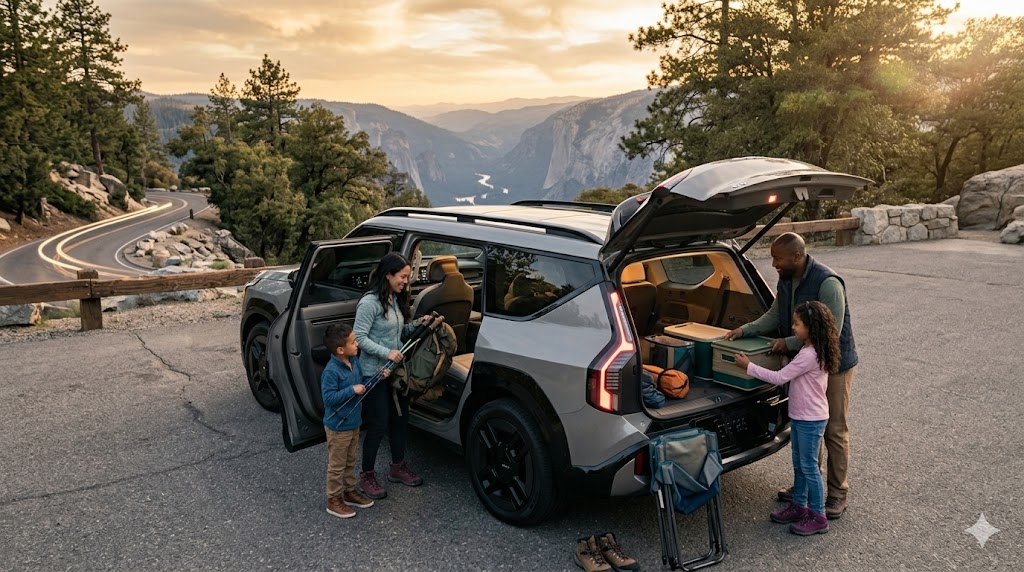
Here's where the EX90 has to earn its keep as an actual family vehicle, and the results are good but not without caveats. The second row is genuinely spacious and comfortable, with captain's chairs available that make it feel like a premium place to sit rather than a compromise position. The third row is where reality sets in a bit: it's usable for children and shorter adults on shorter trips, but like most three-row SUVs in this size class, it's not a place where average-sized adults want to sit for a long highway haul. Headroom and legroom back there are adequate rather than generous, and families who need to regularly seat six or seven adults simultaneously should sit in the third row themselves before buying rather than assume it matches second-row comfort.
Cargo space behind the third row shrinks accordingly when all seats are in use, which is the universal trade-off of the three-row format regardless of brand. Fold the third row flat, though, and the EX90 becomes a genuinely capacious hauler for gear, strollers, and the general chaos of family life. The tech experience inside leans on a large central touchscreen with Google built-in, which handles navigation and voice commands well, though as with any newer software platform, some owners have noted the rollout of certain features and updates has arrived in stages rather than all at once at launch — worth knowing if you like every promised feature active on day one rather than added later.
The Trade-Offs: Weight, Efficiency, and Price
The EX90's size and its heavy emphasis on safety hardware, sound insulation, and structural reinforcement come with a real physics penalty: this is a substantial, heavy vehicle, and that mass affects efficiency the way it does in any large EV. Range and efficiency are competitive for a three-row electric SUV of this size, but buyers cross-shopping against smaller or lighter two-row EVs should expect the EX90 to consume more energy per mile, and should check current published EPA range figures for their specific configuration rather than assume they'll match a smaller sibling model. The flip side of that weight is a driving experience that feels planted and composed, with a ride quality that smooths out rough pavement in a way that suits the car's family-hauler mission better than a sportier tune would.
Price is the other honest conversation. The EX90 sits at the upper end of the three-row electric SUV field, and well-equipped configurations push into territory that invites direct comparison with premium rivals from Mercedes, BMW, and other three-row luxury EV entrants. Given the sensor suite, materials, and safety engineering on board, the price makes sense as a reflection of what's actually in the vehicle, but budget-conscious family shoppers will want to cross-shop carefully rather than assume the EX90 is the value leader in its class, because it generally isn't positioned that way.
Final Thoughts
What the EX90 gets right is refusing to treat safety and sustainability as separate marketing bullet points competing for attention. They're presented as one coherent philosophy: build a vehicle that protects the people inside it while minimizing harm to everything outside it, and let both goals inform the same set of engineering decisions. The third-row comfort limitations and the premium price are real considerations, not dealbreakers, and they're the kind of trade-offs inherent to this vehicle category rather than unique failures of the EX90 specifically. For families who want a three-row EV that treats both crash protection and material responsibility as non-negotiable, this is currently one of the most convincing arguments on the market.
Key Takeaways
- The EX90 is built around a genuine dual mission — Volvo-grade safety engineering and materially sustainable manufacturing — rather than treating one as a side feature of the other.
- Its LiDAR-equipped sensor suite and software-upgradeable safety systems reflect Volvo's long-standing brand identity, though buyers should verify current independent crash-test ratings rather than rely solely on brand messaging.
- Interior materials meaningfully reduce reliance on traditional leather and reflect a broader lifecycle sustainability approach rather than a token eco trim package.
- The third row suits children and shorter trips well but isn't the most comfortable space for adults on long drives, a common trade-off in this vehicle class.
- Vehicle weight affects efficiency as expected for a large three-row EV, and pricing sits at the premium end of the segment rather than positioning as a value option.
- Bottom line: families who prioritize safety and genuine sustainability in equal measure will find the EX90 one of the most coherent options in the three-row EV segment, provided they go in with realistic expectations about third-row space and price.